Ruto presidency: Euphoria turns into discontent
By Reuben Mwambingu, July 23, 2025The atmosphere at Nairobi’s Moi International Sports Centre, Kasarani, was electric on September 13, 2022, as William Ruto was sworn in as Kenya’s fifth President.
The stadium pulsed with energy as celebrated musicians, including Kiswahili stars Nadia Mukami and Sanaipei Tande, delivered breathtaking performances.
Excitement reached its crescendo when Tanzania’s Zabron Singers took the stage with their hit ‘Nimeuona Mkono wa Bwana’, a song that had become the unofficial anthem of the Kenya Kwanza campaign.
As the crowd danced, led by President Ruto and First Lady Rachel Ruto, the moment captured the euphoric optimism of millions of Kenyans who had placed their faith in the new administration.
Radiant future
Ruto’s campaign had painted a picture of a radiant future filled with ambitious promises.
From job creation to sweeping reforms in housing, education, healthcare, and the economy, his messaging suggested a transformation that would fundamentally change Kenya’s trajectory.
The contest for State House was fiercely fought, with the economy, healthcare, education, and housing emerging as key battlegrounds.
Both leading candidates – Ruto and his rival Raila Odinga – proposed ambitious healthcare reforms.
Ruto pledged to reduce NHIF contributions to Ksh300 per household, while Raila proposed “Babacare”, a universal healthcare system promising affordability, accessibility, and quality care for all Kenyans.
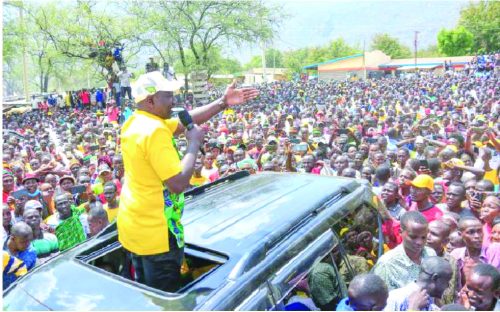
Intense scrutiny
More than two years into the Ruto presidency, however, many of those promises have come under intense scrutiny.
A glance at the comment section of the Permanent Presidential Music Commission’s (PPMC TV) YouTube channel, which hosts footage from the inauguration, reveals a sharp shift in public sentiment.
“Job creation for the youth, the economy builder, truthful man, God-fearing man—this event happened two years ago. Kenyans, come review your statements here,” wrote user Gimwal.
Mark Muchangi added: “I knew Ruto wouldn’t deliver… Two years down the line, I am vindicated.”
Another viewer, Moniq Njoroge, commented: “Who is here after Gachagua’s impeachment today, Thursday 17/10/2024? So heartbreaking.”
Education reforms
Among Ruto’s major pledges were overhauling the Competency-Based Curriculum (CBC), addressing teacher shortages, and revamping the university funding model.
While the President signalled his intention to improve CBC through a task force and a series of reforms, many parents and educators argue the changes have been cosmetic at best.
Complaints persist about the high costs of learning materials and the strain the curriculum places on families.
Agnes Wanjiru, a parent in Mombasa, expressed frustration over assignments like crafting traditional cooking sticks – tasks she believes have limited relevance in today’s digital age.
“We’re not against CBC,” she said. “But we want adjustments that make it affordable and practical. I want my children to be equipped for a technology-driven future, not burdened with outdated traditions.”
As pressure mounts over controversial flagship policies such as the Housing Levy, the Social Health Authority (SHA), and the new university funding model, questions are emerging about whether President Ruto can still turn things around.
‘Flawed foundation’
According to governance and political economy expert Prof Fred Ogola, Ruto’s presidency was problematic from the outset.
“His plan was fundamentally flawed. There’s no such thing as a bottom-up economic model. That’s a wrong map, and you can’t reach the right destination with the wrong map,” Ogola stated.
He argued that with the right team, Ruto could still deliver results. However, in his view, the current administration is plagued by incompetence and misaligned expertise.
“The question is: what kind of team has Ruto assembled? Look at the state of healthcare – do we have hope? In education? In the Treasury?” he asked.
Structural problems
Ogola pointed out that the core ministries needed to drive economic transformation – health, education, treasury, labour, and industrialisation – are either underperforming or being mismanaged.
“Take Alfred Mutua and his ‘Kazi Majuu’ concept. It has failed. John Mbadi, now at the Treasury, is working from flawed economic assumptions. Saying the Kenyan shilling should remain weak to promote exports is overly simplistic,” Ogola argued.
He further alleged that opposition leader Raila Odinga has a political interest in Ruto’s failure. “If Ruto succeeds, Raila becomes irrelevant. Raila’s strategy was to give Ruto a team that would ensure his failure,” Ogola claimed.
Nation at crossroads
According to Ogola, Kenya’s problems have crystallised into two core issues: a collapsing economy and the resulting breakdown in the rule of law and national security.
He warned that the rising number of unemployed graduates is creating a dangerous situation for the country.
“One million youth graduate each year and enter the unemployment market,” he explained.
“By the end of Ruto’s term, that’s five million more added to the already jobless population. When they demand their rights, they’re labelled terrorists. This is not a solution – it’s a declaration of war against your own people.”
As Kenya grapples with these mounting challenges, the euphoria of that September day in Kasarani feels like a distant memory, replaced by the harsh realities of governance and the weight of unfulfilled promises.
‘Inherited crisis’
Ken Opalo, a commentator on Africa’s political economy and foreign affairs, thinks that “reforming the Kenyan economy was always going to be a heavy lift”.
“Having inherited a fiscal crisis, the Ruto administration has spent the last 2.5 years scouring the economy for revenue. From an economic policy standpoint, it has been reactive rather than strategically proactive,” he wrote on An Africanist Perspective on Substack.
“The game appears to be to do whatever it takes to buy time as the economy navigates domestic political upheavals (see next two posts) and emerging external shocks.”
“Unfortunately, the specific tactics deployed to buy time — for example, the embrace of informalisation, high levels of shilling-denominated domestic borrowing, aggressively distortionary revenue mobilisation, sprinkled with half-baked interventions to keep the informal sector humming — will likely plant the seeds of future economic stagnation and political instability.”