Advertisement
Ruto defends 6% NSSF deductions amid pushback
Saturday 13th June, 2026 10:26 PM|

President William Ruto has defended the government’s decision to increase National Social Security Fund (NSSF) contributions, arguing that higher savings are necessary to strengthen the country’s economic foundation despite growing opposition from legal and employer stakeholders.
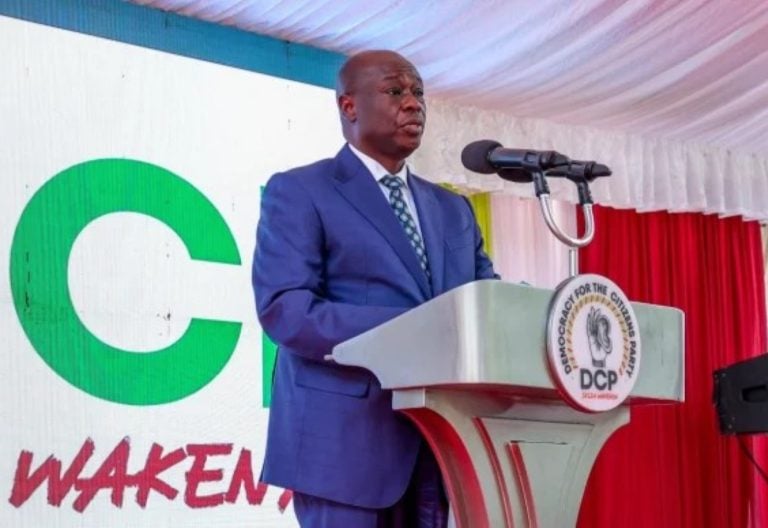
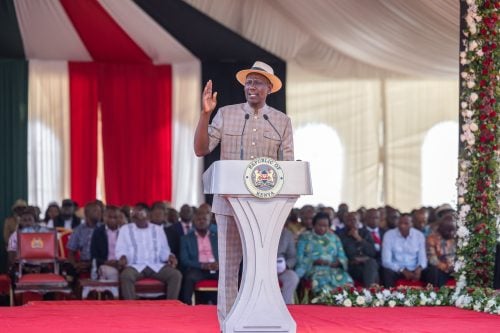
Speaking during the launch of Shirikiana Sacco in Kakamega on Saturday, June 13, 2026, the President said the enhanced deductions were part of a broader strategy to encourage a stronger savings culture among Kenyan workers and boost long-term financial security.
“I urged those who are employed and those in the formal sector that, as a country, we should have more savings,” Ruto said.
The Head of State explained that the arrangement requires both employees and employers to contribute equally toward retirement savings, insisting that the funds remain the property of individual workers.

You Might Also Like
“For that reason, we have agreed that every employee will pay 6 per cent of their salary and the employer will match it with another 6 per cent. All that money is for that employee,” he added.
Ruto pointed to the growth of NSSF assets as evidence that the reforms are yielding positive results. According to him, the fund’s asset base has more than doubled in the past two years, increasing from Ksh312 billion to Ksh670 billion.
He maintained that stronger national savings are essential for financing development and reducing dependence on external borrowing. The President expressed confidence that the current trajectory would significantly expand the country’s savings pool over the next year.
“By 2027, we will have hit Ksh1 trillion in NSSF savings, and that is how to build the foundation of a country’s economy,” he stated.,
The pushback
The President’s remarks come at a time when the legality of the enhanced NSSF deductions remains the subject of intense debate following recent court proceedings.
The controversy stems from a Court of Appeal ruling delivered on May 29, 2026, which dismissed an application seeking to suspend a judgment that had declared the NSSF Act, 2013 unconstitutional. Despite that decision, NSSF has maintained that employers should continue remitting contributions under the current enhanced rates.
In a statement issued on June 5, the Fund said the ongoing legal proceedings do not alter the contribution framework currently in force and directed employers to continue making deductions as prescribed under the Act.
The Federation of Kenya Employers (FKE) has also supported that position. In guidance issued on June 12, the employers’ body advised organisations to continue deducting and remitting NSSF contributions at the prevailing rates while keeping proper records as the matter proceeds through the courts.
However, the Law Society of Kenya (LSK) has strongly challenged that interpretation and warned employers against implementing the contested rates without a clear legal basis.
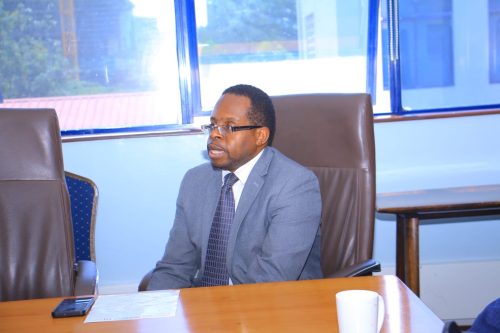
LSK President Charles Kanjama said employers risk legal consequences if they continue making deductions that are not supported by law or authorised by employees.
In a statement published through his official X account on Saturday, June 13, 2026, Kanjama stressed that court decisions remain binding unless they are overturned through established legal processes. He argued that employers should revert to the previous statutory contribution of Ksh200 per month unless employees voluntarily agree to higher deductions or a court issues a different directive.
According to Kanjama, employers cannot independently choose which legal framework to follow where a court has already questioned the validity of the law governing the deductions.
He further noted that payroll deductions are only lawful when they fall within specific legal categories, namely statutory deductions, court-ordered deductions, or voluntary deductions authorised by employees through written consent or collective bargaining agreements.
“It is absolutely NOT OPEN to FKE to advise employers to use NSSF rates prescribed under a law declared as UNCONSTITUTIONAL. It is not a matter of unilateral employer choice or discretion. Employers must revert to the old rates unless they secure their employees’ consent, or they set aside the prevailing court order,” Kanjama stated.
He warned that failure to respect court orders could create uncertainty in the administration of labour laws and weaken public confidence in the justice system.
“It bears repeating: unless & until set aside, court orders must be obeyed, else we end up in a situation of anarchy & legal confusion,” he added.
The opposing positions taken by NSSF, FKE and LSK have left employers caught between competing legal interpretations as they await a final determination from the courts on the future of the enhanced NSSF contribution regime.
Author
Latest News






Advertisement
More on Inside Politics