Advertisement
Ruto addresses fears of crisis in education sector amid mounting criticisms
Saturday 09th May, 2026 09:23 PM|

President William Ruto has defended his administration’s education reforms amid growing criticism over funding shortfalls and operational challenges facing schools and universities across the country.
Speaking during the 120th anniversary celebrations of Maseno School on Saturday, May 9, 2026, Ruto dismissed claims that Kenya’s education sector is in crisis, instead pointing to what he described as significant progress made under his government.
“Don’t worry about the pessimists and the people who see nothing good,” the president said, urging Kenyans not to focus solely on negative narratives surrounding the sector.
Ruto defended the government’s record on teacher recruitment and infrastructure development, questioning why criticism has intensified despite recent investments.
You Might Also Like
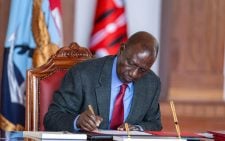


“There was no crisis when we had a shortage of 100,000 teachers. Now that we have hired 100,000 teachers, there is a crisis,” he said.
At the same time, the president also cited the construction of classrooms across the country as part of the reforms aimed at improving learning conditions.
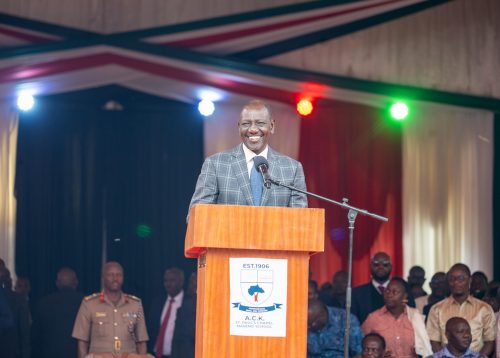
“There was no crisis when there was a shortage of classrooms. Now that we have built 23,000 in three years, all of a sudden, there is a crisis. Really?” he posed.
Ruto further called for unity and responsible leadership, saying the country needs leaders guided by integrity and honesty.
“We need godly leaders across the board, so that we can speak to what it is and be helpful to ourselves,” he said.
His remarks come at a time when the education sector is facing mounting pressure over widening funding gaps in both basic and higher education institutions.
Funding gaps
Despite reforms introduced by the government, concerns continue to grow over the sustainability of the sector as enrolment rises while funding remains constrained.
In secondary schools, enrolment has remained high during the transition from the 8:4:4 system, with about 3.34 million learners currently in Forms 2, 3, and 4 in 2025.
However, education stakeholders have raised concerns that resources have not kept pace with the increasing student population.
Universities are also facing severe financial strain, with institutions projected to face a Ksh260 billion funding shortfall in the 2026/2027 financial year.
At least 23 public universities are reportedly at risk of insolvency due to pending bills amounting to Ksh85.28 billion as of January 2026, affecting their ability to meet operational costs, staff salaries, and statutory obligations.
The introduction of the student-centred Variable Scholarship and Loan Funding (VSLF) model in 2023 was meant to improve equity and efficiency in university financing. However, the shift from block grants to individualised funding has sparked criticism.
Stakeholders argue that the Means Testing Instrument (MTI) used to assess students’ financial need is flawed, potentially locking out deserving but vulnerable learners.
Even for those who qualify, the support is often insufficient. Households continue to shoulder high costs, including accommodation, food, and transport, at a time when the cost of living remains high.
Delays in government disbursements further compound the problem, disrupting university operations and deepening institutional debt.
Author
Latest News







Advertisement
More on Inside Politics