Advertisement
Robert Alai: On-camera confessions warrant reopening of 2007 election case
Tuesday 17th March, 2026 07:58 AM|

Kileleshwa MCA Robert Alai raised concerns over the 2007 General Election, saying new evidence has emerged that could change how the events surrounding the disputed poll are understood. His remarks come after an expose by a local television station on how the presidential election results were manipulated.
In a statement shared on X on Tuesday, March 17, 2026, Alai addressed growing public questions on why the 2007 election is being revisited nearly two decades later, pointing to new developments that he says cannot be ignored.
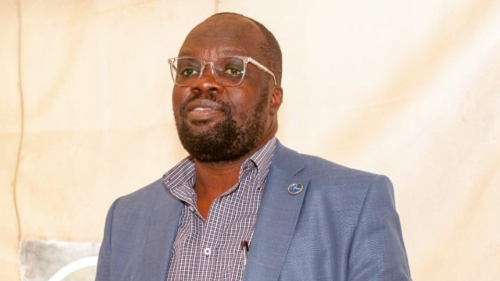
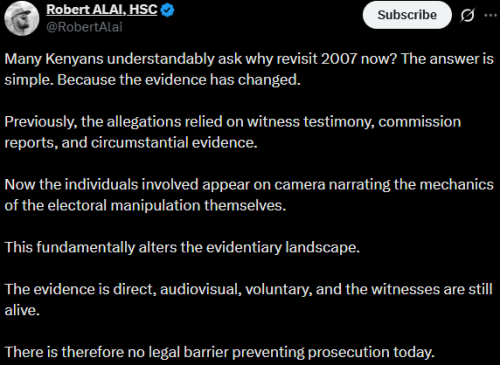
“Many Kenyans understandably ask why revisit 2007 now? The answer is simple. Because the evidence has changed,” his statement on X reads.
He explained that earlier claims about the election were largely built on testimonies and reports, which some people questioned due to a lack of direct proof at the time.
You Might Also Like
“Previously, the allegations relied on witness testimony, commission reports, and circumstantial evidence,” the statement reads.
The MCA then pointed to what he described as a major shift, saying individuals linked to the events have now come forward publicly and spoken on record.
“Now the individuals involved appear on camera narrating the mechanics of the electoral manipulation themselves,” he wrote.
According to him, this new development changes how the matter should be viewed, especially in terms of evidence and the possibility of legal action. He further stressed that the nature of the evidence now available makes it stronger and more direct compared to what existed before, raising fresh questions about accountability.
“This fundamentally alters the evidentiary landscape. The evidence is direct, audiovisual, voluntary, and the witnesses are still alive,” he wrote.
Alai concluded by arguing that the current situation removes previous limitations that may have prevented legal processes from moving forward at the time.
“There is therefore no legal barrier preventing prosecution today,” the statement reads.
Author
Latest News

Advertisement
More on Inside Politics