Advertisement
Orengo rejects Ksh2 billion protest victims’ compensation plan
Tuesday 16th June, 2026 05:55 PM|

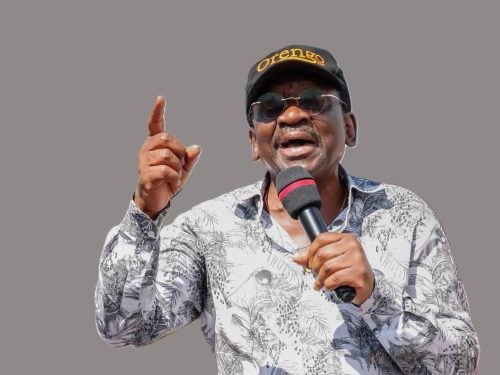
Siaya Governor James Orengo has rejected the government’s Ksh2 billion compensation and reparations programme for victims of recent protests, saying it reduces the sanctity of human life to a predetermined monetary figure while normalising state violence instead of preventing it.
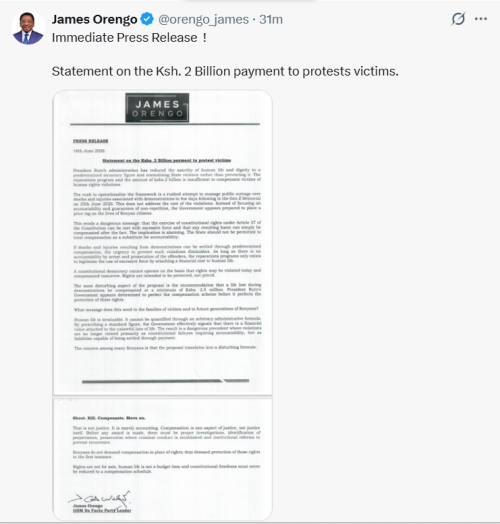
In a press release issued on Tuesday, June 16, 2026, Orengo said the framework was rushed and linked it to efforts to manage public outrage following deaths and injuries during demonstrations connected to the June 25, 2024 memorial events.
“President Ruto’s administration has reduced the sanctity of human life and dignity to a predetermined monetary figure and normalising State violence rather than preventing it,” Orengo stated.
“The reparations programme and the amount of Ksh 2 billion is insufficient to compensate victims of State violence.”
Compensation does not address violations
You Might Also Like
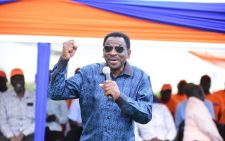
He said the proposal does not address underlying violations and stressed the need for accountability mechanisms. “This does not address the root of the violations. Instead of focusing on accountability and guarantees of non-repetition, the government appears prepared to place a price tag on the lives of Kenyan citizens,” the statement reads.
Orengo added that the proposal risks undermining constitutional protections under Article 37 and warned against reliance on compensation without accountability.
“Human life is invaluable. It cannot be quantified through an arbitrary administrative formula,” he said, adding that the approach risks a sequence where “Shoot. Kill. Compensate. Move on.” He said investigations, identification of perpetrators, prosecution, and institutional reforms should be prioritised.
Government defence and clarification
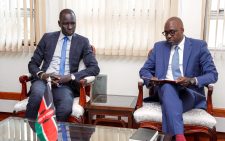
President William Ruto, speaking on Monday, June 15, 2026, during the presentation of the Report on the Framework for Reparations for Victims of Human Rights Violations at State House, defended the programme and announced the Ksh2 billion allocation for affected families, injured persons, businesses, and law enforcement officers. He said the initiative was aimed at national healing and reconciliation.
He stated that the payments were not intended as a valuation of life or loss. “not the price of life, pain or loss and neither are they a reward for violence, looting or unlawful conduct.” He added, “Neither should it be understood as a licence for disorder. Let no one confuse compensation and impunity,” while emphasising that accountability processes remain in place.
Kenya National Commission on Human Rights chairperson Claris Ogangah said the framework applies to victims of gross human rights violations, including extrajudicial killings, torture, and excessive use of force, while ordinary criminal cases would proceed through the justice system.
Context on protest-related violations
The Kenya National Commission on Human Rights has documented more than 1,200 cases of alleged human rights violations linked to protests between 2017 and 2025, forming part of the basis for the reparations framework.
Orengo has previously raised similar concerns following visits to families affected by protest-related deaths, calling for justice processes alongside any compensation considerations. The ongoing discussions on the programme continue to involve government agencies, rights bodies, and affected communities as implementation guidelines are developed.
Author
Latest News

Advertisement
More on Inside Politics