Advertisement
Opposition in Western: How Gachagua is cementing 2027 strategy after impeachment blow
Saturday 13th June, 2026 09:45 PM|
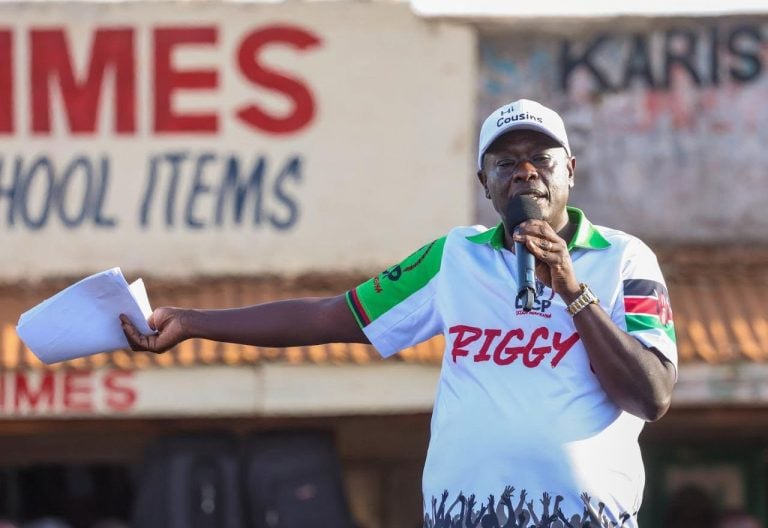
Former Deputy President Rigathi Gachagua has intensified efforts to strengthen the opposition’s 2027 campaign in Western Kenya after suffering a major legal setback that threatens his political future.
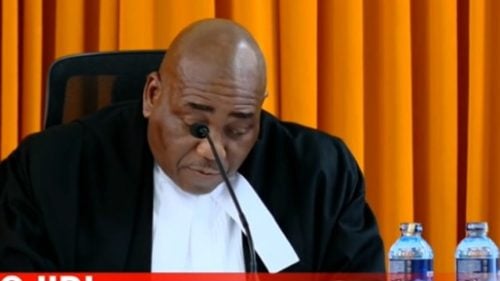
The High Court on Monday, June 8, 2026, upheld Gachagua’s impeachment by the Senate, a decision that bars him from holding public office unless overturned by the Court of Appeal or the Supreme Court.
The ruling has cast uncertainty over his eligibility to contest future elections, with Kenya’s next General Election scheduled for August 2027.
Gachagua has already signalled that he will appeal the decision, arguing that although the court acknowledged violations of his right to a fair hearing during the Senate proceedings, it nevertheless upheld his impeachment.
You Might Also Like



While the ruling represents a significant setback, it may also strengthen his standing among supporters who view him as a victim of political persecution by President William Ruto’s administration.
A day after the judgment, Gachagua announced that he would retreat for 45 days to his Wamunyoro residence to consult opposition leaders and develop a strategy aimed at defeating Ruto in the next election.
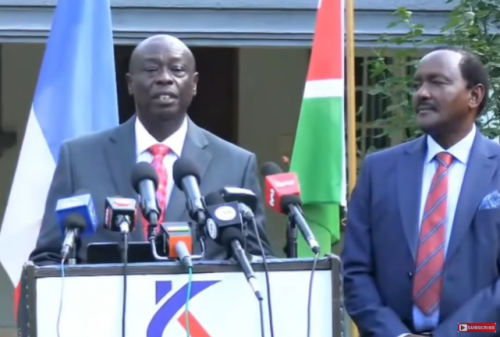
His appearance in Western Kenya alongside his United Alternative Government co-principals has fuelled speculation that the opposition is increasingly coalescing around a single presidential candidate whom they have yet to front amid deliberations.
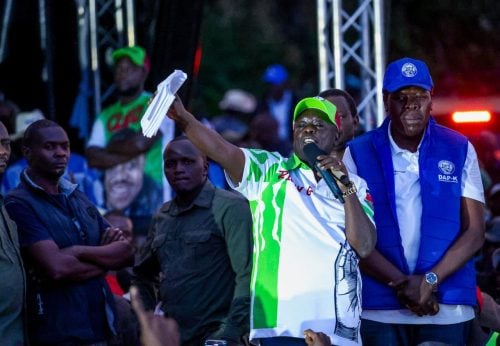
Speaking in Kisa East, Kakamega County, on Saturday, June 12, 2026, at the start of his three-day Western Kenya tour, Gachagua projected confidence that the opposition has the numbers required to unseat Ruto.
“Back home, I have consolidated seven million votes. In Nairobi, we have consolidated three million votes. We want the Mulembe nation to consolidate five million votes, and then join them with Kalonzo’s three and a half million votes,” Gachagua said.
The Democracy for the Citizens (DCP) party boss argued that if opposition strongholds unite behind one candidate, President Ruto’s re-election bid would face a formidable challenge.
The choice of Western Kenya as the latest stop on his mobilisation campaign is politically significant. The region remains a key battleground in opposition calculations and is increasingly viewed as critical to building a national coalition capable of challenging the Kenya Kwanza administration.
Legal battle and Mt Kenya factor
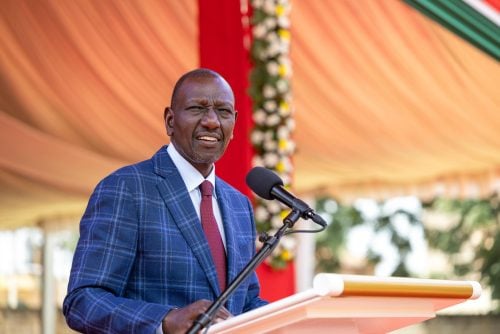
Despite his impeachment, Gachagua continues to portray himself as the dominant political figure in the Mount Kenya region, the country’s largest voting bloc.
The region contributed a substantial share of the votes that propelled Ruto to victory in the 2022 presidential election, making it a crucial battleground ahead of 2027.
Since his fallout with the President, Gachagua has repeatedly claimed that Ruto’s influence in the region has diminished sharply.
During a rally in Kirinyaga County on March 28, 2026, he challenged the President to test his popularity in the region.
“Nataka nikwaambie William Ruto, mimi Riggy G nikiwa nyumbani hapa Kirinyaga, nikiwa mtoto ya Mau Mau, nakwambia leo mchana, ukipata five per cent ya kura hapa mlimani, Riggy G hapana mwanaume,” he declared.
The remarks reflected the increasingly bitter rivalry between the two former allies following Gachagua’s removal from government.
Even as he shifts attention to opposition politics, Gachagua remains embroiled in a legal battle that could ultimately determine his political future.
Petitions challenging his impeachment were filed in October 2024, and the High Court took more than one and a half years to determine the matter. With appeals expected at higher courts, there is no certainty that the dispute will be resolved before the 2027 election.
A fresh controversy has also emerged over the court judgment itself.
Gachagua’s lawyers have questioned what they describe as a discrepancy between the ruling delivered in open court and the version later supplied to parties in the case.
According to the legal team, Justice Eric Ogola indicated during the delivery of the judgment that the ruling consisted of 350 pages. However, the copy subsequently issued contained only 286 pages.
In correspondence to court officials, the lawyers argued that the unexplained difference raises concerns about the integrity of the official court record.
“The discrepancy raises serious questions regarding the completeness and authenticity of the official judgment record,” the lawyers stated.
They further warned that any inconsistency in such a politically significant case risks undermining public confidence in the administration of justice.
The opposition faces crucial decision
The latest developments have shifted attention from Gachagua’s personal political future to the broader challenge facing opposition leaders.
While several opposition figures have declared their intention to challenge President Ruto, pressure is mounting for the coalition to settle on a single candidate.
Gachagua’s decision to retreat for consultations and his public appearances alongside Kalonzo Musyoka have reinforced speculation that negotiations are underway to identify a consensus flag bearer.
For now, the former deputy president appears focused on one objective: uniting opposition strongholds behind a common cause.
Whether that effort translates into a formidable electoral challenge against Ruto in 2027 may depend less on the courts and more on the opposition’s ability to turn political arithmetic into a cohesive national movement.
Author
Latest News







Advertisement
More on Inside Politics