Advertisement
Muturi says Ruto tricked him into signing 4 SHA Bills
Tuesday 10th March, 2026 11:04 AM|

Former Attorney General (AG)and current Democratic Party leader Justin Muturi has accused President William Ruto of misrepresentation in the lead-up to the enactment of four controversial Social Health Authority (SHA) bills, claiming he was tricked into signing the cabinet memorandum without full appreciation of the legal process required.
In an interview on a local Radio station on Tuesday, March 10, 2026, Muturi revealed he initially resisted approval of the cabinet memo containing the Primary Healthcare Act, Digital Health Act, Facility Improvement Financing Act and Social Health Insurance Act, legislation that forms the backbone of the Government’s Universal Health Coverage (UHC) agenda, but eventually yielded amid pressure and what he described as an attempt to secure a campaign message for the President’s Kakamega rally.
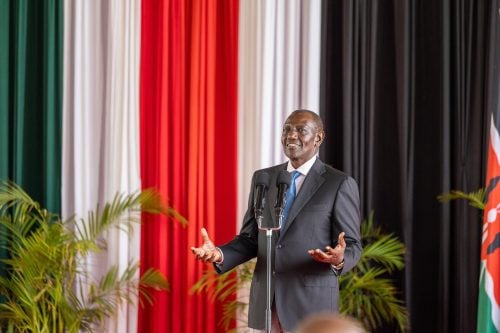
“It has to be these things,” Muturi quoted the President telling him, in reference to the cabinet memo. “Maybe what I can suggest, yes, you approve the cabinet memo, then we will do amendments. We will bring these things to you, so that then you can correct them, as the law requires, for purposes of our discussion at cabinet. Then I would agree just to help you have some message for the people,” he revealed.
Muturi said he had serious reservations because, as the AG, he was meant to be the last reviewer before bills went to Parliament, a safeguard to ensure legal sufficiency.
You Might Also Like



“I said, look, this does notmake sense. Even the National Treasury can make mistakes. If it is a matter of law, they cannot. We cannot allow that to happen,” he stated.
But, Muturi has said he eventually agreed to sign that memo in the interest of harmony and so that President Ruto would not be embarrassed when speaking to the people.
“For purposes of harmony and to allow the President not to be embarrassed when, if he does not have anything to go and talk to people. I said, okay, fine, let us go and do it. I will do it this way,” he said.
The summon
His revelation lays bare intragovernmental friction over how the bills were advanced, and raises broader questions about oversight and compliance with constitutional procedures for bill sponsorship and processing.
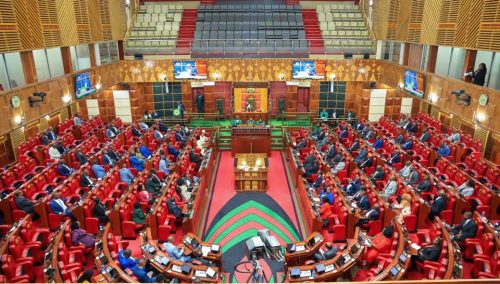
Soon after signing the cabinet memo, Muturi said he was summoned by the National Assembly to explain his involvement in the bills’ progress, an explanation he said he could not provide because, in his view, the bills were never properly routed through his office.
“Do you know, after I agreed to sign that cabinet memo, that was the end on that agreement. The next thing I had was Parliament, the National Assembly, calling me to go and explain about the four bills. So I told them, I have no bills. They are not being processed through me,” Muturi said.
The bills, enacted in November 2023, were presented as transformative pieces of legislation aimed at restructuring Kenya’s healthcare financing and delivery.
Replacing the decades-old National Hospital Insurance Fund (NHIF) Act, the Social Health Insurance Act established the Social Health Authority and three funds: the Primary Healthcare Fund, the Social Health Insurance Fund (SHIF), and the Emergency, Chronic and Critical Illness Fund.
Collectively, the SHA laws were designed to overhaul health financing mechanisms, encourage broader risk pooling, and accelerate Kenya’s march towards UHC. Contributions under the new regime require all adults resident in Kenya to make regular payments: monthly for salaried workers and annually for others.
Before these laws, health financing was largely through NHIF contributions, mandatory for formal employees and voluntary for others, leaving insurance penetration low and most Kenyans paying out of pocket for healthcare.
Among the four, the Facility Improvement Financing Act was intended to allow public health facilities to retain and reinvest revenue from services, strengthening operational independence and responsiveness.
However, the implementation of the SHA laws was challenged in court, and a High Court issued a conservatory order restraining enforcement.
That order was overturned on appeal in January 2024, clearing the way for the Social Health Insurance Act to take effect and triggering the vesting of all NHIF assets and functions into the newly created SHA.
Author
Latest News







Advertisement
More on Inside Politics