Advertisement
Ledama questions presidential aspirants with empty slogans
Saturday 31st January, 2026 07:09 PM|

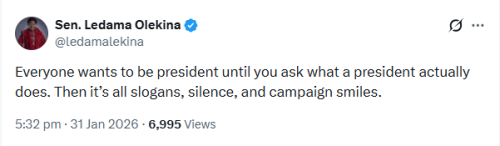
Narok Senator Ledama Olekina sparked discussion with a blunt post about presidential responsibilities.
Taking to X on Saturday, January 31, 2026, he highlighted a common problem in Kenyan politics: many chase the top job without understanding what it truly demands.
“Everyone wants to be president until you ask what a president actually does. Then it’s all slogans, silence, and campaign smiles,” he wrote.
His words highlighted a common concern in Kenyan politics: many people seek the top office, but few explain what they will do once elected.
You Might Also Like
In Kenya, the president holds one of the most powerful positions in the country. The Constitution gives the officeholder several key duties.
The president serves as head of state and head of government, directs national government functions, and appoints cabinet secretaries, principal secretaries, and other senior officials. The president commands the armed forces, signs bills into law or returns them to Parliament for review, directs foreign policy, signs treaties, and can declare war with parliamentary approval.
Beyond these formal powers, the president shapes the nation’s direction. The role requires setting priorities for the budget, pushing economic plans, and managing crises such as security threats or natural disasters.
The president must make tough decisions on debt, taxes, infrastructure, health, and education. He or she works with a divided Parliament, coordinates county governments under devolution, and keeps ethnic and regional tensions in check.
Empty promises
Olekina’s post pointed out a gap many see during election seasons. Politicians fill rallies with catchy phrases and promises. They smile for cameras and repeat simple messages.
Kenya is heading towards the 2027 general election, with several potential candidates emerging from both the ruling coalition and opposition parties.
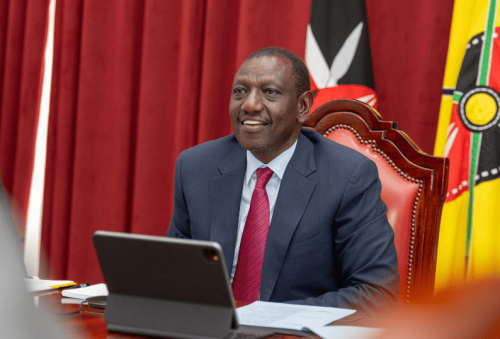
In recent months, President William Ruto has repeatedly criticised opposition politicians for lacking a clear agenda. During his four-day tour of the Ukambani region in November 2025, he warned residents not to elect leaders who only rely on slogans or personal attacks.
“Those people who have no agenda or plans are not people we can entrust with leadership by electing them to office. We have to ensure we continue the projects and the work we have started,” Ruto said in Kilome Constituency, Makueni County.
His deputy, Kithure Kindiki, echoed the call, urging opposition politicians to stop name-calling and present concrete policies and developmental plans to Kenyans.
Ruto returned to the same point during a public gathering in Kisumu on January 30, 2026, taking aim at what he called endless rhetoric from the opposition.
“Ati naona wale majamaa sijui wanapanga seminar, sijui wamepanga retreat, ati waende waongee kutafuta candidate ama sijui nini,” he said.
He added:
“Nawaambia hawa majamaa watafute sera, maono na agenda. Hawa wananchi wanataka kujua agenda yao ni gani. Wasitubebe ufala. Watakuja hapa Kisumu na maneno yao ni one-term, Kasongo must go. Hiyo ndio sera?”
Hiyo ni mpango? Hiyo ni maono?” The remarks drew cheers from the crowd, with Ruto praising Kisumu residents for being discerning voters. “Nyinyi watu wa Kisumu mko na akili. Hawa majamaa hawana agenda, hata akili hawana.”
Author
Kenneth Mwenda
Kenneth Mwenda is a business, sports, and politics digital writer with over seven years of experience in journalism, covering breaking news, feature stories, and in-depth analysis across a range of beats.
For inquiries, he can be reached at [email protected]
View all posts by Kenneth MwendaLatest News
Advertisement
More on Inside Politics