Advertisement
Lawyer Willis Otieno raises alarm over LSK leadership ahead of elections
Tuesday 10th February, 2026 07:17 AM|

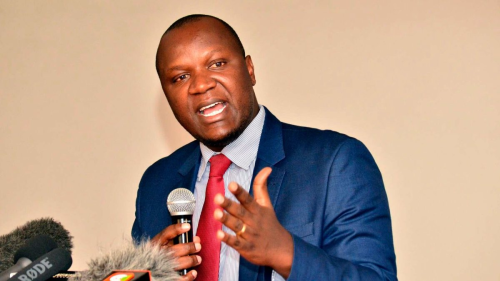
Lawyer Willis Otieno has raised concerns over the future leadership of the Law Society of Kenya, warning that the integrity of the legal profession is at stake as the country moves closer to another leadership contest.
In his statement shared on X on Monday, February 10, 2026, Otieno framed the debate as one that goes beyond elections, saying it touches on the rule of law, independence of institutions, and protection of citizens. His remarks come at a time when lawyers are preparing to choose leaders who will speak for the profession and defend justice across the country.
Otieno poses a direct and defining question on whether the legal body should remain independent or become controlled by powerful political interests.
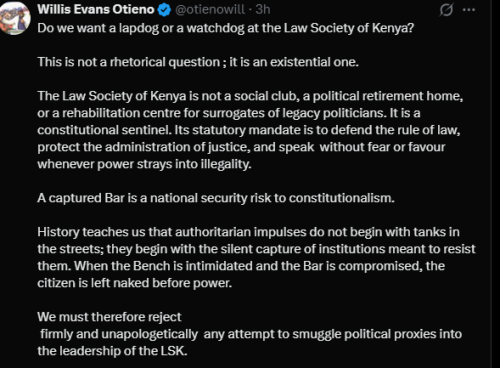
“Do we want a lapdog or a watchdog at the Law Society of Kenya?” he asked.
You Might Also Like
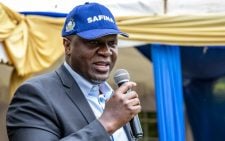


He emphasised that the issue at hand is serious and fundamental, stressing that the debate is not casual but one that speaks to the survival of institutional independence.
“This is not a rhetorical question; it is an existential one,” he wrote.
He described the Law Society of Kenya as a constitutional defender that must protect justice and speak without fear whenever power oversteps legal boundaries.
“The Law Society of Kenya is not a social club, a political retirement home, or a rehabilitation centre for surrogates of legacy politicians. It is a constitutional sentinel. Its statutory mandate is to defend the rule of law, protect the administration of justice, and speak without fear or favour whenever power strays into illegality,” he wrote.
He warned that once political influence captures the legal profession, the consequences extend beyond lawyers and affect the stability of constitutional governance. He reflected on past global experiences, noting that erosion of institutions often begins quietly before citizens feel the full impact of weakened systems
“A captured Bar is a national security risk to constitutionalism. History teaches us that authoritarian impulses do not begin with tanks in the streets; they begin with the silent capture of institutions meant to resist them. When the Bench is intimidated, and the Bar is compromised, the citizen is left naked before power,” Willis Otieno wrote.
Otieno urged lawyers to firmly resist attempts by political players to influence or control leadership within the Law Society of Kenya.
“We must therefore reject firmly and unapologetically any attempt to smuggle political proxies into the leadership of the LSK,” he urged.
He insisted that lawyers must remain independent professionals who do not serve political dynasties or operate under instructions from party leadership.
“Advocates do not swear allegiance to political dynasties. We do not litigate on instructions of party headquarters. We are not errand runners for political godfathers seeking insulation from scrutiny through institutional capture. An LSK led by surrogates becomes predictable, timid, and negotiable,” the statement reads.
Protecting those in power
He explained how such leadership would avoid confronting wrongdoing and instead protect those in power when violations occur.
“It will issue statements calibrated to please sponsors. It will look away when constitutional violations are committed by “friendly” regimes. It will weaponise silence where outrage is required. It will trade institutional courage for political proximity,” he wrote.
He used a vivid comparison to illustrate how institutions lose their purpose when independence is surrendered for comfort and influence.
“That is how watchdogs mutate into lapdogs; well-fed, well-housed, but constitutionally useless. The independence of the Bar is not ceremonial; it is functional. It is the last civic firewall between citizens and executive excess. When lawyers surrender that independence, they do not merely disgrace their profession; they endanger the Republic,” the statement reads.
He called on advocates to closely scrutinise those seeking leadership positions and examine their political ties and support networks.
“We must interrogate candidates beyond talks and manifestos: Who is financing them? Who is mobilising for them? Whose political interests do they serve? Whose phone calls will they be unable to ignore once in office?” he asked.
He added that any sign of political sponsorship should lead to immediate rejection by members of the profession. He reminded lawyers that the coming decision is about safeguarding the profession’s values and protecting the country’s legal foundation.
“If the answers point to political patronage, then the verdict must be swift: Disqualify them in the court of professional conscience. We are choosing not just leaders, but the moral spine of the legal profession,” the statement reads.
He returned to his opening question, urging lawyers to decide whether they want leaders who serve power or those who defend justice.
A lapdog or a watchdog?
“So again, the question stands, sharper than ever: Do we want a lapdog that wags for the powerful, sanitises impunity, and negotiates away professional integrity. Or a watchdog that growls at tyranny, barks at illegality, and bites when the Constitution is threatened?” he asked.
He concluded by warning that the outcome of the leadership choice will shape both the future of the Law Society and the strength of constitutional democracy.
“The choice will define not just the Society but the future of constitutional democracy itself,” he concluded.
Author
Latest News






Advertisement
More on Inside Politics