Advertisement
Kirinyaga Woman Rep Njeri Maina questions accountability of firms in G2G fuel import chain
Monday 18th May, 2026 10:14 AM|

Kirinyaga Woman Representative Njeri Maina has raised concern over the handling of investigations into Kenya’s fuel import system, questioning whether companies involved in shipping and procurement are inflating costs that push up pump prices.
Speaking during a morning interview on Monday, May 18, 2026, Maina said leaders must take responsibility for the fuel crisis and stop what she described as delays in prosecuting cases linked to procurement outside the government-to-government (G2G) fuel deal.
She said the government had previously discussed irregular procurement in the petroleum sector, but little progress had been made. Senior officials in the energy sector, including the Petroleum Principal Secretary, the Kenya Pipeline Company managing director, and the Energy and Petroleum Regulatory Authority director general, earlier resigned following investigations into claimed manipulation of fuel data and procurement breaches.
“And I think this is an issue that we must take responsibility for as leaders,” she said. “We were here some, I think, some three weeks ago when we were talking about procurement outside G2G, and I told you that, and now I am vindicated, that it was just being taken around in circles, that we were not going to see any prosecution happening, and we haven’t seen it to date.”
You Might Also Like
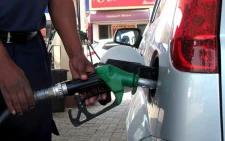


Maina questioned why investigations appeared to be taking a long time without clear outcomes.
“So I do wonder how much longer they need to, quote-unquote, investigate that,” she said.
Her remarks come at a time when the government is under pressure over rising fuel prices, disruptions in transport, and ongoing investigations into alleged manipulation of fuel stock data and irregular procurement within the energy sector. Senior officials, including those in key petroleum agencies, have recently resigned following inquiries into the scandal.
Maina linked the crisis to both global tensions and domestic weaknesses in fuel handling and pricing systems.
“And we can, of course, we all know that we have an issue with the US, Iran, Israel. The war,” she said. “But then at the end of the day, we must also look at the landing cost per barrel.”
She said Kenya must separate global market pressure from possible local distortions in the supply chain.
“There has been issues of procurement outside G2G,” she said. “We have heard that there are entities and companies, you know, persons who are in government involved in the shipping of oil. So is it that people are actually making an inflated landing cost out of it? Is it the reason we are seeing the high cost of fuel? Or is it the actual war?”

Fuel supply chain scrutiny
The G2G arrangement was introduced to stabilise fuel supply, reduce exposure to global price shocks, and streamline procurement. Government officials have previously defended it, saying it has helped keep supply steady even during periods of geopolitical tension.
Despite this, recent developments have raised questions about whether parts of the supply chain were exploited. Investigators are also examining claims of manipulated fuel stock data that may have triggered emergency procurement outside the G2G system.
Maina said the complexity of the crisis should not delay action or accountability.
“All these issues make it very intricate,” she said. “But at the end of the day, the Kenyan people just want a solution from the leaders.”
She added that Parliament must return from recess and take up the matter urgently, arguing that lawmakers share responsibility for resolving the crisis.
“We are the leaders that the Kenyan people are waiting for,” she said. “And Parliament is on recess. We should be getting back to ensure that we address this concern so that regular Kenyans can go on with their day-to-day activities.”
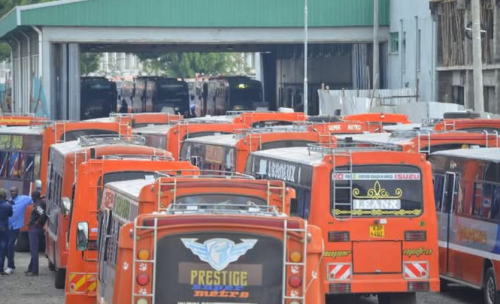
Her remarks add to growing political pressure over fuel prices, which have triggered a nationwide transport strike involving matatu operators, boda boda riders, truck drivers, and ride-hailing services. The strike has disrupted movement in Nairobi and other parts of the country, with transporters citing unsustainable operating costs.
The Transport Sector Alliance, which called for the strike, has blamed rising fuel prices for squeezing operators and increasing the cost of living. Some operators have warned that they may suspend services further if conditions do not improve.
Treasury Cabinet Secretary John Mbadi has defended government interventions, saying global oil price shocks are beyond Kenya’s control and that measures such as subsidies and tax adjustments have helped cushion consumers.
Even so, Maina maintained that attention must also focus on local systems, especially procurement and shipping arrangements within the fuel supply chain.
Author
Kenneth Mwenda
Kenneth Mwenda is a business, sports, and politics digital writer with over seven years of experience in journalism, covering breaking news, feature stories, and in-depth analysis across a range of beats.
For inquiries, he can be reached at [email protected]
View all posts by Kenneth MwendaLatest News






Advertisement
More on Inside Politics