Advertisement
Kindiki defends Kenya’s first world ambition amid criticism
Friday 19th December, 2025 09:21 AM|

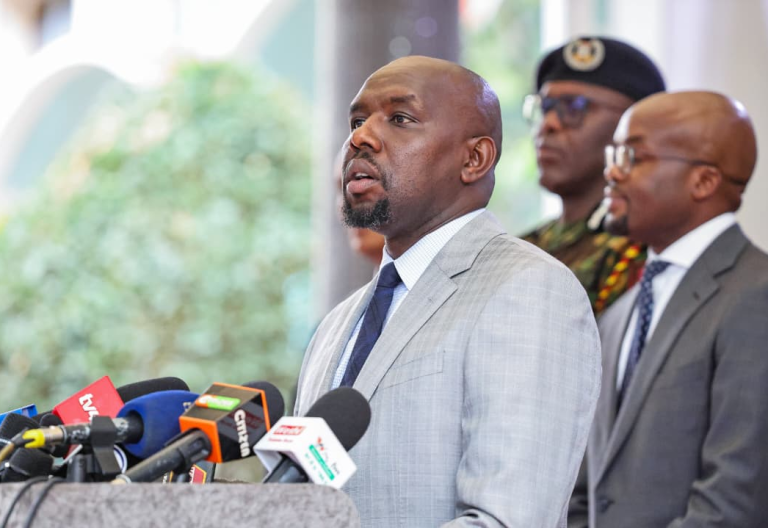
Deputy President Kithure Kindiki has defended Kenya’s aspiration to achieve first-world status, countering critics who argue comparisons to Singapore are unrealistic due to its small size.
In an X post dated December 19, 2025, Kindiki emphasised that Kenya’s development model draws inspiration from multiple Asian countries, not just Singapore.
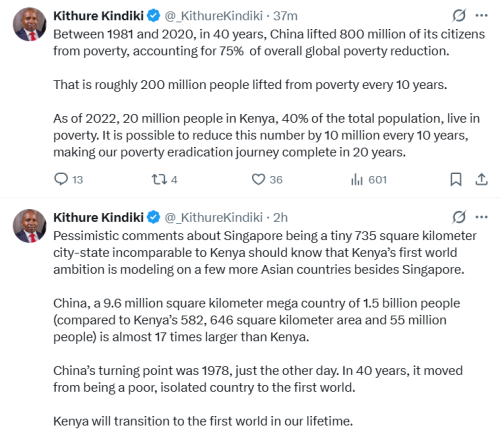
“Pessimistic comments about Singapore being a tiny 735 square kilometer city-state incomparable to Kenya should know that Kenya’s first world ambition is modeling on a few more Asian countries besides Singapore,” he wrote.
Kindiki highlighted China’s scale and rapid development: “China, a 9.6 million square kilometre mega country of 1.5 billion people (compared to Kenya’s 582,646 square kilometre area and 55 million people), is almost 17 times larger than Kenya. China’s turning point was 1978, not so long ago. In 40 years, it has moved from being a poor, isolated country to a first-world nation. Kenya will transition to the first world in our lifetime.”
Poverty eradication as a benchmark
You Might Also Like

Kindiki underscored China’s success in reducing poverty to demonstrate the feasibility for Kenya.
“Between 1981 and 2020, in 40 years, China lifted 800 million of its citizens from poverty, accounting for 75% of overall global poverty reduction. That is roughly 200 million people lifted from poverty every 10 years,” he stated.
Applying the lesson to Kenya, he noted that it is possible to reduce this number by 10 million every 10 years, making our poverty eradication journey complete in 20 years.
“As of 2022, 20 million people in Kenya, 40% of the total population, live in poverty. It is possible to reduce this number by 10 million every 10 years, making our poverty eradication journey complete in 20 years.”
Critics highlight governance and structural gaps
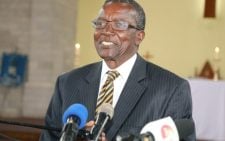
Kindiki’s remarks come amid growing criticism of President William Ruto’s “Singapore of Africa” vision. Former Chief Justice David Maraga, in a statement on December 18, 2025, called the comparison “misleading and dangerous,” noting Kenya lacks the discipline and anti-corruption measures that propelled Singapore.
Maraga highlighted the 1986 investigation of Singapore’s Minister Teh Cheang Wan as an example of accountability, contrasting it with unresolved corruption allegations and weakened oversight institutions in Kenya.
Maraga also raised concerns over fiscal management, citing public debt rising from around Ksh8.6 trillion when Ruto assumed office to over Ksh11.5 trillion by mid-2025, with debt service crowding out funds for healthcare, education, and development.
Human rights lawyer Ndegwa Njiru echoed concerns, calling for urgent health interventions, including a national cancer fund and county-level screening centres.
Kindiki, however, framed Kenya’s ambition as achievable through scaled Asian models, emphasizing poverty reduction, industrial growth, and long-term transformation, arguing that these lessons can guide Kenya toward first-world status within a generation.
Author
Latest News




Advertisement
More on Inside Politics