Advertisement
Karua slams political parties for locking women out of power
Monday 09th March, 2026 07:58 AM|

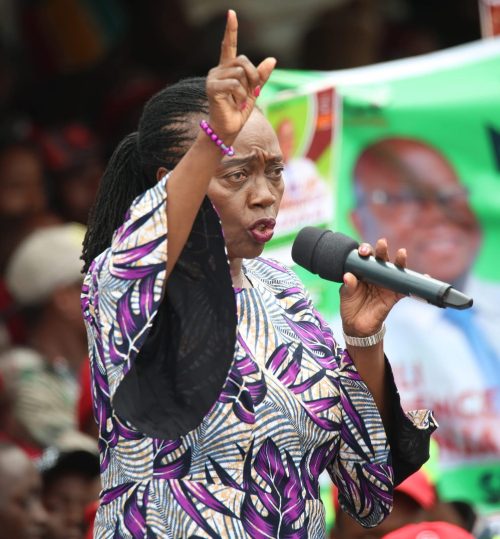
People’s Liberation Party (PLP) leader Martha Karua has criticised major political parties for sidelining women in leadership positions, accusing them of deliberately denying women opportunities to contest winnable seats.
Speaking on the night of Sunday, March 8, 2026, during an interview with a local TV station, Karua said many parties often pressure women to step aside in favour of male candidates during nominations.
“I have seen major parties telling women to step aside and let their brothers, the men, take positions,” Karua said.
According to her, even when women are nominated to run for office, they are often placed in constituencies or counties where their parties have little influence, significantly reducing their chances of winning.
Gender balance
You Might Also Like



Karua argued that political parties could easily help Kenya achieve the constitutional gender balance requirement if they deliberately supported women candidates in competitive races.
Kenya’s Constitution encourages the implementation of the two-thirds gender rule, which aims to ensure that no more than two-thirds of elective or appointive public bodies are dominated by one gender.
However, the country has struggled for years to fully implement the rule, particularly in elective positions.
2022 elections
Karua pointed to the results of the 2022 elections to illustrate how political parties could have improved women’s representation.
She noted that the Orange Democratic Movement and the United Democratic Alliance had significant political influence that could have been used to promote women candidates.
“Even the few nominations that happen for women are often just a matter of luck. If women were nominated in winnable seats, i.e., where the party has influence, for instance, if ODM could have given 50 per cent of its gubernatorial seats to women, since Azimio had 24 governors, we could have had 12 governors,” she said.
She added that if the ruling UDA party had taken a similar approach, the country would have made major progress toward gender equality in leadership.
“UDA had about 18 governors; if they could have given half to women, that would have been nine governors. We would be way past the one-third gender rule,” she said.
Karua said closing the gender gap in leadership requires deliberate political action rather than relying on chance nominations.
She suggested that Kenya should consider adopting a proportional representation electoral system similar to that used in South Africa.
Under proportional representation systems, political parties present lists of candidates, and seats are allocated based on the percentage of votes received, a structure that often allows parties to balance gender representation more effectively.
Karua argued that such a system could help ensure more women are elected to leadership positions in Kenya.
“Deliberate action by political parties can bridge the gender gap. I think it is possible for us as political parties, for us as a country, to adopt proportional representation, which is what happens in South Africa,” she said.
Long-standing gender debate
The issue of women’s representation has remained a major topic in Kenya’s political discourse since the adoption of the 2010 Constitution of Kenya, which introduced provisions aimed at promoting gender equality in governance.
Despite these reforms, women remain significantly under-represented in top elective positions, particularly in governorships and parliamentary seats.
Karua said meaningful progress will only occur when political parties take responsibility for ensuring women have fair access to leadership opportunities.
Author
Mustafa Juma
View all posts by Mustafa JumaLatest News







Advertisement
More on Inside Politics