Advertisement
Jimi Wanjigi: Mbadi is a spokesman of Treasury mafia
Sunday 21st June, 2026 07:41 PM|

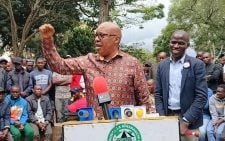
Safina Party leader Jimi Wanjigi has accused Treasury Cabinet Secretary John Mbadi of defending a corrupt system he called ‘mafia mandarins in the Treasury’ in a sharp escalation of the debate over Kenya’s public debt.
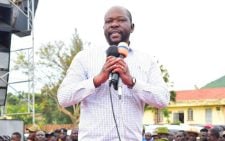
Wanjigi made the remarks during a televised interview on Saturday, June 20, 2026, where he responded to claims by Mbadi that he had suggested Kenya should default on its debt.
He rejected the accusation and said he only opposed payment of what he called ‘illegal debt’.
“I have never said we are going to default. I said we are not going to pay illegal debt. That is very different,” Wanjigi said.
You Might Also Like
Kenya’s public debt now stands at about Ksh13 trillion. Government projections show it could rise to Ksh 14 trillion in the next financial year, after plans to borrow an additional Ksh 1.1 trillion.
Wanjigi said the real issue is not the size of the debt alone, but its legitimacy. He claimed that most of it is illegal.
“I believe most of it is not legal. In other words, 90%,” he said.
He also argued that Kenya has already spent heavily on debt repayment over the past decade, yet the total debt continues to rise.
“If you look at our debt payments, we have almost reached 10 trillion over the last 13 to 14 years. How come the debt keeps climbing?” he asked.
Wanjigi said Kenya remains trapped in a debt cycle that will continue for decades if nothing changes. He warned that debt servicing will remain the biggest item in the national budget up to 2040.
“This year 2.4 trillion, next year 2.6 trillion, then 2.8 trillion. I can take you to 2040. It does not end,” he said.
He accused the Treasury of normalising borrowing to the point where it dominates national planning. He said debt servicing has become the largest single expenditure in the budget.
“It is the biggest expenditure. There is no other like it,” he said.
Wanjigi also directed strong criticism at Mbadi, saying he had failed to deliver on promises to audit Kenya’s public debt. He claimed the idea of an audit was part of earlier political agreements involving the Kenya Kwanza administration and opposition arrangements, but nothing had been implemented.
“He himself promised us an audit of this debt when he became minister. It is part of the MOU with the Kenya Kwanza government and ODM. It has never happened,” Wanjigi said.
“Why hasn’t it happened? William Ruto said it a long time ago. It has never happened. Why do people not want to audit this debt?”
He went further and accused Mbadi of defending entrenched interests within the Treasury.
“He should stop becoming a spokesman. He is just a spokesman of mafia mandarins in the Treasury,” he said.
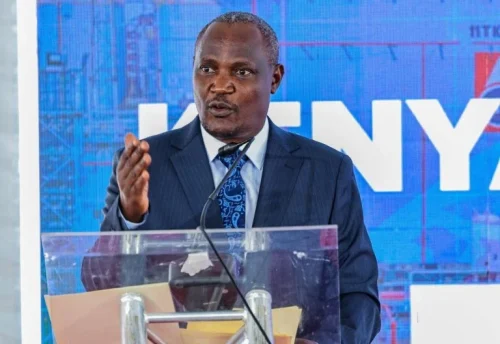
Kenya’s debt
Wanjigi also linked the current debt structure to past legal and constitutional changes. He referred to amendments made in 2014 under the Public Finance Management framework, which he said weakened oversight by allowing loan funds to be managed outside strict central controls.
He pointed to the role of past parliamentary leaders, including Aden Duale, in passing borrowing-related legislation, saying these decisions shaped today’s debt system.
He also questioned Mbadi’s consistency, saying the Treasury chief had previously supported calls for debt audit and lower taxes, but had not delivered on those positions.
Wanjigi rejected arguments that debt sustainability should be judged only through debt-to-GDP ratios. He said this hides the real pressure on taxpayers.
He pointed to countries such as Japan and the United States, saying they manage high debt differently because most of it is domestic and structured in a controlled system.
In Japan, he said, debt is largely held internally by institutions such as companies and the central bank, while tax revenue used for repayment remains manageable. He contrasted this with Kenya, where a large share of revenue goes directly to debt servicing.
In the United States, he added, debt servicing takes a smaller share of tax revenue, even though total debt is high.
Kenya, however, spends a much larger share of its budget on debt repayment, leaving less money for development, health, education, and infrastructure.
Wanjigi said this imbalance has worsened as Kenya prepares to finance a Ksh 4.8 trillion budget, backed by the recently passed Finance Bill 2026. He warned that rising taxes and borrowing will increase pressure on households already facing high living costs.
The Finance Bill passed Parliament with 122 votes against 40, despite opposition concerns over taxation and spending priorities.
The Treasury maintains that borrowing supports development and stabilises the economy, and says reforms and engagement with lenders will improve long-term sustainability.
But Wanjigi insisted that without a full and independent audit of public debt, Kenya will continue operating under what he called an opaque and unaccountable system.
He said the country must first establish what debt is legitimate before taking on more obligations.
Until then, he warned, Kenya will remain locked in a cycle of borrowing, repayment, and rising public pressure that will last well into the next decades.
Author
Kenneth Mwenda
Kenneth Mwenda is a business, sports, and politics digital writer with over seven years of experience in journalism, covering breaking news, feature stories, and in-depth analysis across a range of beats.
For inquiries, he can be reached at [email protected]
View all posts by Kenneth MwendaLatest News



Advertisement
More on Inside Politics