Inside Ruto’s zoning dilemma as ODM demands place 2027 plan at stake
By Aloys Michael, April 15, 2026With roughly 16 months to the 2027 General Election, President William Ruto is facing a delicate political balancing act as zoning demands from Orange Democratic Movement (ODM) threaten to complicate any potential pre-election pact with the ruling United Democratic Alliance (UDA).
In the tight political standoff, ODM’s insistence is that zoning, an arrangement where coalition partners agree not to field candidates against each other in designated regions, be entrenched as a core pillar of any alliance.
While such a framework could solidify a strategic partnership between the two political heavyweights, it risks triggering backlash within UDA’s ranks, where aspirants and grassroots supporters are pushing for open competition across the country.
ODM has remained firm that regions such as Nyanza, Western and the Coast constitute its traditional strongholds and must be protected from what it terms as political encroachment. Party insiders argue that conceding these zones would erode ODM’s identity and weaken its bargaining power in any coalition structure ahead of 2027.
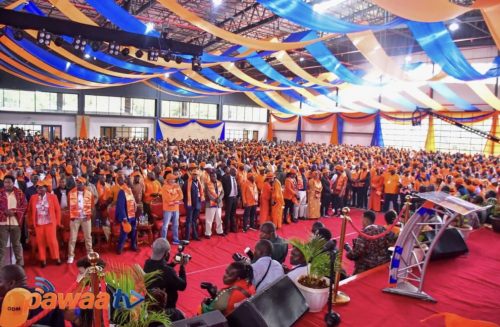
The debate has intensified in recent weeks, with senior ODM figures adopting increasingly uncompromising positions.
Speaking last weekend, ODM national chairperson Gladys Wanga maintained the party’s stance, declaring that any negotiations with UDA must be conducted on equal footing.
“If we are going for negotiations, we are going as equal partners, not as a weaker party,” Wanga said.
Her remarks have been reinforced by a section of ODM lawmakers who view zoning as non-negotiable. Sam Atandi, the Alego Usonga MP, was particularly emphatic in defending the position.
“We are ready to die for zoning. There is no negotiation when it comes to zoning. We are not going to allow UDA to plant candidates in Luo Nyanza and other ODM strongholds,” he said.
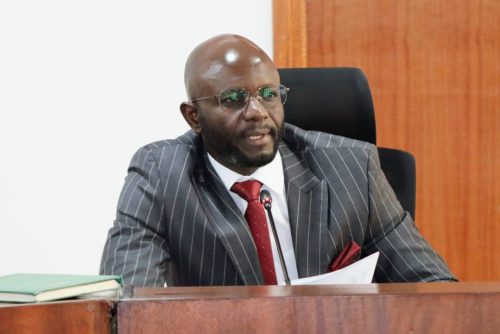
Zoning row
Such hardline rhetoric has heightened tensions, especially as UDA continues to ramp up grassroots mobilisation in perceived ODM territories.
Nowhere is this more evident than in the Coast region, where UDA officials have announced plans to field candidates for all elective seats across the six counties of Mombasa, Kwale, Kilifi, Lamu, Taita Taveta and Tana River.
The move has been interpreted within ODM as a direct political challenge that could significantly reshape the electoral landscape.
In Mombasa, UDA secretary general Hassan Omar is already positioning himself for the gubernatorial race, setting the stage for a potential contest with incumbent ODM Governor Abdulswamad Nassir.
However, even within ODM, the zoning debate is far from settled. Divergent views are emerging, exposing internal tensions over the party’s long-term strategy. Suba North MP Millie Odhiambo has urged caution, questioning whether zoning aligns with democratic principles and ODM’s historical strength as a mass party.

“I don’t know if there is an official position by the party on the matter, but my personal position is that ODM is a popular party and we have always declared it is the largest party in the country,” she said.
ODM is strong and has always managed to successfully field candidates without any form of zoning. Perhaps there may be silent agreements in urban areas like Nairobi, but there has never been a need for zoning for ODM.”
Odhiambo warned that aggressively pushing zoning could alienate voters and undermine accountability among elected leaders.
“When we start pushing zoning, it means that we are putting our personal interests ahead of our constituents. If I have worked for my constituents, I should not fear competition,” she added.
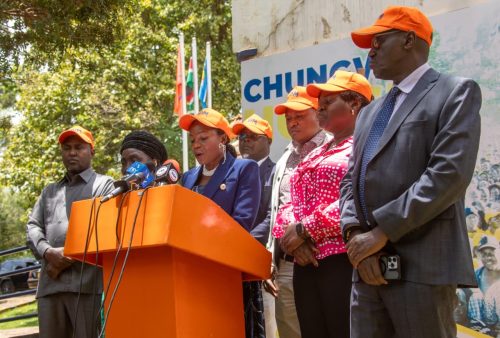
Resistance is also simmering within UDA, particularly in ODM-dominated regions such as Homa Bay, where local party members have rejected any arrangement that would limit their ability to contest seats.
For many UDA aspirants, zoning represents a direct threat to political opportunity and grassroots democracy.
For President Ruto, the dilemma is increasingly complex. Embracing zoning could pave the way for a formidable alliance with ODM, potentially consolidating votes in key regions.
However, it risks fracturing his support base within UDA and fuelling dissent among loyalists who view open competition as central to the party’s identity.
As the 2027 election clock ticks down, the zoning question is shaping up to be a defining fault line, one that could determine not only the nature of pre-election alliances but also the broader trajectory of Kenya’s political landscape.