Inside Ruto-Oburu coalition talks amid pressure over Ksh2B victims’ compensation
By Aloys Michael, March 11, 2026President William Ruto and Orange Democratic Movement (ODM) leader Oburu Oginga are once again under scrutiny after initiating a new step in their emerging alliance while facing mounting pressure to compensate victims of police brutality.
The move comes as the government pushes forward with a Ksh2 billion reparations plan tied to protests dating back to 2017, even as critics question whether the broad-based political arrangement truly reflects the legacy of the late Premier Raila Odinga.
Key to the development is the formation of an eight-member joint technical committee designed to chart the coalition’s roadmap ahead of the 2027 General Election.
The committee, jointly assembled by the ruling United Democratic Alliance (UDA) and the opposition-leaning ODM, signals that the rapprochement between the two camps is shifting from short-term cooperation into a longer-term political strategy.
Each faction will nominate four members to the team. The committee’s secretariat will be jointly handled by UDA Executive Director Nichodemous Bore and ODM Executive Director Oduor Ongwen.
Ksh2 billion reparations plan
“It is our belief that unless something else happens, we should be able to conclude this exercise by June,” he said.

The reparations plan stems from a 10-point reform agenda signed by Ruto and Odinga on March 7, 2025. That pact sought to calm political tensions following widespread protests and demanded accountability from state institutions, including the police.
While acknowledging the limitations of financial redress, the president stressed that compensation remains a necessary step toward closure for affected families.
“While life cannot be compensated, we can provide support to victims’ families. We have already identified victims from as far back as the 2017 demonstrations, allocated resources including Ksh2 billion for compensation, and established a court-mandated panel to expedite the process,” Ruto said.
However, the implementation of this agenda slowed following court procedures and administrative hurdles, fueling criticism from civil society groups and sections of the opposition.
Oversight report and recommendations
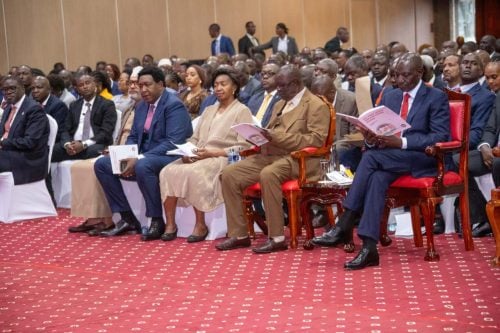
A progress report compiled by a committee chaired by Senator Agnes Zani outlined both progress and ongoing challenges. The report proposed the creation of a multi-agency task force comprising the National Treasury of Kenya, the Kenya National Commission on Human Rights, which Ruto has turned to (KNCHR), the Law Society of Kenya (LSK) and the Office of the Attorney-General of Kenya to oversee compensation.
The oversight panel also cited statistics from the Independent Policing Oversight Authority (IPOA) revealing the scale of complaints against law enforcement during protests.
“From 2023 to 2025, IPOA handled 820 cases of alleged police misconduct during public order management, securing convictions in 35 cases involving 49 officers, and recommending disciplinary action against 30 officers,” the report noted.
Another contentious legislative proposal, the Demonstration Bill, which sought to restrict protest rights, was withdrawn after widespread backlash from activists and legal groups.

Political drama and internal criticism
Despite the seemingly cooperative tone between Ruto’s administration and ODM leadership, the meeting that unveiled the report was not without tension.
Cecily Mbarire, chairperson of UDA and governor of Embu County, challenged the committee for failing to address the constitutional requirement for the two-thirds gender rule. Meanwhile, Anthony Oluoch, the Mathare Member of Parliament, demanded the withdrawal of the report, arguing that it did not fully reflect the president’s remarks and appeared incomplete.
These disagreements highlighted underlying political frictions even within the so-called broad-based government.
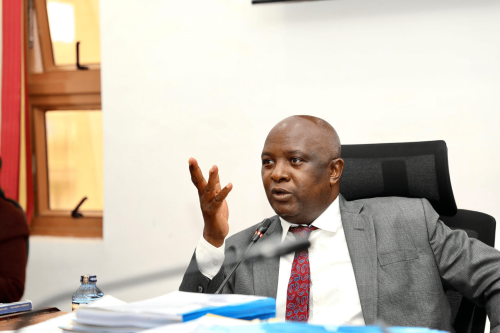
Outside the meeting room, criticism from within ODM has intensified. Some party figures argue that the Ruto–Oburu collaboration risks diluting the reform agenda championed by the late Raila Odinga.
“A narrative is now being pushed by pro-regime voices within ODM claiming that the agreement had no timeline and that March 7, 2026 merely marks the first anniversary of a symbolic signing ceremony at KICC. This interpretation is inaccurate and misleading,” Osotsi said.
“Such claims amount to betrayal of Raila Odinga’s legacy and the millions of Kenyans who sacrificed during the protests and civic agitation that demanded reforms and accountability from the state.”
Ruto and Oburu defend the Coalition
Both Ruto and Oburu dismissed accusations that the coalition had abandoned its commitments, insisting that most agenda items are already underway.
“There are some people who want to appoint themselves supervisors as if we made the commitment to them. We did not make the commitment to them. We made the commitment to the people of Kenya, and our responsibility and reporting is to the people of Kenya,” Ruto said.
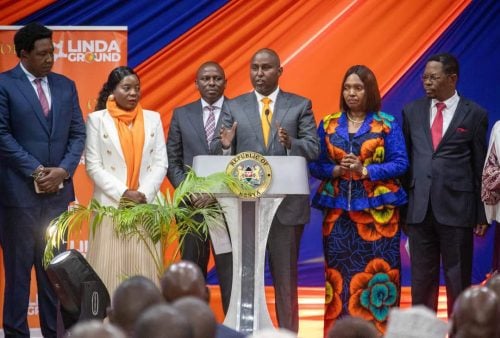
Oginga also emphasised that the broad-based arrangement was designed to run beyond a single anniversary milestone.
“March 7, which was slated as the date for the making of a report, was not the end of the broad-based government. The broad-based arrangement goes until 2027,” he said.
Yet with internal ODM dissent, civil society pressure over police brutality, and unresolved constitutional reforms, the alliance faces a delicate balancing act.
Whether the promised compensation and reforms materialise by June may determine not only public trust but also the durability of the coalition itself.