Advertisement
In volatile time, Ruto finds he’s stuck with Raila
Monday 30th June, 2025 01:20 AM|

For decades, Kenya’s political rhythm has revolved around three power centres: the Mountain (Mt Kenya), the Valley (Rift Valley), and the Lake (Lake Victoria). In this political geometry, alliances between any two often leave the third isolated.
In the early 1960s, during the final push for independence, Jaramogi Oginga Odinga famously demanded the release of Jomo Kenyatta from colonial detention, declaring there would be no freedom without Kenyatta.
When Kenya attained independence in 1963, Kenyatta became President and appointed Odinga as his vice-president, effectively uniting the Mountain and the Lake.
But the honeymoon was short-lived. The two soon fell out over ideological differences, prompting Jaramogi to resign and ushering in Kenya’s first wave of opposition politics.
You Might Also Like
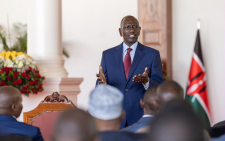
From that point on, the political duel between the Odinga and Kenyatta dynasties would define much of Kenya’s post-independence history – each side backed by regional loyalties from the Lake and the Mountain, respectively.
Rift Valley’s rise
Meanwhile, Daniel Arap Moi – representing the Rift Valley – quietly climbed the political ladder.
As political scientist Prof Gabrielle Lynch of the University of Warwick notes, Moi earned re-election in the landmark 1957 parliamentary elections and quickly built his influence through grassroots engagements and cross-ethnic alliances.
In her article “Moi: The Making of a Kenyan Big Man,” Lynch writes that Moi’s humility, political loyalty to Kenyatta, and non-threatening profile made him an ideal pick for vice president in 1967.
Upon Kenyatta’s death in 1978, Moi seamlessly succeeded him, marking the Valley’s arrival on the national stage – and gatecrashing the Lake-Mountain affair.
Next generation
The generational resonances of this historical triangle played out again between Raila Odinga and Uhuru Kenyatta, sons of the two founding fathers. Raila first ran for President in 1997 but lost to Moi.
Uhuru entered the ring in 2002, endorsed by Moi as his heir, but was defeated by Mwai Kibaki – backed at the time by Raila and other defectors from KANU.
Five years later, Uhuru shelved his ambitions to support Kibaki against Raila in the bitter 2007 election. The disputed result sparked ethnic violence that claimed over 1,000 lives.
Both Uhuru and Raila’s ally William Ruto were later named among the International Criminal Court’s list of suspects linked to the post-election violence.
Coalition politics
A fragile peace was brokered in the aftermath. Raila became prime minister in a grand coalition government, while Uhuru was named deputy prime minister and later finance minister. But the truce didn’t last.
In 2013, Uhuru and Ruto joined forces under the Jubilee coalition, uniting the Mountain and the Valley once more – shutting out the Lake again as Raila suffered his third presidential defeat.
The duo won again in 2017, although Raila challenged the results, leading to a historic nullification by the Supreme Court. When a repeat election was held in October that year, Raila boycotted it and went on to symbolically declare himself the “People’s President” on January 30, 2018.
In a move that stunned the nation, Uhuru and Raila publicly reconciled on March 9, 2018, in what became famously known as the “Handshake.”
This realignment, which sidelined Ruto, saw the Mountain and the Lake unite once again, leaving the Valley out in the cold. Together, Uhuru and Raila championed the Building Bridges Initiative, a reform agenda that was later declared unconstitutional in 2022.
When the 2022 election rolled around, Uhuru backed Raila’s fifth presidential bid. But the Mountain-Valley alliance – this time under William Ruto and Rigathi Gachagua – proved unstoppable, handing Raila yet another defeat.
Now, as the 2027 race looms, the political chessboard is once again shifting. Despite their storied rivalry, Raila Odinga and President Ruto find themselves bound together in an awkward alliance that’s equal parts necessity and survival.
Brewing rebellion
With murmurs of rebellion growing louder in Mt Kenya, two former foes – Gachagua and Martha Karua – appear to be plotting a new political front. Karua, Raila’s running mate in 2022, has unveiled her People’s Liberation Party and hinted at teaming up with Gachagua to challenge Ruto’s grip on the region.
“I look forward to working with you, Gachagua. We will not allow President Ruto to become a tyrant,” Karua declared recently, signalling a dramatic realignment in the Mountain.
Gachagua’s impeachment has further rattled Ruto’s political bedrock, pushing the president to launch early charm offensives across Coast, Nairobi, North Eastern, and Nyanza.
“Ruto knows he can’t count on inheriting Raila’s support base. That’s why he’s back on the ground early,” notes Benson Omondi of Kongowea’s Bunge la Mwananchi.
Gen Z factor
Adding to Ruto’s political headaches is the surging Gen Z movement – a digitally savvy, fiercely independent demographic that has rattled the establishment with calls for transparency, accountability, and generational change.
Their rejection of the controversial Finance Bill has shaken the government to its core.
In this volatile environment, Raila is no longer just a political ally; he is Ruto’s lifeline.
“Raila is the only man who can bring calm when things are boiling,” says political analyst Herman Manyora. “If he walks away, Ruto could be left exposed – and vulnerable.”
Manyora believes that if Raila announces a 2027 presidential bid, he could easily rally the political elite behind him as a transitional figurehead.
Despite working with the government, Raila’s grassroots support remains intact. “Kenyans don’t always vote based on purity. Even while doing Ruto’s bidding, Raila is still seen as the people’s champion,” adds Manyora.
Transactional politics
Fred Ogweno, executive director of the Inter-Regional Peace Network, sees the alliance as transactional at best. “This government is implementing policies that Raila once fought. That contradiction makes their partnership shaky,” he argues.
“Raila is the people, and the people are Raila. If he senses he’s losing that connection, he’ll jump ship,” Ogweno adds. “This unity government is a temporary shelter – nothing more.”
He warns that Ruto may have lost his crisis manager by bringing Raila into government. “When he was in opposition, Raila could be called upon to calm the nation. Now, if a storm hits, they’ll both get swept away.”
Comfort of power
Lee Makwiny, another political commentator, says Ruto has made Raila more comfortable than Uhuru ever did.
“Today Raila has five appointees in Ruto’s Cabinet. He’s getting tangible development for his support base – something he didn’t get from the handshake with Uhuru,” Makwiny explains.
He reveals that Raila was recently offered a deal by elements within the opposition to ditch Ruto and run again in 2027. “He turned it down,” says Makwiny.
“Raila isn’t about to trade the comfort he currently enjoys for an uncertain gamble.”
Makwiny believes the offer likely came from Uhuru or Gachagua. “And it’s no coincidence that on the day Gen Z protested, Ruto and Raila were attending a funeral together in Kilifi.”
Backchannel negotiations
A recent photo of Raila flanked by Uhuru’s allies David Murathe and Raphael Tuju at an event in Siaya has fuelled speculation that backchannel talks may already be underway.
Still, Raila is cautious.
“He knows he can’t win without solid Mountain backing. The region is fractured. Until he’s sure whether it’s Uhuru or Gachagua calling the shots, he’ll stay put,” says Makwiny.
“Raila might have rejected the offer because he is not sure whether the Mountain will support him based on the 2022 election results and the fact that the Mountain has left President Ruto because of his handshake with Raila,” the analyst explains.
Author
Reuben Mwambingu
View all posts by Reuben MwambinguLatest News

Advertisement
More on Inside Politics