Ida Odinga backs Winnie, throws spotlight on youth in Kenya’s shifting politics
By Kepher Otieno, January 18, 2026Ida Odinga has stepped into Kenya’s political conversation with a message that cuts across generations, power, and succession, reinforcing the growing debate about who truly shapes the country’s political future.
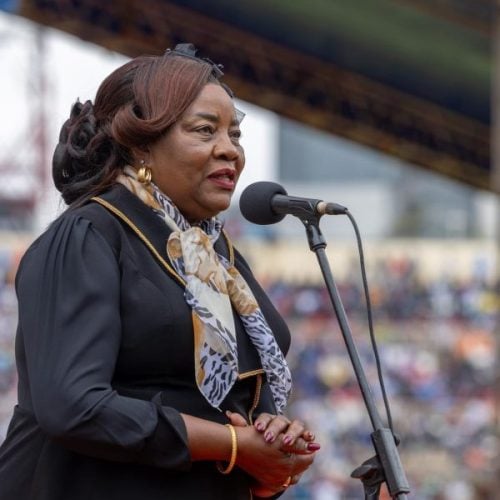
Speaking in support of her daughter, Winnie Odinga, the wife of former Prime Minister Raila Odinga, framed the youth not as political spectators but as central players in Kenya’s emerging political order—warning that any new dispensation that sidelines them does so at its own peril.
In a political landscape long dominated by familiar surnames and veteran actors, Ida’s remarks landed as both an endorsement and a challenge. Her backing of Winnie was not merely maternal; it was ideological. While elevating her daughter’s political voice, Ida positioned Winnie as part of a broader generational push seeking to redefine leadership beyond legacy politics.
“The youth must never be treated as an afterthought in our politics,” Ida said, underscoring that young people carry the largest demographic weight, the greatest stake in governance outcomes, and the energy driving social and political change. Her remarks echo a growing sentiment within Kenya’s civic space that demographic realities can no longer be ignored in elite political calculations.
The youth influence
Kenya is a youthful nation, with the majority of its population under 35. Yet political power has historically been concentrated among older leaders who cut their teeth in the struggles of the 1980s and 1990s.
While these figures still command influence, recent elections and civic movements have exposed widening cracks in the old political order, driven largely by youth frustration over unemployment, governance failures, and economic inequality.
In backing Winnie, Ida appeared to acknowledge these shifts.
Winnie, who has increasingly spoken on governance, social justice, and youth inclusion, represents a younger political voice within a family synonymous with Kenya’s opposition politics.
Winnie’s Kibra rally
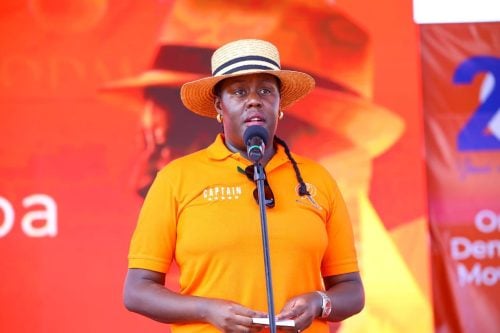
Winnie, on Sunday, January 18, 2026, launched a parallel ODM rally in Kamkunji Kibera grounds, dubbed the ODM pressure group, ostensibly to push for the youth agenda.
She said it’s their time and that the wave of young people will sweep the majority votes come the 2027 General Elections.
She strongly advocated for youth rights and democracy.
Ida’s intervention therefore served a dual purpose: legitimising Winnie’s political engagement while signalling an openness to generational transition within established political families.
However, the endorsement also raises uncomfortable questions about dynastic politics—an issue that has long dogged Kenyan democracy. Critics argue that political families often preach inclusion while reproducing power within their own circles. Ida’s remarks attempt to navigate this tension by framing Winnie not simply as an Odinga heir, but as part of a broader youth-driven movement demanding space in national leadership.
” Let’s listen to the young people as well. Let’s not overlook them or ignore them at all,” Ida tipped.

Whether that framing resonates beyond Odinga’s support base remains to be seen. Kenya’s youth are far from a monolithic bloc. Many remain sceptical of elite politics altogether, expressing their frustrations through protest, digital activism, or disengagement rather than party structures. For such groups, symbolic endorsements may ring hollow unless accompanied by tangible shifts in policy, opportunity, and representation.
Still, Ida’s statement is politically significant. It reflects a growing recognition among senior political actors that youth issues can no longer be addressed rhetorically. Economic hardship, shrinking job markets, and rising living costs have pushed young Kenyans to the centre of political debate, forcing leaders to reckon with their demands.
Her remarks also come at a time when Kenya’s political class is quietly repositioning itself ahead of future succession battles. As alliances realign and veteran leaders contemplate their legacies, the question of who inherits political space—both within parties and in national leadership—has become unavoidable.
Ida, by throwing her weight behind Winnie and amplifying the role of youth, has added her voice to a national conversation about transition. Whether this signals genuine generational renewal or a strategic adaptation to shifting political winds will depend on what follows—particularly whether young leaders are given real power rather than symbolic visibility.
What is clear is that Kenya’s politics is changing, and the youth are no longer content to wait their turn. Ida Odinga’s message, intentional or not, underscores a reality the political establishment can no longer afford to ignore.