Advertisement
How a spat over Taiwan is threatening China-Japan ties
Monday 17th November, 2025 10:32 AM|
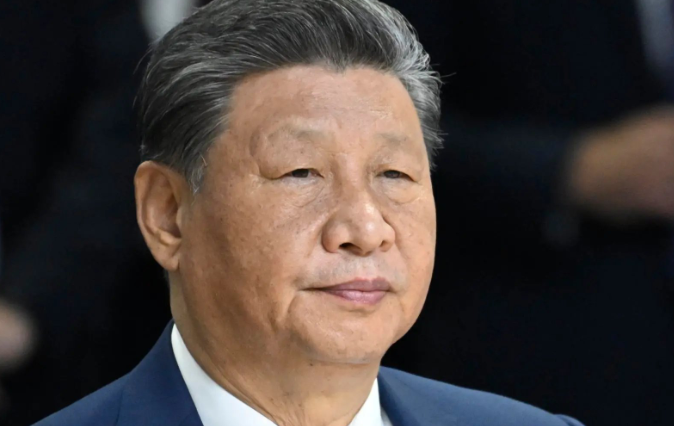
Less than a month into her term, Japan’s conservative leader has stirred tensions with China by suggesting a Chinese move against Taiwan could prompt a Japanese military response.
China objects to the involvement of other countries in Taiwan, notably the United States, which is the main supplier of weapons to the self-governing island. Beijing claims it as its own and says it must come under its control. It says it’s a domestic issue and “a red line” that others should not cross.
Takaichi went beyond past Japanese statements
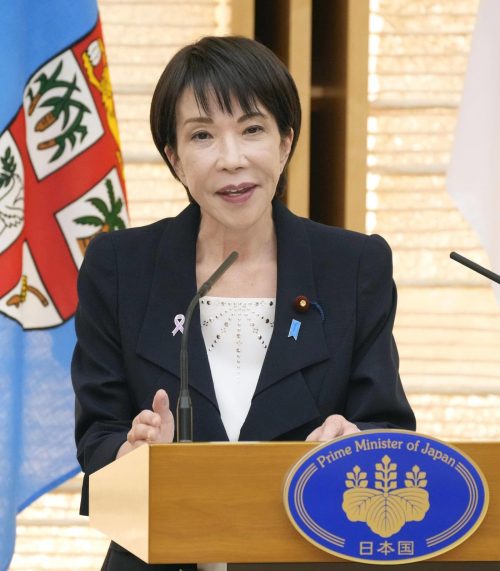
Speaking to a parliamentary committee, Prime Minister Sanae Takaichi said on November 7, 2025, that a Chinese naval blockade or other action against Taiwan could be grounds for a Japanese military response.
Her comments were stronger than those of her predecessors. Previous prime ministers have expressed concern about China’s threat to Taiwan, but haven’t publicly said how Japan would respond.
You Might Also Like

Takaichi later refused to retract her remarks but told the same parliamentary committee three days later that she would avoid talking about specific scenarios in the future.
Japan’s new leader is a longtime supporter of Taiwan. She views China as a growing threat and has ordered an acceleration of plans to boost Japan’s military spending.
Foreign Minister Toshimitsu Motegi said Friday that Japan’s position on Taiwan has not changed.
China responds with stern warnings
Takaichi’s comments caused an uproar in China, with the foreign and defense ministries, the Taiwan Affairs Office, and state media all weighing in.
Her remarks came as a surprise because tensions over Taiwan were not particularly high, said Wang Huiyao, the president of the Center for China and Globalisation, a think tank in Beijing.
“We can’t just let the prime minister speak so openly at parliament,” he said.
One of the first to speak out was China’s consul general in Osaka, who said in a now-deleted social media post that China has no choice but to cut off an intruding “dirty neck.” Motegi called the post “extremely inappropriate.”
China’s Foreign Ministry called in Japan’s ambassador to warn against any interference in Taiwan. The next day, Japan’s Foreign Ministry summoned China’s ambassador in Tokyo to complain about the social media post.

Beijing is upping the ante
On Friday, November 14, 2025, at night, China took aim at Japan’s tourism economy. It issued a notification advising against travel to Japan. About 7.5 million Chinese tourists visited in the first nine months of this year, the largest number from any country and about one-fourth of the total.
China’s Education Ministry followed up with a warning to students on Sunday, November 16, 2025, about recent crimes against Chinese in Japan, though it didn’t advise them not to go.
Also on Sunday, China’s coast guard announced that it was patrolling the waters around a group of uninhabited islands that both countries claim.
A bigger concern for Japan would be if China were to restrict the export of rare earth magnets, vital components in auto manufacturing and other industries. There was no immediate indication China was considering it.
Japanese officials are trying to calm the waters. Motegi said he planned to ask China to make “an appropriate response” to prevent a major impact on relations.
US-Japan alliance
The U.S.-Japan alliance casts a long shadow over Tokyo’s security policy. Japan’s post-World War II constitution restricts the use of force to defending its own territory, with the military officially designated as the Self-Defense Force.
Former Prime Minister Shinzo Abe expanded this mandate in 2015 by passing a law allowing Japan to aid an ally, most likely the U.S., if a conflict is deemed an existential threat to Japan.
Seiko Takaichi, a political protégé of Abe, suggested that a Chinese move against Taiwan could meet that threshold, sparking controversy.
Analysts also point to a conflict with North Korea involving the U.S. as another potential trigger. However, Japan has not clearly defined what qualifies as an “existential threat” under its collective self-defense law.
Tokyo now appears reluctant to have Takaichi retract her statement. Doing so could limit Japan’s strategic flexibility in a Taiwan crisis and damage the new prime minister’s high public support and hawkish image toward China.
Author
Latest News







Advertisement
More on Inside Politics