Advertisement
Herman Manyora explains why both Ruto and Gachagua camps are worried about Sifuna
Wednesday 18th February, 2026 02:40 AM|

Political analyst Herman Manyora has explained why both President William Ruto and the United Opposition camp are concerned about the sudden rise of Nairobi Senator Edwin Sifuna.
Speaking during an interview on Political Headache on Tuesday, February 18, 2026, Manyora argued that neither camp can honestly claim they are not unsettled by Sifuna’s growing political influence. He pointed to the massive crowd that turned up during the “Linda Mwananchi” rally in Kitengela, held just days after attempts were made to oust him as Secretary General of the Orange Democratic Movement (ODM).
According to Manyora, Sifuna’s entry into the broader national conversation has disrupted the existing political game in a way that few had anticipated.

“Both the Ruto and Gachagua camps are worried about Sifuna. Nobody, none of these people can lie to you that they are not worried about it. First, he, he, he is interrupting the political game. It is in a way. Nobody expected you to get it,” Manyora stated.
You Might Also Like

He noted that the young senator is awakening what he described as two sleeping giants.
Sifuna wooing Gen Zs
The first, he said, is the Gen Z voting bloc, a youthful demographic that has largely remained dormant but holds immense electoral power both in Kenya and globally. He described the youth as a powerful and uncompromising force, comparing them to a river whose direction ultimately determines political success.

“Secondly, he’s awakening two sleeping giants. One is the one which you know, which is the Gen Z that is asleep. That’s a giant across the world. Youth is a force you cannot ignore,” he added.
Manyora observed that Sifuna appears to be energising this constituency, which could translate into millions of votes if mobilised effectively. He argued that neither Ruto nor former Deputy President Rigathi Gachagua can afford to ignore such a shift, especially with the 2027 elections on the horizon.
He further suggested that Gachagua, who has been seen as a key organiser within the United Opposition, could find himself losing control of the political arrangement if Sifuna’s influence continues to grow.
Manyora added that leaders who were previously comfortable with Gachagua steering opposition strategy, including figures like Kalonzo Musyoka, may now have to reassess their positions in light of Sifuna’s rising prominence.
Challenging the status quo
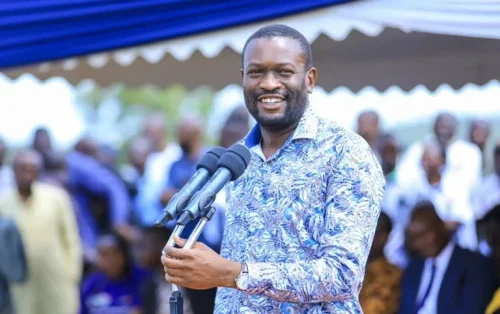
Beyond individual rivalries, Manyora argued that the larger challenge Sifuna poses is to the political status quo itself. He claimed that both Ruto and Gachagua belong to the same entrenched political establishment despite their public rivalry. Echoing sentiments previously expressed by veteran politician Lee Njiru, he described them as political cousins who share common interests.
In Manyora’s view, Sifuna’s growing movement threatens to alter the political equation by changing the rules of engagement and reshaping alliances. Such disruption, he suggested, could even push rival camps to find common ground if they feel their shared interests are at risk.
He concluded that Sifuna’s momentum represents a broader shift in Kenyan politics, one that established power players may find difficult to control if it continues to gather pace.

This comes days after Gachagua hinted of working with the Sifuna-led faction, saying that should they have a strong presidential candidate, the united opposition principals will shelve their individual aspirations to rally behind the chosen person from the Sifuna faction.
Author
Latest News





Advertisement
More on Inside Politics
