Advertisement
Governor Barasa calls for Western leaders to back Ruto amid growing opposition push
Sunday 24th May, 2026 07:00 PM|
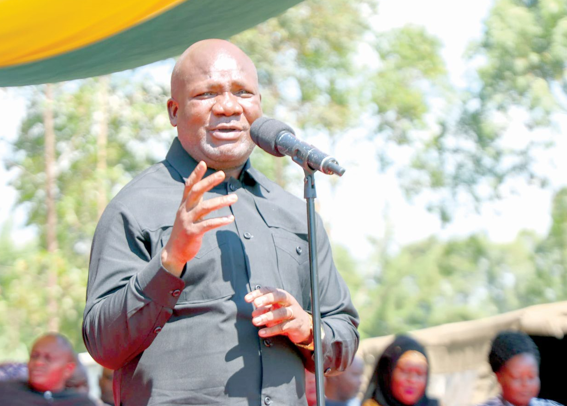
Kakamega Governor Fernandes Barasa has stepped up calls for political unity in Western Kenya, urging leaders in the region to rally behind President William Ruto as the country moves closer to the 2027 general election.
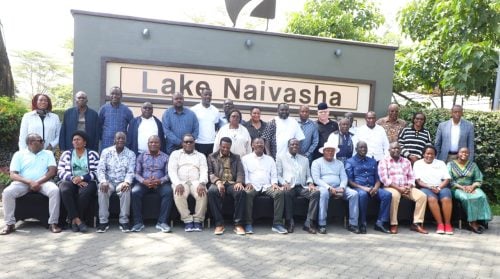
Barasa made the remarks on X on Sunday, May 24, 2026, after chairing a consultative forum with selected leaders from Western Kenya, where discussions focused on regional unity, development priorities, and the political direction the region should take ahead of the polls.
He said the meeting provided a platform for frank discussions on the region’s future and the need for coordinated leadership.
“A united and focused Western Kenya, behind H.E. President William Ruto, remains key to advancing our region’s political and economic interests, with a priority focus on the completion of key infrastructure projects,” Barasa said.
You Might Also Like
The governor stressed that infrastructure remains the central concern for the region, pointing to roads, water projects, energy expansion, and agricultural markets as key drivers of economic growth. He said leaders must prioritise delivery over political rivalry.
Barasa, who also chairs the Council of Governors’ Finance Committee, has recently positioned himself as one of the key voices pushing for closer cooperation between ODM and UDA-aligned leaders in the region. He argues that such cooperation will help Western Kenya secure a stronger bargaining position in national development planning.
Western Kenya divided
However, the push for unity comes at a time when Western Kenya’s political landscape is sharply divided.
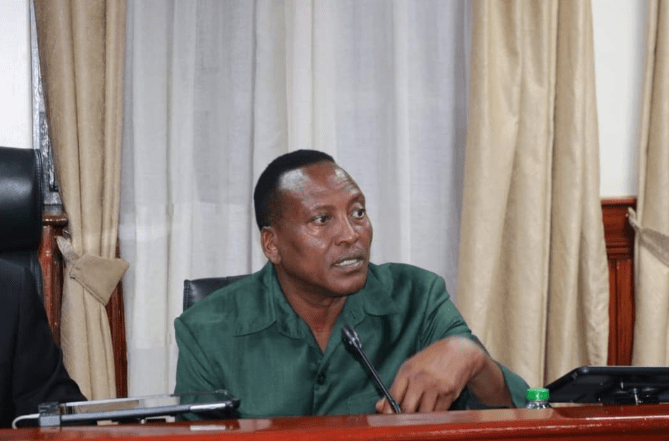
On one side is a growing bloc of leaders allied to what has become known as the “Wantam” movement. The group includes leaders such as Vihiga Senator Godfrey Osotsi, Nairobi Senator Edwin Sifuna, Trans Nzoia Governor George Natembeya, and Kakamega Senator Boni Khalwale, among others.
These leaders have been mobilising separately, warning that early alignments with the ruling coalition could weaken ODM’s independence and dilute the region’s bargaining power ahead of 2027.
Sifuna and his allies have also intensified grassroots engagement through the Linda Mwananchi tour, where they have criticised the cost of living and what they describe as incomplete government promises.
The split reflects deeper uncertainty within Western Kenya politics, where leaders are weighing between short-term development gains under the broad-based arrangement and long-term political positioning.
Barasa, however, maintains that unity behind Ruto offers the region the best chance to secure ongoing and stalled development projects. He has also previously argued that ODM and UDA candidates working together could dominate elective seats in Kakamega County.
His position has received backing from some leaders aligned to the pro-government camp, who argue that Western Kenya must avoid fragmentation if it wants to increase its influence in national decision-making.
The Naivasha forum is part of a series of meetings by Western Kenya leaders seeking to define a common political strategy ahead of 2027. But with rival camps deepening their mobilisation, the region remains politically split between competing visions of unity, opposition strength, and alignment with national power structures.
As the election season approaches, Western Kenya is emerging as one of the key battlegrounds where internal divisions could shape not only regional politics but also the national outcome.
Author
Kenneth Mwenda
Kenneth Mwenda is a business, sports, and politics digital writer with over seven years of experience in journalism, covering breaking news, feature stories, and in-depth analysis across a range of beats.
For inquiries, he can be reached at [email protected]
View all posts by Kenneth MwendaLatest News
Advertisement
More on Inside Politics
