Advertisement
Gachagua faults Ruto, Sakaja over poor conditions near Nairobi River
Monday 16th February, 2026 02:52 PM|

Former Deputy President Rigathi Gachagua has called out the ongoing living conditions of residents residing along the Nairobi River, describing the area as a bad business environment.
Taking to his official X account on Monday, February 16, 2026, Gachagua explained that residents have been ignored for far too long by both the National Government and the County Government, despite remitting taxes to both.
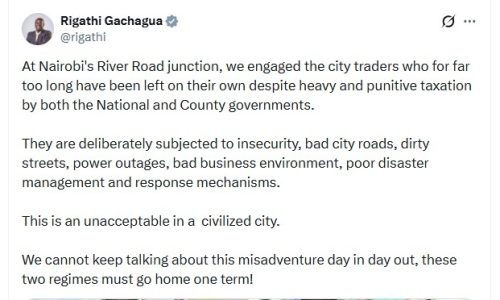
“At Nairobi’s River Road junction, we engaged the city traders who for far too long have been left on their own despite heavy and punitive taxation by both the National and County governments,” Gachagua said.
On his part, Gachagua noted that residents are often subjected to insecurity, poor city roads, dirty streets, power outages, a poor business environment, and poor disaster management and response mechanisms.
You Might Also Like
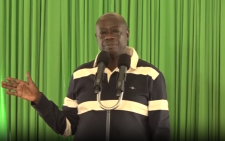


“They are deliberately subjected to insecurity, bad city roads, dirty streets, power outages, bad business environment, poor disaster management and response mechanisms,” Gachagua stated.
“This is unacceptable in a civilised city.We cannot keep talking about this misadventure day in day out, these two regimes must go home one term!,” he added.
Revamping the Nairobi River
His remarks come a week after the Nairobi City County Cabinet, chaired by Governor Johnson Sakaja, approved the continued implementation of the Nairobi River Regeneration Programme, a KSh 50 billion initiative aimed at rehabilitating the capital’s heavily polluted waterways and redeveloping surrounding river corridors.
The Cabinet said the programme, launched in 2025, has recorded significant infrastructure progress and remains on track for completion in January 2027.
“This regeneration is about people as much as it is about the environment safer homes, better markets and decent livelihoods for our communities,” Sakaja stated.
According to county officials, key works completed so far include the construction of a 60-kilometre trunk sewer line, the first major sewer upgrade in decades; riverbank stabilisation; expansion of stormwater drainage systems; and remediation works at the Dandora dumpsite to reduce pollution flowing into the rivers.
Affordable housing projects and flood-mitigation wetlands are also part of the blueprint, while more than 40,000 jobs have already been created for youth engaged in cleanup and construction efforts.
“A clean river is not a luxury, it is a lifeline for public health, jobs and the dignity of our city. We are turning the Nairobi River from a symbol of neglect into a backbone of green growth and opportunity,” he added.
Author
Latest News







Advertisement
More on Inside Politics