Are senators using new bill to settle scores with governors before 2027?
By Aloys Michael, April 27, 2026Is Kenya witnessing a genuine push for accountability, or a calculated political fightback by senators against governors ahead of the 2027 General Election?
That is the question dominating political circles following the introduction of a controversial constitutional amendment Bill that seeks to bar governors from contesting Senate and county assembly seats for five years after leaving office.
The proposal, tabled by Kirinyaga Senator James Murango, has not only stirred legal debate but also intensified an already bitter standoff between the Senate and county chiefs.
On paper, the Constitution of Kenya (Amendment) Bill, 2026, is framed as a reform measure. It proposes changes to Articles 99 and 193 of the Constitution, as well as Sections 24 and 25 of the Elections Act, to introduce new disqualification criteria targeting former governors.
The aim, according to its sponsors, is to prevent conflicts of interest, particularly in cases where former governors could end up sitting in institutions mandated to oversee their past conduct.
“Allowing former governors to immediately transition into legislative roles within these same bodies would create a conflict of interest and potentially interfere with ongoing accountability processes,” the proposal reads in part.
The argument is grounded in a practical reality: audit queries and financial reviews of county governments often extend years beyond a governor’s tenure. Without a cooling-off period, a former governor could, in theory, join the Senate and participate in committees scrutinising decisions made under their own administration.
Supporters of the Bill say this undermines both transparency and public confidence. A five-year restriction, they argue, would give oversight bodies sufficient time to conclude investigations independently, free from political interference.
But is that the full story?
Governors and their allies believe otherwise. To them, the Bill cannot be separated from the broader political context in which it has emerged: a deepening rivalry with senators, many of whom are positioning themselves to run for governor in 2027.
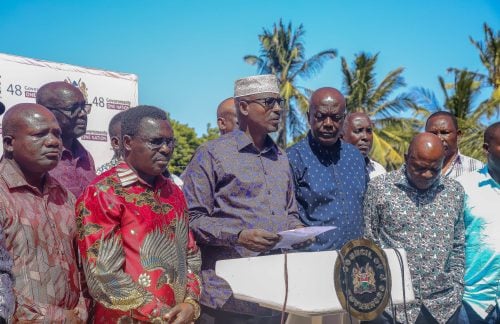
The Council of Governors (CoG), chaired by Ahmed Abdullahi, has already escalated the dispute by boycotting Senate committee sittings, accusing lawmakers of turning oversight into a political weapon.
“The CoG notes with great concern the continuous political witch-hunt, harassment, intimidation, and humiliation of governors by certain senators when they appear before the Public Accounts Committee of the Senate,” Abdullahi said.
This accusation gains weight when viewed alongside the conduct of recent Senate sessions. What were once routine accountability hearings have increasingly taken on a combative tone, with governors publicly clashing with senators over audit queries, budget allocations, and administrative decisions.
Key in the tension is the CPAC, which regularly summons governors to answer audit questions. Governors argue that the process has been compromised by clear conflicts of interest, pointing out that some senators involved in oversight have openly declared ambitions to unseat them.
In this light, the proposed five-year ban appears, to critics, less like a safeguard and more like a strategic move to reshape the 2027 political battlefield. By preventing governors from immediately transitioning into Senate roles, the Bill could effectively block a key fallback option for term-limited county chiefs while giving senators a clearer path to gubernatorial seats.

Reform or retaliation?
Senators reject the notion that they are acting out of political revenge. County Public Accounts Committee chair Moses Kajwang insists that oversight is a constitutional duty, not a political choice.
“It is not an option. It is a duty we have to the public. Whether we like you or not, we shall continue fighting for more resources to go to counties and ensure they are properly accounted for,” Kajwang’ said.
From this perspective, the Bill is a logical extension of the Senate’s watchdog role, an attempt to close loopholes that could weaken accountability mechanisms. Proponents argue that without such safeguards, the integrity of oversight institutions risks being compromised by revolving-door politics.
Yet the timing remains politically charged. The Bill was first read in the Senate on March 26, 2026, just months into a period when political alignments are beginning to take shape ahead of 2027. At the same time, relations between governors and senators have reached some of their lowest levels since the advent of devolution.
This convergence of legislative action and political tension has fueled the perception that Kenya is entering an early campaign season, one where laws, oversight processes, and public platforms are all being leveraged in preparation for the next electoral contest.
So, are senators safeguarding accountability, or settling scores?
The answer may ultimately depend on how the Bill evolves in Parliament and how the Senate conducts its oversight role in the months ahead.
For now, what is clear is that the battle between governors and senators is no longer just about governance. It is an unfolding political contest, one that could redefine both accountability and ambition in Kenya’s devolved system as 2027 approaches.