World Bank reveals 6 reasons prices are rising in Kenya despite lower interest rates
By Aloys Michael, July 10, 2026Despite easing inflation and lower interest rates, millions of Kenyans are still paying more for food, fuel, transport and other everyday essentials.
According to the latest World Bank Kenya Economic Update, six powerful economic forces are driving the rising cost of living in Kenya, putting increasing pressure on household budgets and threatening to push more families into poverty.
The report explains why prices are rising in Kenya even as economic indicators suggest improving stability. Higher fuel prices, rising food costs, global trade disruptions, falling remittances, slower investment and fiscal pressures are combining to make life more expensive for households across the country.
“Recent global developments have increased downside risks to Kenya’s economic outlook,” the World Bank said, warning that external shocks could worsen the cost-of-living crisis facing many families.
Why prices keep rising
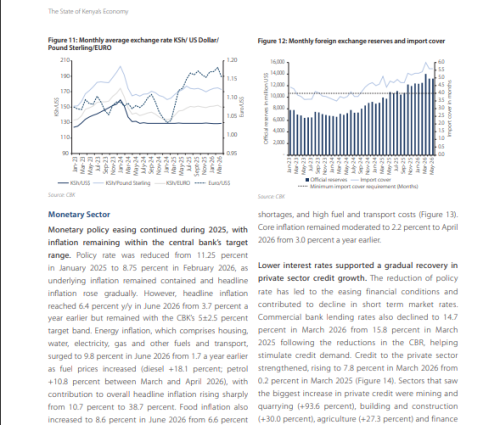
One of the biggest reasons behind the rising cost of living in Kenya is fuel. The World Bank notes that diesel prices surged by nearly 18 per cent compared to a year earlier, increasing the cost of transporting goods, operating businesses and moving agricultural produce from farms to markets.
The impact is already being felt across the economy. As fuel prices rise, businesses pass on higher operating costs to consumers, resulting in more expensive food, transport and essential goods.
Transport costs have climbed particularly fast. According to the report, transport inflation reached 10 per cent year-on-year in May 2026, increasing the cost of commuting, logistics and public transport services.
For many households, transport is now consuming a larger share of monthly income, reducing the amount available for food, education, healthcare and savings.

Food prices are also playing a major role in Kenya’s cost-of-living crisis. The World Bank reported that food inflation rose to 8.6 per cent, reflecting higher prices for several staple commodities and supply-side pressures affecting agricultural production.
The institution noted that lower-income households are feeling the greatest impact because food accounts for a much larger share of their monthly spending.
“Poorer households spend a larger share of income on food and are more exposed to food price increases,” the World Bank said.
The report further identifies global trade disruptions as another hidden factor behind rising prices. Increased trade barriers and uncertainty in international markets are expected to raise the cost of imported goods and industrial inputs used by Kenyan manufacturers and businesses.
These higher import costs often translate into higher prices for consumers, adding to inflationary pressures already being experienced in local markets.
More pressures ahead
At the same time, the World Bank warned that remittances from Kenyans living abroad could come under pressure due to global economic uncertainty. The report estimates that up to about Ksh5.2 billion in monthly remittances could be at risk under adverse conditions.
For thousands of families, remittances help pay school fees, medical bills, rent and daily household expenses. Any decline in these inflows would reduce household purchasing power and deepen financial strain.
Another concern highlighted in the report is slowing investment. Uncertainty in the global economy could cause businesses and investors to postpone expansion plans, reducing job creation and limiting income growth.
Lower investment can have a direct effect on household welfare because fewer jobs and slower wage growth reduce spending power across the economy.
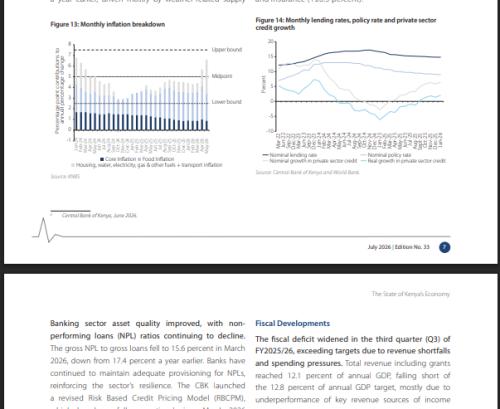
The World Bank also pointed to fiscal pressures as a significant challenge. While Kenya has made progress in reducing its budget deficit, public debt obligations and limited fiscal space continue to constrain government spending and economic support programmes.
According to the report, these combined pressures could have serious consequences for living standards. The World Bank estimates that between one million and 2.4 million additional Kenyans could fall below the national poverty line in 2026 if fuel price increases and other economic shocks continue to spread through the economy.
“Rising fuel prices are expected to affect household welfare both directly and indirectly through higher transport and food costs,” the report states.
Although Kenya’s economy is expected to continue growing, the World Bank warns that economic growth alone may not be enough to ease the cost of living in Kenya if household incomes fail to keep pace with rising prices.
For many Kenyans struggling with higher food prices, fuel prices and transport costs, the report offers a clear explanation: lower interest rates cannot fully offset the impact of global shocks, rising energy costs, weaker remittance flows, investment uncertainty and fiscal pressures that continue to push prices higher across the economy.