World Bank explains 54,500 new jobs in Kenya as manufacturing leads hiring boom
By Aloys Michael, July 10, 2026Kenya created approximately 54,500 new private-sector formal jobs in 2025, with manufacturing emerging as the country’s fastest-growing employer, according to the latest World Bank Kenya Economic Update.
The report offers fresh insights into Kenya’s labour market, identifying the sectors creating the most job opportunities while highlighting the industries and workers being left behind as the economy navigates global and domestic challenges.
For job seekers, graduates and investors searching for the best industries for jobs in Kenya, the World Bank findings point to manufacturing, finance, insurance and energy as the country’s strongest formal employment generators.
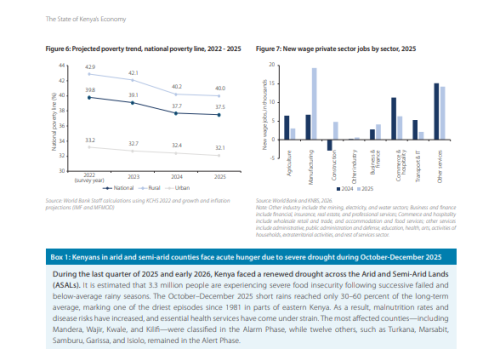
“In total, the private sector added about 54,500 new wage jobs,” the World Bank said in the report.
Manufacturing recorded the strongest growth in formal employment, expanding by 5.9 per cent in 2025. The sector outperformed many traditional job creators, benefiting from a broader recovery in industrial activity and improved business conditions.
The financial and insurance sector followed closely, posting a 4.4 per cent increase in formal jobs, while employment in the electricity sector rose by 3.8 per cent.
The World Bank noted that Kenya’s industrial sector grew by 4.7 per cent in 2025, a sharp improvement from 1.1 per cent in 2024. Manufacturing, construction and mining were among the key drivers of the recovery.
The findings suggest a shift in Kenya’s job market, with industrial and service-sector activities increasingly creating opportunities for skilled workers and young professionals.
The report also highlighted improving earnings among workers after several years of declining purchasing power.
“After continuous yearly declines, real average wage earnings grew by 2 percent in total, with wages in the formal private sector growing by 3.9 percent in the year,” the World Bank stated.
The rise in wages is expected to support household incomes and consumer spending, although many Kenyans continue to face pressure from rising living costs.

The biggest loser
Despite the increase in formal employment, the World Bank said Kenya’s labour market remains heavily dependent on informal work.
Informal employment accounted for 83.8 per cent of all jobs in 2025, growing by 4.1 per cent during the year.
“Employment growth remained strong in 2025, but most jobs are still created in the informal sector,” the report noted.
This means that while thousands of new formal jobs were created, the vast majority of Kenyan workers continue to rely on small businesses, casual labour and self-employment, which often provide lower and less stable incomes.
The dominance of informal employment remains one of the biggest challenges facing policymakers seeking to reduce unemployment in Kenya, improve productivity and create sustainable jobs for the country’s growing youth population.
What the findings mean for job seekers
The World Bank report suggests that manufacturing, financial services, insurance and energy are among the sectors currently offering the strongest formal employment opportunities.
For graduates and professionals looking for long-term career prospects, these industries are increasingly becoming important sources of stable jobs and wage growth.
At the same time, the report highlights the need for stronger private-sector investment and industrial expansion to absorb the millions of young people entering the labour market every year.
While the employment outlook remains positive, the World Bank warned that higher fuel prices, food inflation and external economic shocks could weigh on business activity and household spending.
The institution projects Kenya’s economy will grow by 4.3 per cent in 2026, with services, manufacturing, tourism, financial services and trade expected to remain key drivers of economic activity and job creation.
However, the report cautioned that persistent fiscal pressures, rising public debt and global uncertainties could slow investment and hiring if not addressed.
Even so, the latest findings indicate that Kenya’s formal labour market is gradually strengthening, with manufacturing now leading a new wave of job creation as the country seeks to expand employment opportunities and reduce reliance on the informal economy.