Tim Kipchumba outlines fiscal impact of introducing more fuel subsidies
By Faith Lagat, May 19, 2026Tim Kipchumba has highlighted the fiscal implications of a proposed Ksh50 per litre fuel subsidy, warning that it would require major budget adjustments at the national level.
His remarks come amid ongoing fuel price protests, transport disruptions, and debates on possible government interventions.
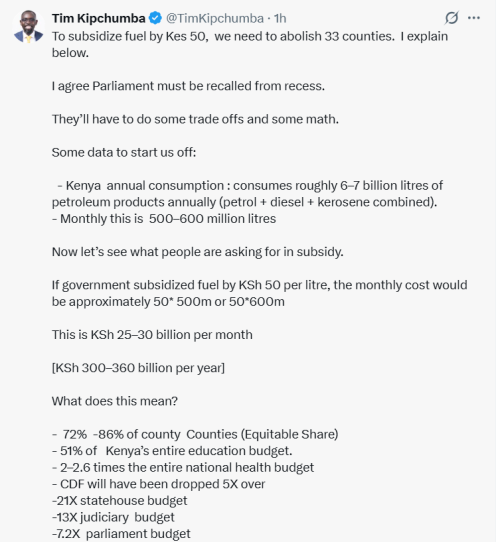
According to Kipchumba, Kenya consumes approximately 6–7 billion litres of petroleum products annually, including petrol, diesel and kerosene. This translates to about 500–600 million litres monthly. Based on this estimate, a Ksh50 subsidy would cost between Ksh25–30 billion per month, or Ksh300–360 billion annually.
“This is not a ‘small relief measure’,” he stated in a post on X dated May 18, 2026.
He added that the annual cost would represent 72 per cent –86 per cent of the county’s equitable share, 51 per cent of the education budget, and between 2 and 2.6 times the national health budget.
He further compared the figure to other allocations, stating it would be five times the Constituency Development Fund (CDF), 21 times the State House budget, 13 times the Judiciary budget, and 7.2 times Parliament’s budget.
Fiscal implications and parliamentary debate
Kipchumba called for Parliament to be recalled from recess to address the issue, arguing that the scale of the proposal requires urgent fiscal scrutiny and policy trade-offs.
He said lawmakers would need to evaluate competing national priorities and budget allocations before considering such a subsidy.
This comes amid push by Ndindi Nyoro, Kiharu MP, who has proposed a series of measures aimed at reducing fuel prices in Kenya through tax reforms, subsidies, and margin adjustments.
In a statement dated May 15, 2026, Nyoro outlined plans including reducing importers’ and distributors’ margins by Ksh4, introducing a Ksh5 billion diesel subsidy, cutting VAT by 8 per cent and making fuel products VAT-exempt, and removing the Ksh7 fuel levy introduced in 2024.
He argued that the interventions could lower Super Petrol to Ksh187.38 per litre and diesel to Ksh189.16 per litre, offering short to medium-term relief as fuel prices remain a major driver of inflation, transport costs, and household expenses following the latest EPRA review that increased petrol by Ksh16.65 and diesel by Ksh46.29 per litre despite government stabilisation efforts.
The discussion comes as transport stakeholders continue to demand tax relief on fuel, including the removal of VAT and the Road Maintenance Levy, amid rising public pressure over high fuel costs.
Transport crisis and government response
The debate unfolds against a backdrop of a nationwide transport strike that began on May 18, 2026, involving matatu operators, truck drivers, boda boda riders and other stakeholders. The strike led to road blockades, burning tyres, and disruption of transport services across several regions.
Interior Cabinet Secretary Kipchumba Murkomen reported four deaths, more than 30 injuries and 225 arrests linked to the protests. Authorities also confirmed injuries among police officers during the unrest.
In response to the crisis, the government proposed measures to reduce the price gap between diesel and kerosene to address fuel adulteration concerns affecting diesel engines used in transport and logistics.
The Energy and Petroleum Regulatory Authority (EPRA) implemented a diesel price reduction of Ksh 10.06 per litre effective May 19, 2026. In Nairobi, super petrol remained at Ksh 214.25, diesel dropped to Ksh 232.86, and kerosene rose to Ksh 191.38.
Global pressure and economic outlook
Fuel prices have also been influenced by global supply disruptions, including geopolitical tensions affecting shipping routes through the Strait of Hormuz. Kenya, which imports most of its petroleum products, has experienced rising import costs linked to international oil price increases.
Treasury Cabinet Secretary John Mbadi described the situation as a global challenge affecting many economies, warning that full tax removal could significantly reduce government revenue.