Advertisement
Ruto details how Kenya can save Ksh500B a year in 50-dam project
Monday 13th October, 2025 05:45 PM|
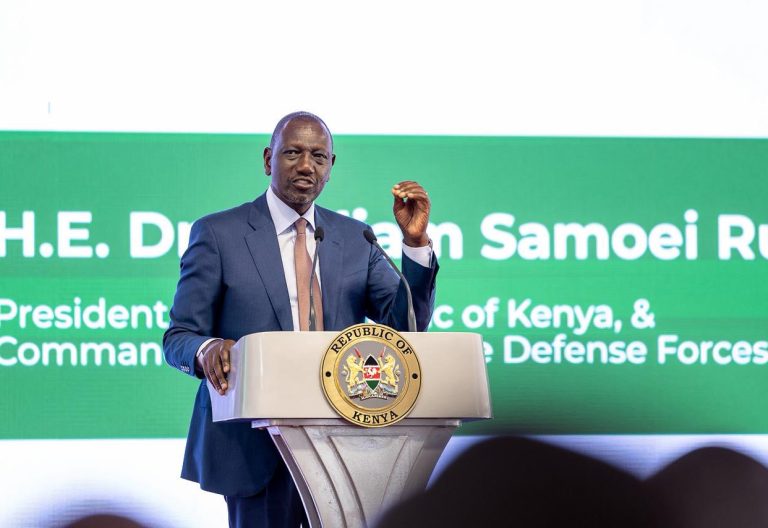
President William Ruto has outlined a major irrigation plan that will see Kenya construct 50 mega-dams across the country to irrigate two million acres of land.
The Head of State said the move is aimed at ending the country’s over-reliance on rain-fed agriculture, cutting food imports, and driving Kenya towards self-sufficiency.
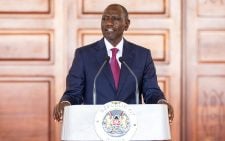
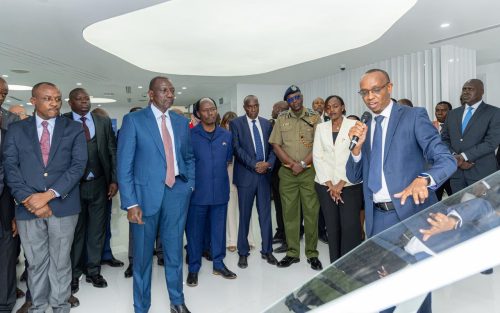
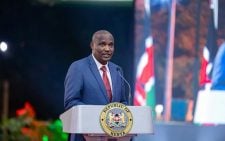
Speaking on Monday, October 13, 2025, during the launch of Phase One Infrastructure at Konza Technopolis in Makueni County, Ruto said irrigation is now Kenya’s next frontier in agricultural transformation.
Also watch: Ruto says backing agriculture is key to lowering living costs, not consumption subsidies.
You Might Also Like
He explained that the government is spending about Ksh500 billion every year to import food such as rice, wheat, sugar, and edible oil, a trend he described as unsustainable.
“We need to build 50 mega-dams like Thwake so that we can irrigate two million acres,” Ruto said. “It will not only provide us with food security in Kenya, but it will also give us products to export to the markets we have already negotiated.”
The president noted that Kenya has already secured access to major international markets through trade deals with the African Continental Free Trade Area (AfCFTA), the European Union, the United States under AGOA, and, most recently, China. However, he said the country is not producing enough to meet local demand, let alone supply these export markets.
Ruto said his administration has set aside at least Ksh1.5 trillion for the irrigation plan, which will include the construction of 50 large dams in different regions. He said this investment will help expand Kenya’s irrigated land and create millions of jobs, particularly for young people.
‘You are seeing what we are beginning in Galana; that is just a tip of the iceberg,” he said. “We need to do that across Kenya. That is the next frontier for our economy if we are serious about becoming a food-secure and export-driven nation.”
Two other key areas
The president said irrigation alone will not be enough to move Kenya from a developing nation to a first-world economy. He outlined two other key areas that must be prioritised alongside irrigation, energy generation and infrastructure development.
According to Ruto, Kenya currently produces about 2,300 megawatts of electricity, which he said is far below what is needed to support rapid industrialisation. He added that the government plans to increase generation capacity to 10,000 megawatts within the next seven years at an estimated cost of Ksh1 trillion.
“To generate 10,000 megawatts of energy, we need something like a trillion shillings. It’s not a lot of money, we can find it,” he said. “Without sufficient power, we cannot sustain manufacturing or expand industries.”
He cited ongoing and planned industrial projects such as those at Konza, Vipingo, Dongo Kundu, and Nakuru, saying they will collectively employ thousands of Kenyans but will require reliable and affordable energy to operate efficiently.
The president also called for massive investment in infrastructure, including roads, railways, and airports. He said the government needs about Ksh1.5 trillion to expand Kenya’s transport network, build at least 1,000 kilometres of dual carriageways, and modernise airports.
“We must up our game and raise our standards,” Ruto said. “We cannot continue thinking small. If we want to move from a third-world country to a first-world country, we must think big.”
National Infrastructure Fund
To finance the ambitious projects, Ruto said the government will set up a National Infrastructure Fund. The proposed law to establish the fund will soon be tabled in Parliament. He said the fund will pool resources from the national budget, private sector investments, and proceeds from privatisation to support large-scale development projects.
“With a well-managed national infrastructure fund, we can mobilise the resources we need to generate 10,000 megawatts of power, expand our transport network, and build 50 mega-dams for irrigation,” he said.
Ruto concluded by saying Kenya can achieve the transformation within a generation if citizens and leaders work together with focus and discipline. He drew comparisons with South Korea, saying the East Asian country faced similar economic challenges in 1963 but has since become a global industrial powerhouse.
“Korea was exactly like Kenya in 1963,” he said. “They made bold decisions, and today they are a first-world nation. We can do it too, in our lifetime.”
Author
Kenneth Mwenda
Kenneth Mwenda is a business, sports, and politics digital writer with over seven years of experience in journalism, covering breaking news, feature stories, and in-depth analysis across a range of beats.
For inquiries, he can be reached at [email protected]
View all posts by Kenneth MwendaLatest News

Advertisement
More on Business