Advertisement
Rivatex dives deep into the red as cumulative losses hit Sh3.4 billion
Tuesday 12th August, 2025 07:00 AM|
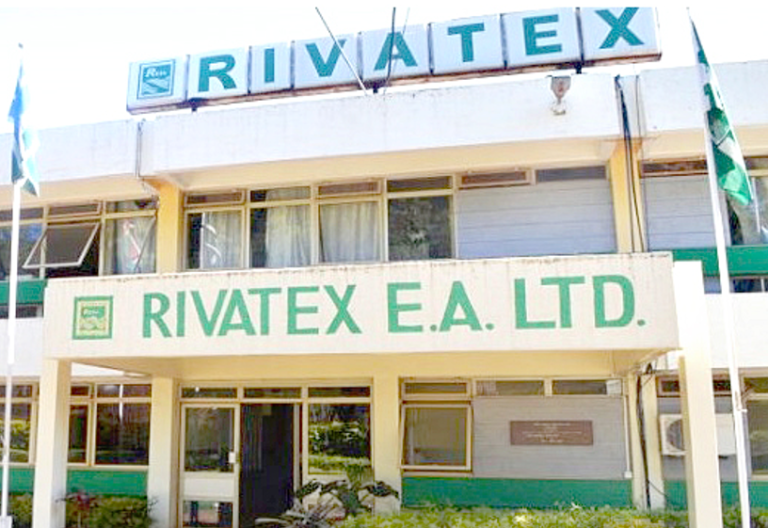
Rivatex East Africa Limited recorded a gross loss of Sh278.5 million in the financial year ending June 30, 2024, compared to Sh293 million the previous year, says a report by the Office of the Auditor-General .
The firm’s accumulated losses now stand at Sh3.4 billion, up from Sh3.04 billion in 2023.
Management blames chronic shortages of cotton, high production costs—especially for electricity, water, fuel, and labour—and frequent equipment repairs for the dismal performance.
This is as high-power costs and unreliable raw material supply stifle the growth of Rivatex, Kenya’s state-owned textile manufacturer, despite its reliance on locally sourced inputs.
Legislators say these challenges have kept the company on life support, heavily dependent on government bailouts.
The company’s debt burden is also rising. In 2023, Rivatex was owed Sh111.3 million, with over Sh29 million outstanding for more than a year, pointing to cash flow strains that threaten its survival without continued government and creditor support.
With most of Rivatex’s machinery running on power, and given Kenya’s industrial tariffs being uncompetitive compared to countries like Uganda and Ethiopia, the firm may find it difficult to be competitive.
According to the National Assembly’s Trade, Industry and Cooperatives Committee, the plant is operating at under 10 per cent of its installed capacity despite years of heavy investment—a factor that discourages foreign direct investment.
Trade committee member Bernard Shinali has warned that the absence of an industrial power policy is hurting manufacturing and continues to discourage foreign direct investments in Kenya.
“While our neighbours such as Uganda and Ethiopia and Uganda attract investors by offering competitive electricity tariffs, Kenya is yet to implement an industrial power policy,” he said.Principal Secretary for Energy Alex Wachira says Kenya will need between 3,000 and 4,000 MW of nuclear power to lower costs, a target projected for around 2034. Until then, smaller power projects are unlikely to deliver significant price relief.
“We have to bring on board more nuclear power. That is the only way we are going to see low cost of power but these small power plants that we are still constructing will not drastically lower the cost of power,” he said.
Managing Director Stanley Bett says the firm is working with the Ministry of Industry, Trade, and Investments to distribute Sh60 million worth of Bt and open-pollinated cotton seeds to farmers, aiming to reduce costly imports and revive cooperative societies.
The government has also allocated Sh120 million to modernise and revitalise cotton ginneries, a move expected to boost supply.
Author
Victor Mukabi
View all posts by Victor MukabiLatest News




Advertisement
More on Business