Advertisement
Rironi-Mau Summit Highway: The businesses that stand to benefit
Friday 17th July, 2026 05:22 PM|

From transport companies and fuel stations to hotels, manufacturers and real estate developers, Kenya’s ambitious Rironi–Mau Summit Highway project is expected to create winners far beyond the construction industry.
The multi-billion-shilling expressway, currently under construction between Rironi and Mau Summit, is designed to ease chronic traffic congestion along one of East Africa’s busiest transport corridors.
The government is also preparing for the next phase, the expansion of the Mau Summit–Eldoret–Malaba section, which will ultimately create a modern high-capacity highway linking Nairobi to the Ugandan border.
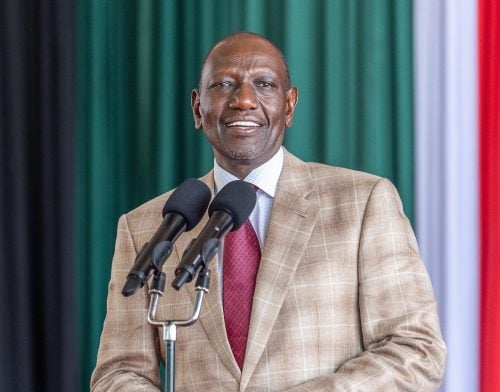
President William Ruto, while hosting Bungoma County grassroots leaders at State House, Nairobi, on Friday, July 17, 2026, reaffirmed that the highway will eventually extend through Eldoret, Bungoma and Malaba, describing it as a strategic investment that will unlock Western Kenya’s economic potential and strengthen regional trade.
You Might Also Like



For businesses operating along the Northern Corridor, the implications could be profound.
Manufacturers stand to save billions
Manufacturing firms are among the biggest beneficiaries.
Every day, thousands of trucks ferry raw materials from the Port of Mombasa to factories in Nairobi, Nakuru, Eldoret, Webuye and neighbouring countries before returning with finished products.
Years of congestion along the Rironi–Naivasha–Nakuru stretch have translated into higher transport costs, delayed deliveries and expensive fuel consumption.
A faster dual carriageway is expected to reduce travel time significantly, allowing manufacturers to cut logistics costs while improving inventory management.
Major manufacturers with operations in Nakuru, Eldoret and Webuye, including food processors, steel manufacturers, cement producers and paper manufacturers, could become more competitive as transport bottlenecks ease.
Freight and logistics companies
The Northern Corridor carries the majority of cargo destined for Uganda, Rwanda, South Sudan and eastern Democratic Republic of Congo.
According to the Kenya National Highways Authority (KeNHA), the upgraded highway forms part of a broader strategy to modernise one of Africa’s most important trade routes through a Public-Private Partnership (PPP). The planned Mau Summit–Eldoret–Malaba section alone covers about 245 kilometres and will complement the ongoing Rironi–Mau Summit expressway.
For logistics companies, shorter transit times mean:
- More truck trips per week.
- Lower fuel consumption.
- Reduced vehicle wear and tear.
- Lower insurance and maintenance costs.
- Improved reliability for importers and exporters.
Fuel stations and service centres
Paradoxically, while faster journeys may reduce fuel consumption per trip, roadside businesses are still expected to benefit.
Modern expressways often stimulate investment in fuel stations, truck stops, electric vehicle charging facilities, restaurants, vehicle repair centres, and convenience stores.

New commercial developments are already being anticipated around major interchanges and bypasses where motorists are likely to stop.
Hotels and hospitality
Hotels, lodges and conference facilities along the corridor could also see increased business.
Reduced travel times between Nairobi, Naivasha, Nakuru, Eldoret and Western Kenya are expected to encourage more domestic tourism, corporate travel and regional business meetings.
Tour operators also anticipate easier access to destinations such as Lake Nakuru National Park, Menengai Crater, Kerio Valley and Kakamega Forest.
Agriculture and fresh produce
Farmers may be among the biggest long-term winners.
The highway passes through some of Kenya’s richest agricultural zones, including areas producing:
- Tea.
- Maize.
- Wheat.
- Dairy products.
- Potatoes.
- Vegetables.
- Flowers.
- Sugarcane.
Faster transportation means produce reaches markets sooner, reducing post-harvest losses while improving profitability.
For exporters moving fresh produce to Jomo Kenyatta International Airport or the Port of Mombasa, improved road connectivity could enhance Kenya’s competitiveness in international markets.
Real estate
Infrastructure has historically driven land values in Kenya.
Property developers expect increased demand for residential estates, warehouses, logistics parks and industrial parks near highway interchanges.
Towns such as Naivasha, Nakuru, Mau Summit, Eldoret, Webuye and Bungoma could witness accelerated urban growth as businesses relocate closer to the upgraded transport corridor.
Industrial land is also likely to become more attractive to investors seeking efficient access to regional markets.
Cross-border trade
Perhaps the greatest economic impact lies beyond Kenya.
The Northern Corridor serves Uganda, Rwanda, Burundi, South Sudan and eastern Democratic Republic of Congo.
KeNHA describes the corridor as a strategic international route whose expansion is expected to reduce transport costs while strengthening regional integration and trade under the East African Community framework. The Mau Summit–Malaba expansion is also part of the Trans-African Highway network linking the Port of Mombasa to neighbouring countries.
Lower logistics costs could make Kenyan exports more competitive while improving the movement of imported goods into the country.
Construction firms and suppliers
In the short term, contractors supplying cement, steel, bitumen, aggregates, construction machinery, and engineering services stand to benefit from years of sustained infrastructure spending.
The project is also expected to create thousands of direct and indirect jobs during construction.
Financial institutions
Banks and insurance companies are likely to finance businesses expanding along the corridor.
Demand for commercial property loans, construction financing, asset financing, vehicle financing, and trade finance could rise as economic activity accelerates.
Challenges remain
Despite its economic promise, the project is not without challenges.
Questions remain over tolling arrangements, land acquisition, environmental concerns, and ensuring affordable access for motorists.
The government has previously revised aspects of the project after concerns over financing and toll charges, before relaunching the highway under a new Public-Private Partnership model. Construction on the Rironi–Mau Summit section is already underway, while feasibility work is progressing for the Mau Summit–Eldoret–Malaba extension.
Author
Mustafa Juma
View all posts by Mustafa JumaLatest News




Advertisement
More on Business