Advertisement
Report: World largest banks pledged Ksh117 trillion to fossil fuel companies in 2025
Tuesday 09th June, 2026 06:17 PM|

The world’s largest banks committed $906 billion (117.21 trillion) in financing to the fossil fuel industry last year, an “unfathomable” increase in investment locking in years more of coal, oil and gas production as the world continues to overheat, a new report has found.
The surge in new fossil fuel lending, up $64 billion (Ksh8.28 trillion) or nearly 8 per cent on 2024, shows that the world’s largest 65 banks are making decisions incompatible with international agreements to restrain rising global temperatures, according to the coalition of environmental groups behind the new analysis.
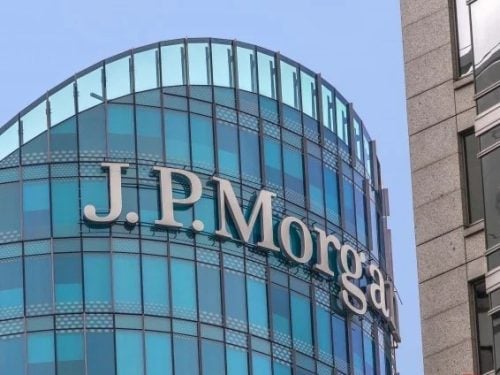
JPMorgan Chase is again the world’s leading financier of fossil fuels, according to the annual Banking on Climate Chaos report, after pushing $58 billion (Ksh7.50 trillion) to the sector last year – up 13 per cent from 2024.
Bank of America committed the second largest amount to fossil fuels last year, followed by Japanese banks MUFG and Mizuho Financial. Citigroup, another US bank, rounds out the top five, with Barclays, at number eight, the highest placed British bank.
You Might Also Like


“Last year was the first year where we were hoping to see a continuous decrease in historical numbers, but we actually saw that increase and then that continues this year,” said Caleb Schwartz, a policy analyst at Rainforest Action Network, one of the groups behind the report. “So it’s a troubling trend.”
Asked for comment about its fossil fuel lending, a JPMorgan Chase spokesperson said: “As one of the world’s largest financiers of energy, we support the full range of energy solutions and technologies, with a focus on reliability, affordability, security and long-term resilience. We believe our data reflects our activities more comprehensively and accurately than estimates by third parties.”
In 2015, countries agreed in the Paris climate deal to strive to avert a breaching of 1.5C in global heating above preindustrial times, beyond which the world will suffer ever more ruinous heatwaves, floods, droughts and other climate-fueled disasters.
Avoiding such a threshold would require the near elimination of planet-heating emissions from fossil fuel production. Since the Paris agreement, however, the world’s largest banks have funnelled $8.7 trillion to the fossil fuel industry to dig and drill for more coal, oil and gas.
Climate targets under threat
Scientists now predict that the 1.5C limit will be breached imminently, with a recent string of record hot years set to be further surpassed this decade.
In the wake of the US and Israel’s attack on Iran, which has escalated the global cost of oil and gas, several of the world’s largest fossil fuel companies have reported surging profits this year.
“The fossil fuel incumbents are not going out with a whimper,” said Niko Lusiani, a climate and energy expert who edited this year’s report. “They are doubling down to expand an increasingly fragile, unreliable, risky energy system.”
Fossil fuel lending is becoming more concentrated among a selection of large institutions, the new report found, with what the green groups called the “dirty dozen” responsible for 40 per cent of all industry funding. Almost all fossil fuel financing comes from six jurisdictions – the US, Canada, Japan, China, the UK and the European Union.
A total of 26 out of the top 65 largest banks reduced their fossil fuel financing last year, with European banks BNP Paribas, UBS and La Caixa leading the way with reductions.
Large oil and gas operators have not been left short of available cash, however, with the largest banks pledging $508 billion (Ksh65.72 trillion) for the expansion of existing fossil fuel sites last year, a 27 per cent increase on 2024. Three US oil and gas operators – Venture Global, Enbridge and Energy Transfer – were the largest recipients of borrowed funds in 2025.

/X
Several large banks had previously announced targets to cut their emissions and to restrict lending to particularly dirty forms of energy, such as coal. But amid the political resurrection of Donald Trump, who has called the climate crisis “bullshit” and demanded unfettered fossil fuel extraction, banks have turned their backs on previous environmental commitments.
Last year, the Net-Zero Banking Alliance, a UN-backed scheme that aimed to align banks’ lending with net zero emissions scenario by 2050, was disbanded after a number of high-profile departures from its membership.
“We’ve seen a lot of banks turn their back either quietly or more loudly amid a context of political pressure, particularly in the US,” said Lusiani.
He added: “The era of voluntary commitments has not worked at the scale that we need and so this points to a much more active role for financial regulators, legislators and policymakers, especially in those big six financial centers.”
In response to a request for comment, a spokesperson for Bank of America said that the bank supported “a broad range of clients across both renewable and traditional energy sectors, by providing them with the capital and advice to achieve their goals – including advancing clean energy technologies and ensuring energy affordability and security in an increasingly complex and dynamic environment”.
A spokesperson for Citi, meanwhile, said the company “supports clients in the low‑carbon transition while recognizing the real need for secure, affordable and reliable energy today. We are committed to achieving net zero financed emissions by 2050 and advancing our $1 trillion sustainable finance goal, with a focus on balancing the transition with global energy resilience”.
Author
Latest News








Advertisement
More on Business