Advertisement
Oil prices fall sharply after Iran says Strait of Hormuz is open
Friday 17th April, 2026 08:59 PM|

Oil and gas prices fell sharply on Friday, April 17, 2026, after Iran said the Strait of Hormuz was open to commercial shipping, potentially clearing the way for tankers holding millions of barrels of oil and gas to reach the global market.
Iran’s foreign minister said vessels would be free to transit the Strait of Hormuz for the duration of the 10-day ceasefire between Israel and Lebanon, which was struck on Thursday, April 16, 2026.
Brent crude, the international benchmark, fell more than 10 per cent to $88.8(Ksh11,468) a barrel. That is well below a peak of $119 (Ksh15,368) last month, but still much higher than the $72 (Ksh9,298) before the war.
Donald Trump later said the US naval blockade on Iran’s use of the strait would remain in full force until Washington had struck a deal with Tehran. He said the process “should go very quickly” because “most of the points are already negotiated”.
You Might Also Like

The benchmark European gas contract fell by about 6.4 per cent to about €39 (£34 or Ksh5,924) per megawatt hour on hopes that diplomatic progress between the US and Iran could bring an end to the conflict.
The news also drove stock markets higher on both sides of the Atlantic. Germany’s Dax and France’s Cac rose by about 2 per cent, while the Dow Jones and S&P 500 opened up more than 1 per cent in New York. In London the FTSE 100 closed up 0.7 per cent.
Tehran’s chokehold on the Strait of Hormuz since the US and Israel’s attacks on Iran began seven weeks ago has disrupted supplies of Middle Eastern crude and gas as well as refined fuels from Gulf refineries, in what the International Energy Agency has described as the biggest energy supply crisis in history.
Oil and gas prices had already begun to slide after Trump said on Thursday that Israel had agreed to a ceasefire with Lebanon, in a big step forward for the US peace talks with Iran.

The progress was the clearest sign yet that oil and gas flows could begin to return to normal. However, big questions remained over whether the ceasefire would hold for long enough for tankers stranded in the Gulf to move through the strait and whether shipping companies would be willing to risk a transit.
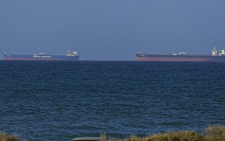
Before the crisis, more than 130 ships a day travelled through the strait, but this has reduced to a trickle under threats from Iran’s Revolutionary Guards. About 800 tankers remain stuck in the Gulf, of which about 300 are oil and gas tankers.
Author
Latest News








Advertisement
More on Business