Advertisement
Mobile money loans take over Kenya’s credit market amid rising fraud – report
Monday 06th April, 2026 02:48 PM|
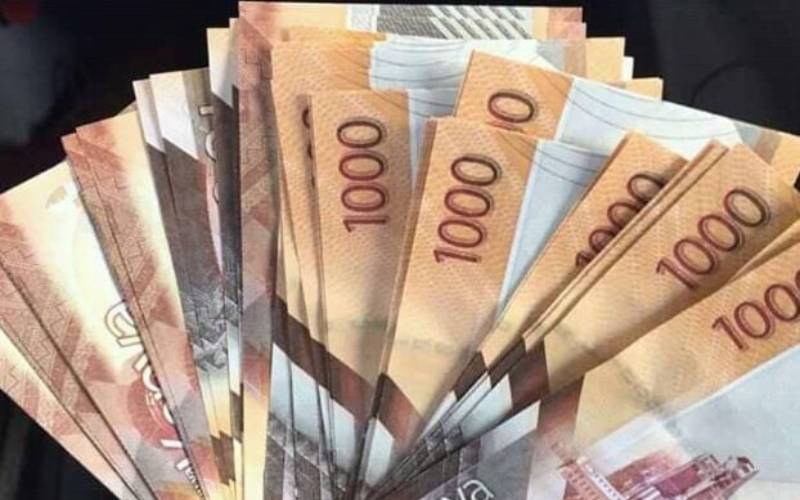
Many Kenyans are borrowing money from Mobile Money Providers (MMPs) as usage of mobile money accounts rises in African markets.
While most mobile money accounts ownership remains high in Africa, Kenya, Tanzania and Uganda were found to have the highest mobile money account ownership rates in the world.
Here, the GSMA found that 20 per cent of adults have mobile money as their only financial account.
You Might Also Like



This growth in account ownership has since seen a preference for mobile money loans, as borrowers in Kenya and other East African markets shun borrowing from banks and other formal financial institutions. The same is evident in saving, where customers preferred saving on their mobile money accounts to taking their money to the bank.

In its survey, GSMA found that mobile money borrowing accounted for approximately 60 per cent of all formal borrowing in the Sub-Saharan Africa region in 2024.
In Kenya, 32 per cent of adults borrowed loans from a Mobile Money Provider, with 25 per cent of adults only borrowing through their mobile money accounts and not from banks, saccos or microfinance institutions.
“A larger share got a loan through a mobile money account in 2024. At the same time, bank-only borrowing decreased among those who borrowed only in this way,” the State of Industry report notes.
The mobile loans, which are low-value and are paid within a short duration, have since driven MMPs to profitability as agents play a crucial role in digitising money.
Scam affecting the industry
As the mobile money industry continues to record significant growth, fraud remains a big challenge to providers and their customers.
The GSMA points out that close to Ksh65 trillion is lost globally due to fraud, which is the most common complaint among consumers of digital financial services.
Identity fraud remains the most prevalent scheme among mobile money consumers who also face impersonation, insider fraud from MMP staff, agent fraud and cyber fraud.
Other mobile money users lose money through social engineering and SIM Swap schemes.
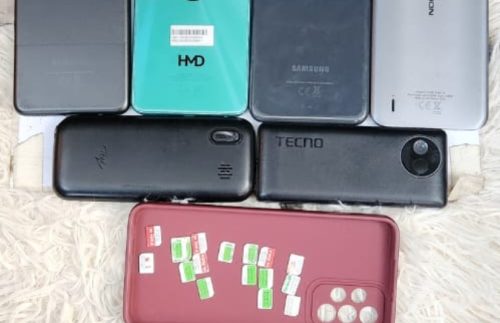
To counter these incidents, MMPs say they have adopted Artificial intelligence solutions to detect anomalies such as unusual transaction patterns.
The AI and Machine Learning technologies have enabled providers to train models using historical fraud events. These algorithms can then recognise patterns in unusual transactions and predict fraudulent activities through real-time monitoring.
Others are combating fraud by creating awareness among consumers.
The sector, according to the GSMA, is also faced by challenges including taxation, remittance costs, inconsistent licensing, and other policy and infrastructure gaps.
“Mobile money has become an economic cornerstone in many LMICs. However, taxes on mobile money transactions risk affecting millions,” the sectoral report notes.
Kenya’s adoption of mobile credits
The government of Kenya has put in place programmes enabling access to mobile money credits.
In 2022, the Kenya Kwanza government unveiled the Hustler Fund, a Financial Inclusion Fund disbursed through mobile money.
As of November 2025, the state said it had disbursed over Ksh80 million in personal loans and to small businesses previously locked out of formal lending.
“We took a firm position and negotiated with credit reference bureaus, and we redeemed 7 million Kenyans who were blacklisted and gave them a second chance. Today, we have 2 million Kenyans who borrow religiously from the Hustler Fund,” President William Ruto said on the status of the lending programme.

In August 2025, Kenya unveiled yet another financial inclusion programme enabling credit to youth and vulnerable persons who have historically been excluded from formal borrowing.
The National Youth Opportunities Towards Advancement (NYOTA) Project, in partnership with the World Bank, offers citizens a startup capital of Ksh50,000 each to support small businesses.
Both Hustler Fund and NYOTA funds can be accessed through mobile platforms using USSD codes.
However, Kenya’s initial financial inclusion programme has since been crippled by defaulters. As of March 5, 2026, borrowers had defaulted on paying Ksh12 billion taken from the Hustler Fund. These defaulters are disqualified from the NYOTA program.
The state has since put in place measures to enhance the loan recovery by tracing defaulters through their personal identifiers, including national IDs and SIM cards.
In the financial year 2025/26, Hustler Fund’s budget was clipped to Ksh300 million, down from the ambitious Ksh5 billion allocated in the previous financial year.
Author
Latest News







Advertisement
More on Business