Advertisement
Mbadi warns weaker shilling could strain budget further
Monday 25th May, 2026 12:11 PM|

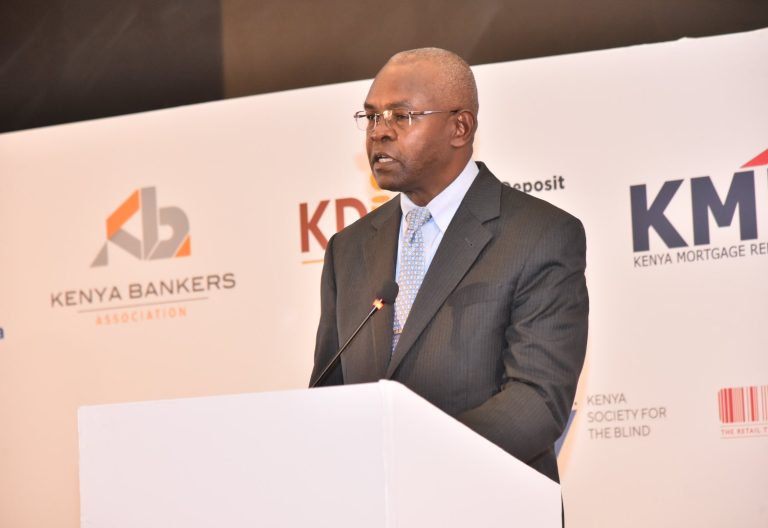
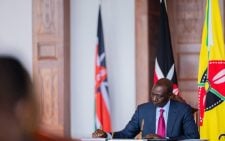
Treasury Cabinet Secretary John Mbadi has warned that Kenya’s fiscal stability depends heavily on protecting the shilling from unnecessary depreciation, saying any sharp fall in the currency would worsen debt costs and strain the national budget.
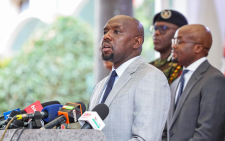
He spoke on Monday, May 25, 2026, while addressing journalists about the Finance Bill 2026 and 2026/27 budget.
“That is again why I’m saying those who are calling on us to discontinue G2G, you want this economy to commit suicide, and we will not allow it. The shilling, we don’t want the shilling to depreciate unnecessarily, because that would raise the price of the cost of servicing our debt from 1.5 trillion to a higher figure,” Mbadi said.
Mbadi’s remarks come two days after he warned that the shilling could weaken sharply to as low as Ksh180 against the US dollar if the government-to-government (G2G) fuel import arrangement is scrapped.
You Might Also Like
Speaking on Saturday during a church event in Rarieda, the Treasury CS defended the fuel import framework, saying it helps ease pressure on the demand for dollars and protects the local currency from further strain.
He argued that Kenya is operating under difficult global conditions marked by high fuel landing costs, longer shipping routes and foreign exchange pressures linked to the ongoing conflict in the Middle East.
“If you liberalise fuel importation, the demand for dollars will be high, and that will strain the shilling,” Mbadi said at the time. “You will find the shilling moving from 129 or 130 to 160, even 180.”
He said a weaker shilling would make fuel imports more expensive and significantly raise the country’s external debt servicing costs, increasing pressure on an already stretched budget.
Growth slowdown raises concerns
The CS also said Treasury has not made a final decision on whether to reopen the budget, but acknowledged that weaker growth could force adjustments.
“It will really do the budget. But anyway, what I was answering, my friend, is, will we redo the budget? We still don’t know,” he said. “You know, you can decide to redo the budget now, and this will work through trucks and continues for another one year. How will you respond?”
Mbadi said global conditions are pushing many economies, including Kenya, to revise growth forecasts downwards.
“I think it is early. We are monitoring the situation as it is, but obviously, it’s going to hit all economies,” he said. “All economies are revising their projections downwards in terms of economic growth. Even Kenya, we are already lowering it.”

He added that Kenya’s current growth assumption of about 5 per cent is under review by technical teams before any official change is made.
“Let my team work on it. I don’t want to interfere with my technical team. Let them present to me the facts that this is now the projected economic growth, and we will communicate it,” he said.
Mbadi warned that any slowdown in growth would directly reduce revenue collection and tighten fiscal space.
“The moment the projected economic growth comes down, what will happen? Revenue projection will come down,” he said. “And if revenue projection is down, how do you finance the same budget? Either by borrowing or taxation.”
Spending cuts remain likely
He ruled out both options as immediate solutions, saying the government has limited room to manoeuvre.
“We have no option to come for more taxes. Borrowing is another no-go zone,” he said.
That, he said, leaves spending cuts as the only remaining option, though no decision has been taken.
“So what is the other option left? Cut the budget. So, however painful it is, we may go that route,” he said. “But for now, it is too early to say that because we must be sure of the magnitude.”
Mbadi described the 2026/27 budget as highly rigid, with most expenditure already committed before any policy flexibility.
He said projected revenue of Ksh3.63 trillion is immediately reduced by Ksh1.5 trillion in debt repayment obligations.
“That one you cannot even negotiate. It is there,” he said.
After debt servicing, he said about Ksh2.1 trillion remains, most of which goes to salaries and fixed statutory spending.
“That 2.1 trillion goes to paying salaries, not negotiable,” he said.
He added that counties take about Ksh420 billion, while the Constituency Development Fund absorbs Ksh.61 billion. Additional allocations go to social programmes, including cash transfers for the elderly, health support, school capitation, and agricultural subsidies.
“You remain with less than 700 billion,” he said. “Then I have not even gone into security.”
Mbadi said the security sector alone takes about Ksh566 billion, including salaries and operations.
“My friend, where is the money? Where do you even cut?” he asked.
Author
Kenneth Mwenda
Kenneth Mwenda is a business, sports, and politics digital writer with over seven years of experience in journalism, covering breaking news, feature stories, and in-depth analysis across a range of beats.
For inquiries, he can be reached at [email protected]
View all posts by Kenneth MwendaLatest News

Advertisement
More on Business