Mbadi explains reasons behind Ksh4.82T budget amid push for tax cuts
By Aloys Michael, June 11, 2026Treasury Cabinet Secretary John Mbadi has defended the proposed Ksh4.82 trillion national budget, saying public criticism over its size is largely based on a misunderstanding of what is driving the increase in government spending.
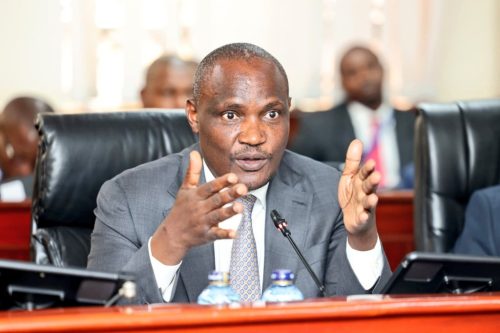
Speaking on Thursday, June 11, 2026, ahead of the official budget presentation in Parliament, Mbadi said many Kenyans commenting on the budget had not examined the details behind the figures.
“A lot of negative comments around the size of the budget are informed by people who have not looked at the details. If you determine what has caused the budget to go to Ksh4.8 trillion, you will realise that the line with the highest increase is what we call Consolidated Fund Services,” Mbadi said.
According to the CS, Consolidated Fund Services (CFS), which covers public debt repayments and pension obligations, accounts for the largest share of the increase in expenditure.
“CFS is basically debt repayment and pensions, and these are figures that you cannot change. If debts become payable, you have to pay them, and if pensions become payable, you have to pay them,” he explained.
Mbadi noted that CFS spending has risen from Ksh1.36 trillion to Ksh1.501 trillion, making it the single biggest contributor to the expansion of the budget.
“That is the heaviest increase in the budget. It is not even the recurrent expenditures that some people want to believe,” he said.
The Treasury boss also said the government’s efforts to improve spending efficiency through the implementation of a zero-based budgeting framework, which requires every expenditure item to be justified before receiving funding.
“Last year, we indicated that this year would be the first year for implementation of zero-based budgeting, and we have exactly implemented that,” Mbadi said.
He acknowledged that the new system is still in its early stages and will take about three years to fully achieve its intended impact.
However, he said it had already helped identify areas where expenditure could be reduced.
As an example, Mbadi pointed to significant cuts in the Energy State Department budget after reviews showed that several projects could be financed through alternative mechanisms such as the National Infrastructure Fund and Public-Private Partnerships (PPPs).
“We have largely prepared this budget on the basis of justification of every expenditure, as opposed to what has previously been the case,” he said.
The Ksh4.82 trillion budget is expected to be closely scrutinised as lawmakers and taxpayers continue to push for lower taxes and prudent government spending.