Advertisement
Mbadi defends 2026 Finance Bill deficit amid soaring debt servicing costs
Monday 11th May, 2026 02:29 PM|

Treasury Cabinet Secretary John Mbadi has defended the government’s widening budget deficit under the proposed Finance Bill 2026, blaming shrinking borrowing space, ballooning debt servicing costs and rigid public expenditure obligations that leave the State with little room to cut spending.
Speaking during a Monday, May 11, 2026, press briefing, Mbadi said the government is now under pressure to increase revenue collection without introducing punitive new taxes, forcing the Kenya Revenue Authority (KRA) to intensify reforms aimed at sealing loopholes and boosting compliance.
“We may because the borrowing space is shrinking, and you can see we are spending so much money in terms of debt service, I would not want to go that route to borrow more,” Mbadi said.
“We would want to try as much as possible to live within our means, and that would call for some adjustment in expenditure.”
You Might Also Like


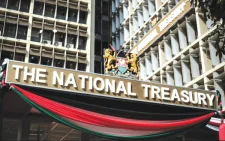
The CS, however, admitted that reducing government expenditure has become increasingly difficult because most of the national budget is tied to mandatory spending.

“If you look at our expenditure in its totality, first there is the Ksh1.5 trillion going to debt service, and then you have another almost a trillion going to salaries,” he stated.
Mbadi explained that after allocating nearly Ksh500 billion to counties through equitable share and conditional grants, the government is left with limited fiscal flexibility to fund critical sectors such as education, healthcare, agriculture and security.
“So, you find then the other recurrent expenditure, you go to the security sector. You have education taking money you cannot do without, supporting secondary, free primary. And there’s even demand to put more money there,” he added.
The Treasury boss further noted that healthcare spending continues to rise, with the government allocating Ksh18 billion to primary healthcare and another Ksh4 billion for emergency, chronic and critical illnesses.
Agriculture subsidies have also become unavoidable amid food security concerns.
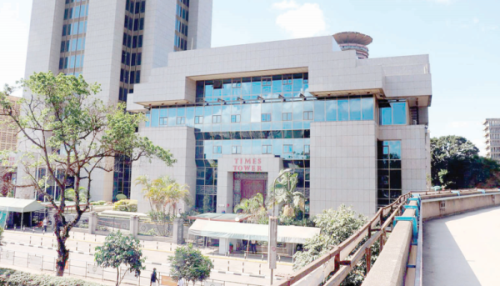
“Fertiliser subsidy, which if we don’t do, there will be no food security, again that is taking another Ksh18 billion, Ksh19 billion,” Mbadi said.
“So you look at all this, you realise that we realistically don’t have that leverage, that latitude in terms of cutting our expenditure. Therefore, the Kenya Revenue Authority must perform.”
No fresh taxes?
Mbadi insisted that the only sustainable solution available to the government is to increase revenue collection efficiency rather than impose fresh taxes on Kenyans already grappling with a high cost of living.

“That is why we are putting a lot of reforms there, so that the only avenue we have, the only space, revenue, we must increase revenue without increasing taxes,” he said.
His remarks come months after the National Treasury unveiled a strategy to increasingly rely on domestic borrowing to finance the country’s growing budget deficit while reducing exposure to expensive foreign debt.
According to the 2026 Draft Medium Term Debt Strategy (MTDS), the government plans to finance 82 per cent of its gross borrowing needs through domestic sources, with only 18 per cent coming from external lenders.
Treasury argues that the move is aimed at containing borrowing costs and reducing foreign exchange risks associated with external debt.
“From an array of strategies analysed, Strategy 2 proposes balancing lower cost external borrowing with deepening the domestic debt market, locking in fixed rates and lower foreign exchange rate exposure,” the Treasury said in the draft MTDS released on Monday.
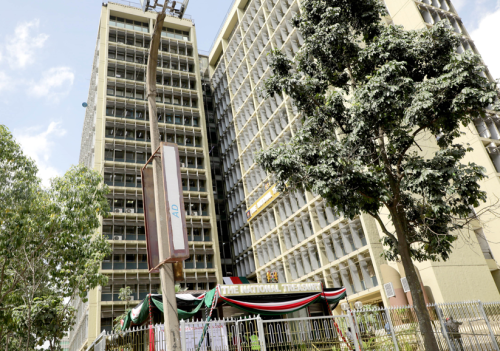
The government projects that between the 2026/27 and 2028/29 financial years, 78 per cent of net borrowing will come from domestic sources compared to 22 per cent externally.
However, the heavy reliance on local borrowing has sparked concerns among private sector players, who fear that aggressive government appetite for domestic credit could crowd out businesses seeking loans from commercial banks.
The Treasury has defended the strategy as cost-effective and says it plans to deepen the local debt market through innovative financing instruments, including retail digital bonds accessible via mobile money platforms.
Data from the Treasury shows the government has consistently exceeded its domestic borrowing targets in recent years due to delays in external financing disbursements.
In the 2024/25 fiscal year, the government financed 83 per cent of its revenue needs locally against a target of 55 per cent. Similar deviations were recorded in previous years, highlighting the State’s increasing dependence on the domestic debt market.
The MTDS further revealed that domestic debt risks worsened in the year ending June 2025, with the proportion of instruments maturing in under one year rising to 20.5 per cent from 18.6 per cent, increasing refinancing pressure on the exchequer.
Author
Latest News




Advertisement
More on Business