KNBS explains why inflation and trade deficit rose despite Kenya’s economic growth
By Aloys Michael, July 10, 2026Kenya’s economy posted stronger growth in the first quarter of 2026, but rising inflation, a widening current account deficit and renewed currency pressures highlight challenges that could weigh on the country’s economic outlook in the months ahead.
According to the latest Quarterly Gross Domestic Product (GDP) Report released by the Kenya National Bureau of Statistics (KNBS) on Friday, July 10, 2026, the economy expanded by 5.3 per cent in the first quarter of 2026 compared to 4.9 per cent growth recorded during the corresponding period in 2025.
While the stronger GDP performance points to resilience in key sectors such as tourism, construction, manufacturing and financial services, the report shows that several macroeconomic indicators moved in the opposite direction, raising concerns about the cost of living, external balances and exchange rate stability.
One of the key warning signs highlighted by KNBS was the increase in inflation during the review period.
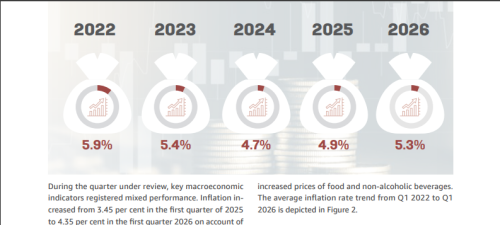
“Inflation increased from 3.45 per cent in the first quarter of 2025 to 4.35 per cent in the first quarter of 2026 on account of increased prices of food and non-alcoholic beverages,” the report stated.
Although inflation remains within the Central Bank of Kenya’s target range, the rise suggests that households are continuing to face pressure from higher food costs despite broader economic growth.
For consumers, inflation directly affects purchasing power by increasing the cost of essential goods and services. For businesses, rising input costs can squeeze profit margins and ultimately be passed on to customers through higher prices.
The increase also illustrates a common economic challenge where growth does not always translate into immediate relief from cost-of-living pressures.
Current account deficit widens sharply
The KNBS report also revealed a significant deterioration in Kenya’s current account balance.
“The current account balance widened from a deficit of KSh 70.0 billion in the first quarter of 2025 to KSh 120.9 billion in the first quarter of 2026,” KNBS said.
A current account deficit occurs when a country spends more on imports, services and external obligations than it earns from exports and foreign income.

Economists often view a widening deficit as a signal of growing external financing needs. While deficits can be supported by strong investment inflows, persistent expansion may increase vulnerability to external shocks and currency volatility.
The latest figures suggest that despite gains in tourism earnings and export-oriented sectors, Kenya continues to face pressure from its import bill and international financial obligations.
Shilling faces renewed currency pressures
The report also showed mixed performance for the Kenyan shilling against major global and regional currencies.
According to KNBS, the shilling depreciated against the euro by 11.2 per cent and the pound sterling by 6.9 per cent during the quarter under review. The local currency also weakened against the South African rand, Ugandan shilling and Tanzanian shilling.
However, the shilling gained marginally against the US dollar by 0.1 per cent and appreciated by 2.9 per cent against the Japanese yen.
Businesses closely watch currency movements because they affect the cost of imports, external debt servicing and international trade competitiveness. A weaker shilling can increase the cost of imported goods, fuel and industrial inputs, potentially contributing to inflationary pressures.
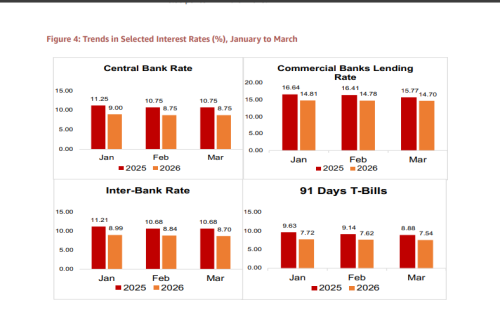
Despite these headwinds, Kenya’s economic fundamentals showed encouraging signs. Tourism recorded double-digit growth, construction activity accelerated, manufacturing rebounded, and financial services expanded as borrowing costs declined.
The combination of stronger economic growth and rising macroeconomic pressures presents a mixed picture for policymakers, businesses and households.
As Kenya seeks to sustain growth in 2026, managing inflation, stabilising external balances and protecting the value of the shilling will remain critical to ensuring that economic gains translate into broader benefits for consumers and businesses across the country.