Advertisement
CBK reveals why Kenya’s food prices face new inflation pressure
Wednesday 17th June, 2026 11:05 AM|

Kenyans could get a temporary break at the supermarket, but a storm thousands of kilometres away may decide how long it lasts.
A new agriculture sector survey by the Central Bank of Kenya (CBK) shows that the country’s food basket is caught between two competing forces: favourable rainfall that is improving food supply, and global shocks that threaten to push up the cost of living.
The CBK Agriculture Sector Survey May 2026 reveals that while farmers remain optimistic about production, rising fuel costs, transport expenses and disruptions linked to the Middle East conflict are creating fresh risks for Kenya’s food prices in 2026.
The survey found that 65 per cent of respondents expect inflation to rise in the next one month, while 64 per cent expect it to increase over the next three months.
You Might Also Like
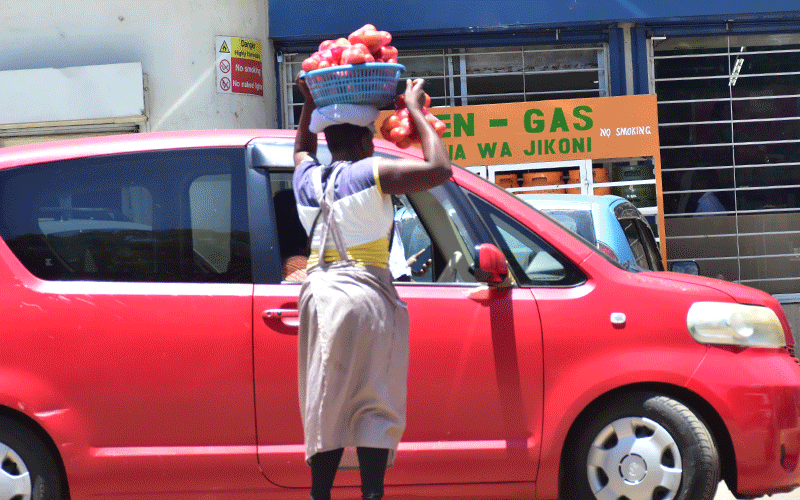

However, the figures represent a decline from April 2026, when 81 per cent of respondents expected inflation to rise over both periods. CBK attributed the improvement partly to expectations of increased food supplies after favourable rainfall during the March-May long rains season.
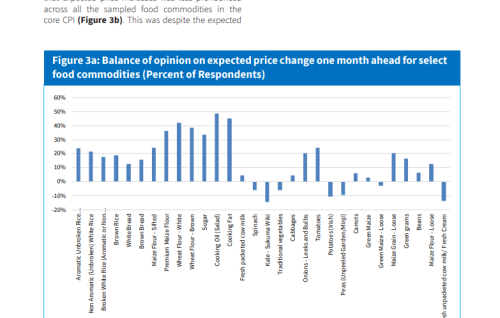
For households already struggling with the cost of living in Kenya, the report highlights a delicate balance. The rains have improved expectations for harvests, potentially easing pressure on essential commodities, including maize products, vegetables and milk.
But the same households remain exposed to external shocks affecting transport and energy costs.
“Transport costs emerged as the biggest factor influencing retail prices, with 95 per cent of respondents identifying it as a major driver. Weather conditions followed at 83 per cent, while market access and product availability accounted for 77 per cent. The survey also found that 76 per cent of respondents linked price pressures to the US-Israel-Iran war, citing its impact on global oil prices and supply chains,” the survey reads.
The conflict’s economic impact is being felt through fuel markets, with higher energy costs threatening to filter down to food distribution networks.
Traders and farmers face increased expenses moving produce from farms to markets, creating a possible ripple effect on retail prices.

For consumers watching maize flour prices, the outlook is mixed. While improved harvest expectations could support food availability, higher fuel and transport costs could limit how much relief reaches households.
The CBK report says that more than 80 per cent of sampled respondents expect agriculture sector performance to improve in the next three months and one year, mainly because of favourable rains and continued government support, including interventions aimed at reducing farm input costs.
Farmers also reported strong expectations for improved output across several crops, with optimism linked to better weather conditions. Sugarcane, millet, onions and carrots were among crops where farmers expressed stronger confidence about production prospects.
However, Kenya’s food security remains vulnerable as the survey found that 77 per cent of sampled farmers depend mainly on rain-fed agriculture, meaning future rainfall patterns will continue to play a major role in determining food supply and prices.
The CBK findings suggest that Kenya may be entering a critical period where weather, global energy markets and farming conditions will determine whether households experience sustained relief or another wave of inflation pressure.
Author
Latest News





Advertisement
More on Business