Inside secretive bid-rigging schemes capturing Kenya’s biggest deals
By Aloys Michael, March 18, 2026A shadowy web of colluding contractors may be quietly capturing Kenya’s most lucrative public tenders, inflating prices, rotating winners and draining billions meant for roads, schools and hospitals, a new study has revealed.
The report suggests that government procurement is not merely inefficient or corrupt in isolated cases, but increasingly vulnerable to organised bid-rigging schemes designed to simulate fair competition while secretly predetermining outcomes.
Public procurement accounts for roughly 60 per cent of government spending, making it the single largest marketplace in the country.
According to the Organisation for Economic Co-operation and Development (OECD), this enormous pool of public money has become fertile ground for cartel-like behaviour among suppliers.
“Public procurement markets are particularly vulnerable to bid rigging,” the report released on Tuesday, March 17, 2026, reads in part, warning that collusion can flourish when oversight is weak and detection tools are limited.
The illusion of competition
The report reveals that companies secretly coordinate their bids before submitting them. One firm wins at an inflated price, while the others submit deliberately higher or non-competitive bids to create the appearance of a legitimate contest.
In other cases, firms may take turns winning contracts, a practice known as bid rotation. Over time, each member of the network profits while taxpayers foot the bill.
The OECD review found that Kenyan authorities lack effective systems to identify such patterns before contracts are awarded.
“Screening mechanisms are inadequate,” the report states, explaining that suspicious bidding behaviour often goes unnoticed until long after public funds have been spent.
Without data analytics or specialised monitoring tools, procurement officers may see only what appears to be normal competition on paper.
Strong laws, weak enforcement
Kenya’s legal framework against collusion is relatively robust. However, enforcement tells a different story.
The report notes that despite clear prohibitions against anti-competitive conduct, actual investigations and penalties remain limited.
“Enforcement has been constrained partly due to capacity challenges and weak coordination among agencies,” the report reads.
This gap creates a low-risk, high-reward environment for cartel behaviour. Companies that rig bids can reap enormous profits with little fear of detection or punishment.
Authorities are also hampered by insufficient resources. Investigating procurement cartels requires specialised expertise, forensic data analysis and sustained inter-agency cooperation, capabilities that remain underdeveloped.

A marketplace captured
The study says the consequences extend far beyond inflated invoices. When contracts are awarded at artificially high prices, fewer projects can be completed with the same budget.
A single rigged infrastructure tender, the study warns, can cost taxpayers enough to build dozens of classrooms, equip county hospitals or extend electricity to underserved communities.
In effect, cartel activity silently converts development funds into excess profits for a handful of firms.

“Collusion reduces efficiency and increases costs for the government,” the report notes, warning that citizens ultimately pay through poorer services and stalled projects.
One of the most troubling findings is that authorities cannot often detect collusion early. The OECD recommends the introduction of specialised screening tools and audits to identify markets at high risk of bid rigging.
Such tools can flag suspicious patterns, identical pricing structures, recurring winners, or bids submitted from related companies that human reviewers might miss.
Currently, however, these systems are largely absent or underutilised.
“Authorities lack the tools to detect collusion before contracts are awarded,” it says.
The human cost and remedies
Behind the technical language lies a stark reality: every inflated contract means lost opportunities for ordinary Kenyans.
Fewer schools are built. Roads remain unfinished. Hospitals operate without essential equipment.
What appears on paper as a procurement anomaly translates in real life into overcrowded classrooms, longer travel times and preventable deaths.
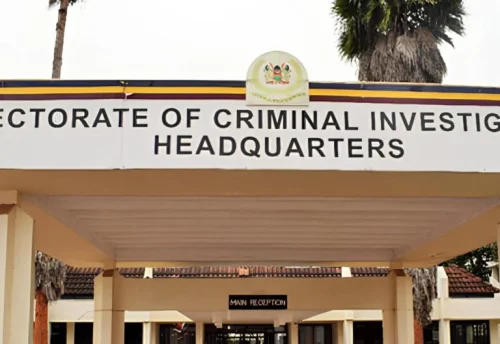
The OECD is urging Kenya to strengthen cooperation between competition and procurement watchdogs, such as the Directorate of Criminal Investigations (DCI) and the Ethics and Anti-Corruption Commission (EACC), invest in data-driven detection systems and increase enforcement capacity.
Without decisive action, the report warns, collusive networks could become entrenched within public contracting.
If left unchecked, tender cartels risk turning the government’s largest spending channel into a pipeline for private gain, quietly diverting billions away from national development.
For taxpayers, the stakes could not be higher: the difference between a functioning public service and one perpetually starved of funds may hinge on whether these hidden networks are finally exposed and dismantled.
Sealing loopholes
As part of the government’s effort to seal the loopholes, the eGP platform was introduced.
This digital platform was touted to address key challenges faced by businesses, including delayed access to information, limited visibility of tender notices, high transaction costs, and concerns about fairness. Automation was further tipped to enable faster bid submissions, reduce paperwork, and simplify documentation.
Improving transparency by creating a clear audit trail and reducing human interference, which lowers the risk of malpractice, was also listed among the key attributes of the eGP platform.