Advertisement
Revealed: How govt is losing billions through procurement loopholes
Wednesday 18th March, 2026 11:46 AM|

A damning new international report has laid bare how weak oversight, poor coordination among watchdogs, and limited use of technology are draining billions of shillings from Kenya’s public coffers through flawed procurement practices.
The study by the Organisation for Economic Co-operation and Development (OECD) dubbed Peer Reviews of Competition Law and Policy: Kenya, paints a troubling picture of a system vulnerable to cartel behaviour, inflated contracts and near-impunity for offenders.
Public procurement, the report notes, is one of the largest channels of government spending, making any leakage extraordinarily costly to taxpayers.
“Public procurement accounts for approximately 60 per cent of the government’s annual budget,” the report published on Tuesday, March 17, 2026, reads in part.

You Might Also Like



At the centre of the problem is weak enforcement. Despite laws that criminalise collusion and bid rigging, penalties are rarely applied. The review found that enforcement of competition rules in Kenya “has been limited” in recent years, even though the legal framework itself is considered robust.
The report warns that this gap between law and practice creates fertile ground for price-fixing cartels that inflate costs while delivering poor-quality services.
Watchdogs working in silos
A key failure identified in the report is the weak collaboration between institutions responsible for policing procurement and competition. The Competition Authority of Kenya (CAK) and the Public Procurement Regulatory Authority (PPRA) operate largely independently, despite overlapping mandates.
The OECD recommends that the two agencies significantly increase the amount of co-operation and jointly develop detection tools for bid rigging. Without this coordination, suspicious tender patterns can slip through the cracks.
Compounding the problem is the limited role of prosecution authorities. The review notes that CAK sometimes depends on other state bodies to enforce sanctions, slowing or even derailing cases. Where prosecution is weak, fines become difficult to implement, effectively shielding offenders.

Transparency, a cornerstone of clean procurement, remains elusive. Only a fraction of public entities use centralised electronic procurement systems, leaving most tenders outside real-time scrutiny.
The OECD urges Kenya to expand digital tools that can automatically flag suspicious bidding patterns or high-risk tenders before contracts are awarded. Such systems are widely used internationally to detect cartel behaviour early.
“Screening tools or audits of past tender procedures” could identify markets prone to collusion, the report advises.
Weak institutions, stretched resources
Even when wrongdoing is detected, institutional limitations undermine enforcement. The CAK, the country’s main competition watchdog, operates with relatively low funding and staffing compared to similar agencies worldwide.
In 2024, its total budget was about Ksh578 million, with only a portion allocated to competition enforcement. The report says such constraints make it difficult to investigate complex procurement cartels that often involve sophisticated networks.
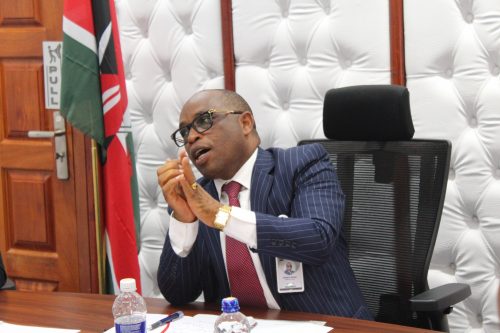
Staffing shortages further compound the challenge. The authority had just over 30 personnel working on competition issues, a figure the OECD says is far below comparable jurisdictions.
The cumulative effect of weak coordination, limited enforcement, technological gaps and under-resourced regulators is a procurement system susceptible to manipulation. Inflated contracts mean the government pays more for less, diverting funds from essential services such as health, infrastructure and education.
The OECD warns that without urgent reforms, Kenya risks entrenching a culture where collusion becomes routine rather than exceptional.
Among the priority recommendations are strengthening cooperation between agencies, boosting resources for enforcement, increasing transparency through technology and ensuring penalties are strong enough to deter misconduct.
Ultimately, the report notes that reforming procurement oversight is not merely a governance issue but an economic imperative. Efficient, competitive procurement could save taxpayers billions of shillings, money that could instead drive development and public welfare.
Until those safeguards are firmly in place, however, the nation’s largest spending channel may remain its biggest financial leak.
Author
Latest News








Advertisement
More on Business