How Kenya defies global slowdown but risks industrial decline – Report
By Aloys Michael, April 26, 2026Kenya is increasingly being hailed as one of Africa’s most resilient economies, standing firm even as global growth slows and financial pressures tighten.
With steady expansion, easing inflation, and a relatively stable currency, the country appears to be charting a confident economic path in 2026, outperforming several of its regional peers.
But beneath this reassuring headline performance lies a deeper concern. While Kenya’s economy continues to grow, the foundations of long-term transformation, particularly industrialisation, are weakening.
The result is a growing disconnect between macroeconomic stability and the kind of structural change needed to create jobs and sustain inclusive growth.
A new report by LEAF Africa, released Sunday, April 26, 2026, captures this contradiction starkly. In its Sub-Saharan Africa Economic Outlook 2026, the organisation describes Kenya as the region’s strongest and most stable performer, projecting GDP growth of 4.9 per cent in 2026 alongside relatively low inflation of about 5.2 per cent.
Yet it warns that future outcomes will hinge not just on stability but also on productive-sector strength and the ability to address structural constraints.
LEAF is an independent, private institution focused on data, research, and strategic insight on Africa’s markets and economies.
Over the past decade, manufacturing’s share of Kenya’s GDP has fallen significantly, from 10 per cent in 2015 to just 7.3 per cent in 2024. While other sectors, particularly services, have expanded, the erosion of industrial capacity raises concerns about the quality and sustainability of growth.
“The pattern suggests that manufacturing depth remains limited,” the report notes, adding that Kenya shows “the clearest downward trend, pointing to a shrinking manufacturing footprint within the economy.”
This shift is not just a technical economic issue; it has real implications for jobs, incomes, and the country’s development trajectory.
Manufacturing has traditionally been a key driver of employment, especially for young people entering the workforce. Its decline risks leaving many locked out of stable, higher-paying jobs, even as the broader economy expands. For small and medium-sized enterprises, the challenges are equally stark, ranging from high energy costs to stiff competition from cheaper imports.
Agriculture boom?
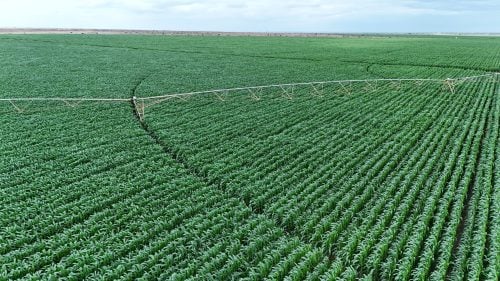
Meanwhile, growth is increasingly being powered by the services sector and a steadily expanding agricultural base. Kenya’s agriculture has shown consistent gains over the years, but these have not translated into the kind of industrial linkages needed to drive large-scale transformation.
The result is a paradox: Kenya is getting better at growing, but not necessarily at transforming.
“Growth is rarely driven by a single factor,” the report observes, stressing that sectoral balance is critical. Without stronger investment in production and industry, the report says that gains in one area may not translate into broader economic resilience.
This raises a fundamental question for policymakers: can a services-led economy deliver enough jobs and long-term prosperity?
The risk, economists warn, is what is often described as premature deindustrialisation, where a country shifts toward services before building a robust industrial base. In such a scenario, growth may remain steady, but its ability to generate employment and support exports becomes limited.
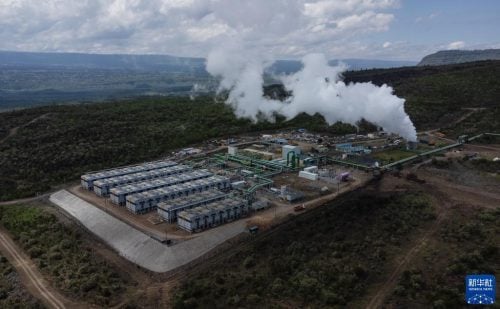
The report says that reversing this trend will require deliberate action. Strengthening industrial policy, improving infrastructure, ensuring a reliable power supply, and enhancing competitiveness are all identified as critical steps.
“Stronger industrial policy, infrastructure, power reliability, and competitiveness will be central to changing this trajectory,” it states.
For now, Kenya’s macroeconomic story remains one of resilience. But the deeper challenge is ensuring that stability translates into strength and that growth today does not come at the cost of tomorrow’s industrial future.