Advertisement
Experts raise alarm over lack of sinking fund to pay debt
Tuesday 22nd July, 2025 05:20 AM|
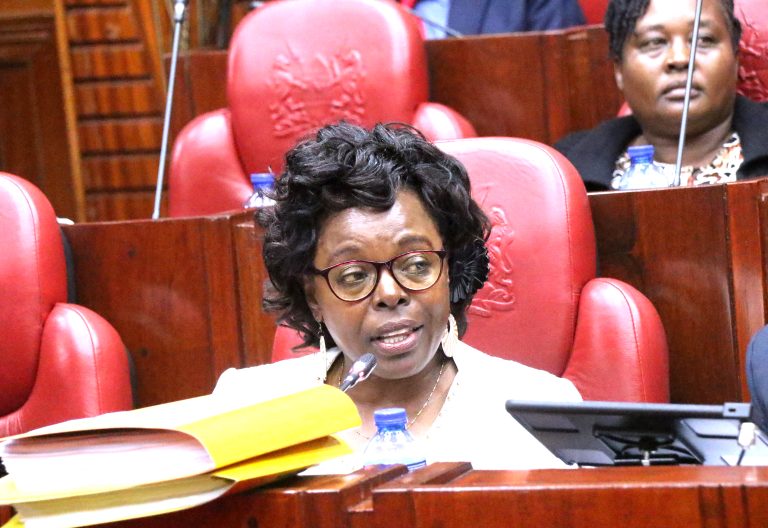
Economists and financial analysts have raised the alarm over Kenya’s persistent failure to establish a sinking fund to manage its ballooning public debt.
They described the failure as a missed opportunity for fiscal transparency and a potential avenue for corruption.
A sinking fund, often used by governments to set aside money for repaying debt obligations, has long been proposed for Kenya, but remains absent in every budget cycle.
Samuel Nyandemo, Senior Lecturer in Economics at the University of Nairobi, believes the lack of such a fund is not an oversight but a deliberate omission by those in power to make it easy to siphon funds.
You Might Also Like


“This is a scheme used by the government to pay for debts that are non-existent. The sink fund would enhance accountability and transparency, but the government doesn’t want that,” he said.
Nyandemo argues that such a mechanism would offer a structured approach to debt repayment and prepare the country in the unlikely event of insolvency.
The concern comes as Kenya’s public debt has surpassed Ksh11.5 trillion as of April 30, or 68 per cent of gross domestic product (GDP) — well above the 55 per cent sustainability threshold.
Without a sinking fund, the country relies solely on the Consolidated Fund Service (CFS) to settle its debt, pensions, and constitutional salaries — a model critics say is insufficient and outdated.
According to Bernard Njiri, Senior Research Analyst at the Institute of Public Finance, the absence of a dedicated debt-repayment fund forces the country to either seek new loans or restructure existing ones whenever debt matures, such as the recent Eurobond.
“When a debt matures, we panic because we don’t have a structured system to manage repayment. This lack of planning sends negative signals to lenders,” he said.
Economists warn that such signals increase Kenya’s risk profile in the international credit market, leading to higher interest rates on future borrowings.
Debt obligations
Former parliamentary finance committee chair Ndindi Nyoro said this erodes trust as it tarnishes the image of the country, as it depicts that the country is struggling to meet its debt obligations, sending the wrong signal to the credit market.
“We are almost at a cliff in terms of debt regime, and especially interest rate. What usually happens when you give signals that you have problems paying your debt, the international market starts to sense you as somebody who may also change terms when they lend you money,” he quipped at a previous engagement.
Njiri also criticised the opacity in Kenya’s debt reporting systems, singling out the Public Debt Management Office (PDMO) at the Treasury for failing to publish up-to-date or machine-readable data.
“You can’t even find how much debt we contracted in Q1 of 2025. It’s either unavailable or buried in scanned PDFs,” he lamented.
Controller of Budget Margaret Nyakang’o has also pushed for operationalisation of Section 58 of the Public Finance Management (PFM) Act, which provides for the creation of a sinking fund.
“This would ensure systematic saving for loan repayment, reduce reliance on new debt and enhance fiscal discipline,” she noted.
Nyakang’o pointed to Tanzania’s integrated public debt tracking system as a model Kenya should emulate, adding that while Kenya uses a standalone system called Meridian, it remains unlinked to the rest of the Treasury’s financial infrastructure, making it ineffective.
“It still gives us piecemeal information,” Nyakang’o said.
As Kenya grapples with a Ksh923.2 billion budget deficit in the current fiscal year and continues to rely on expensive domestic borrowing, the call for a sink fund is becoming louder.
Without it, Kenya risks deepening its debt trap while undermining investor confidence and long-term economic stability.
Author
Victor Mukabi
View all posts by Victor MukabiLatest News








Advertisement
More on Business