Advertisement
Curbing corruption must starts with accountants
Saturday 02nd August, 2025 02:20 AM|
Rogue accountants may have enabled grand corruption scandals such as the National Youth Service (NYS) heist, where falsified payment records facilitated the theft of billions, and the Afya House scam, involving manipulated procurement accounts in the health sector.
This, after rogue practitioners were involved in exploiting gaps in regulation to aid tax evasion, launder stolen public funds, and even forge audit reports to conceal irregularities.
These concerns have seen the Institute of Certified Public Accountants of Kenya (ICPAK) mull reviewing the Accountants Act to curb such abuses, by strengthening legal oversight to end their role in enabling illicit financial flows that continue to drain the economy and erode public trust.
In a renewed effort to restore trust and efficiency in Kenya’s accounting profession, the Institute will review the Accountants Act to clamp down on rogue practitioners who continue to exploit regulatory gaps for illicit financial activities.
You Might Also Like


This legislative overhaul is seen as critical to safeguarding the integrity of a profession increasingly blamed for facilitating financial misreporting and aiding money laundering schemes.
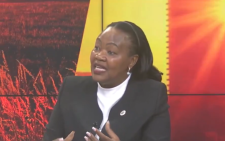
Grace Kamau, CEO of ICPAK, acknowledged that despite existing frameworks, a significant number of unqualified individuals continue to perform core accounting functions, often aiding in the misrepresentation of financial data.
Law designed with accountants in mind
Speaking at the launch of the FiRe Awards, which recognise excellence in financial reporting, Kamau said ICPAK’s current legal mandate is insufficient to police the entire profession effectively.
“The law was designed with auditors in mind. We are now reviewing it to bring all accountants—especially those in business—under regulatory oversight,” she said.
Last year, the institute conducted raids to expose unqualified individuals posing as accountants.
“Those cooking the books are not accountants. They are quacks without the necessary qualifications,” she asserted, emphasising the urgency of the ongoing legal review.
The proposed reforms aim to expand the definition of an accountant and set new standards for registration and accountability.
Illicit Financial Flows (IFFs), which include tax evasion, smuggling, and money laundering, are often facilitated by these rogue actors.
According to Transparency International Kenya, accountants fall under Designated Non-Financial Businesses and Professions—sectors vulnerable to abuse for financial crimes.
James Kinyua, an anti-corruption expert, noted that accountants, alongside lawyers and casinos, have been flagged by global watchdogs for enabling suspicious transactions.
Economic governance
Flywheel Advisory, which focuses on economic governance, has raised concerns about the government’s role in perpetuating IFFs with Grace Mburu, a forensic and anti-financial crimes specialist, pointing out that Kenya’s opaque debt reporting and weak enforcement mechanisms continue to fuel financial secrecy.
“We’ve landed on the grey list because we lack proper controls and understanding of our risk exposure,” she said, citing the mismatch in debt data between the National Treasury and the Central Bank.
Banks, too, have become a playground for manipulation. With regulations requiring large transactions—typically above Ksh1 million—to be flagged, rogue accountants often help businesses launder money through smaller deposits using proxy accounts.
These activities go undetected, further entrenching IFFs in the financial system.
The cost to the economy is steep. IFFs erode public trust, discourage investment, and result in Kenya being flagged by international development partners.
Mburu warned that businesses bear the brunt of these failings, facing stringent compliance requirements and reduced investor interest due to the country’s poor financial reputation.
Experts in the sector say that the solution lies in a stronger, inclusive regulatory framework that ensures every accountant operating in the country meets defined professional standards.
“This review will help us filter out those without the right skills and ensure that every person preparing financial statements is fully accountable,” Kamau said.
As the review process nears completion, the profession—and indeed the wider economy—waits to see whether the reforms will finally close the loopholes that rogue accountants have long exploited with impunity.
Author
Victor Mukabi
View all posts by Victor MukabiLatest News







Advertisement
More on Business