5 reasons why 2026 FIFA World Cup is unique
By Joel Masibo, December 6, 2025After years of preparation and build-up to the FIFA World Cup 2026 draw, the fate of the participating teams was unveiled at the event in Washington, DC, on Friday, December 5, 2025.
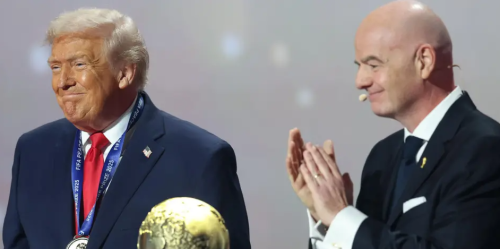
The United States of America President Donald Trump, Canadian Prime Minister Mark Carney and Mexican President Claudia Sheinbaum were all in attendance as the leaders of the three co-host nations, as the US capital played host for the event at the Kennedy Centre, as the 48 participating teams knew their fate at the showpiece.
However, after the draw was conducted, the 2026 FIFA World Cup is unique in five major ways:
First World Cup with 48 teams
FIFA expanded the tournament from 32 to 48 national teams for 2026, the largest field in World Cup history. That expansion changes qualification dynamics and brings many more nations to the world stage.
New tournament structure and many more matches
Because of the expansion, the 2026 competition uses a new group/knockout structure (the final draw placed teams into 12 groups of four), and the knockout phase expands, so 32 teams reach the elimination stages, increasing the total number of matches (the tournament format and schedule were revised accordingly). This alters tournament rhythm, rest days, and broadcasting windows.
First World Cup co-hosted by three countries
2026 is the first time three nations jointly host the men’s World Cup (United States, Mexico, Canada). That’s unprecedented for a senior men’s World Cup and introduces cross-border logistics, travel and visa considerations at a scale never seen before.
Canada will host its first-ever men’s World Cup matches
While the U.S. and Mexico have both hosted before, Canada will host men’s World Cup matches for the first time (Toronto and Vancouver are staging matches). That’s a major milestone in Canadian soccer history and for CONCACAF.
Unprecedented geographic scale
The tournament spans 16 host cities (11 in the U.S., 3 in Mexico, 2 in Canada), making it one of the widest-ranging World Cups ever in terms of venues and travel. Also, FIFA pre-placed the three hosts in the seed pot, and they were guaranteed participation, a first for three co-hosts. The combined effect is a tournament that’s larger logistically, commercially, and culturally than any prior edition.