Advertisement
World Environment Day: Mau Forest restoration gains momentum as communities reclaim degraded ecosystem
Friday 05th June, 2026 06:55 PM|
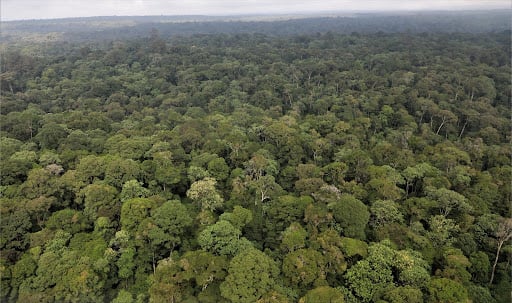
The Mau Forest Complex Integrated Conservation and Livelihood Improvement Programme (MFC-ICLIP) is spearheading Kenya’s ambitious effort to restore the Mau Forest Complex.
The efforts are so far yielding significant results, with over 1,500 hectares of degraded forest land already rehabilitated and approximately 1.5 million tree seedlings planted within just ten months of the programme’s launch.
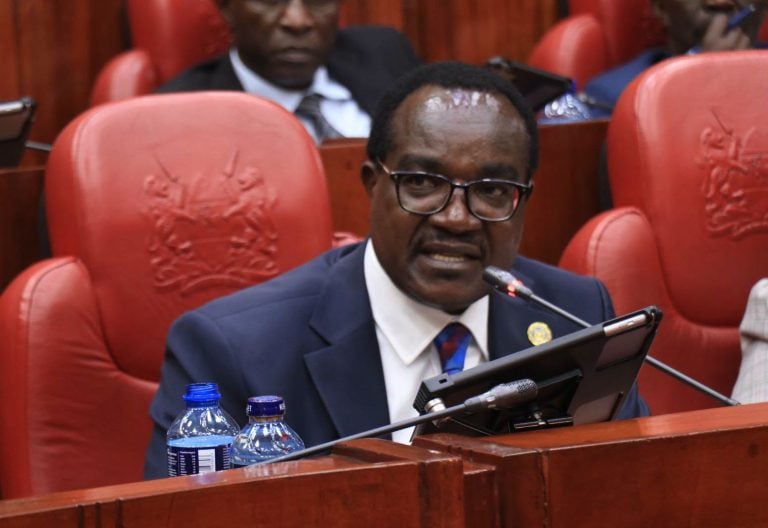
Speaking at a resource mobilisation dinner in Nairobi, Principal Secretary for Environment and Climate Change Festus Ng’eno described the Mau Forest Complex as Kenya’s largest water tower and one of the country’s most critical natural assets, supporting millions of livelihoods, agriculture, biodiversity, and hydroelectric power generation.
The restoration initiative, known as the Mau Forest Complex Integrated Conservation and Livelihood Improvement Programme (MFC-ICLIP), was launched by President William Ruto in October 2025 and seeks to combine ecosystem restoration with community empowerment and economic development. The programme targets over 317,000 Ha across Eastern, Western, Molo and South West Mau forest blocks.
You Might Also Like



“The programme has evolved from a labour-intensive restoration model to an innovative ‘Adopt-a-Block’ approach that has attracted participation from government leaders, private sector players, development partners, and local communities,” Ng’eno said.

The PS noted that a major breakthrough has come through the Trees Establishment and Livelihood Improvement Scheme (TELIS), commonly known as the Shamba System, which allows local communities to grow crops while nurturing tree seedlings. The approach has enhanced food security and created new income streams for thousands of households living around the forest.
The programme has allocated 657 hectares under TELIS, benefiting more than 4,000 households through community participation in forest restoration activities.
According to Kenya Forest Service Forests Status Report (2024), Kenya’s forests contribute 3.6% to the GDP, and is one of the sectors identified by Vision 2030 as critical to sustainable development of the country.
Speaking at the same event, KCB Group CEO Paul Russo stressed the importance of collective action in advancing Kenya’s climate commitments, including the restoration of degraded landscapes and the expansion of national tree cover.
“The success of our customers, communities, and economies depends on our ability to mitigate climate risks and adapt to a changing environment,” he noted.
The programme has also partnered with 150 schools to establish avocado orchards, promoting environmental conservation, improved nutrition, and climate education among learners.
Ng’eno noted that the restoration programme has achieved these milestones using only about 40 percent of its first-phase budget, demonstrating the effectiveness of partnerships between government agencies, development organizations, the private sector, and local communities.
Despite the progress, he emphasized that the programme still aims to restore an additional 2,500 hectares under the first edition and a further 4,000 hectares under the second edition scheduled to begin in July 2026.
Ng’eno called on development partners, businesses, and individuals to support the next phase of the initiative to scale up restoration efforts, strengthen livelihoods, and improve ecosystem governance across the Mau landscape.
The PS further underscored that investing in the Mau Forest Complex is an investment in Kenya’s water security, clean energy future, biodiversity conservation, climate adaptation, food systems, and community prosperity.
Author
Francis Muli
Francis Muli is an editor and passionate digital journalist with extensive experience in crafting compelling stories across various platforms. His major focus is in business, politics and current affairs. He has a keen eye for detail and a commitment to uncovering the truth. He has contributed to leading publications across the country. When not chasing stories, you can find Muli exploring new technologies, attending local events, or reading fiction. Connect with Francis Muli on X @FMuliKE and Facebook (Francis Muli) to follow his latest stories and insights.
View all posts by Francis MuliLatest News







Advertisement
More on News