Advertisement
Why the Red Sea crisis is moving closer to Kenya – global report
Saturday 13th June, 2026 11:53 PM|

Kenya does not border the Red Sea. Yet a new global report warns that one of the world’s most dangerous geopolitical flashpoints is moving steadily closer to East Africa, with potentially far-reaching consequences for trade, security and economic stability.
The latest Global Peace Index 2026 identifies the Red Sea corridor as an increasingly critical zone where multiple conflicts, rival powers and strategic interests are colliding.
From Sudan’s civil war and the Iran-Israel confrontation to Houthi attacks on shipping lanes and growing military competition among global powers, the region is becoming one of the most contested spaces on the planet.
For Kenya, the implications could be profound.
You Might Also Like



“The Iran war is a force multiplier for the spread of conflict,” the report warns, arguing that instability around the Red Sea is amplifying existing security risks across the Horn of Africa.
The report notes that conflicts are no longer isolated events. Instead, they are increasingly linked through trade routes, refugee flows, external interventions and economic shocks.
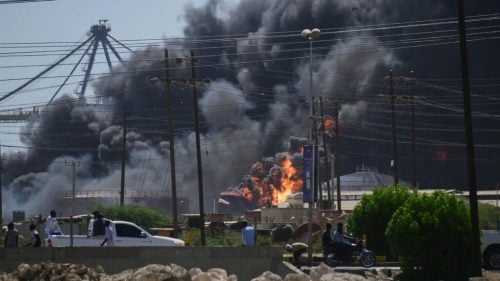
“The Horn of Africa is no longer a set of separate conflicts. The conflicts in Sudan, Ethiopia, Eritrea, South Sudan and Somalia are now interlocked through every channel that causes conflicts to spread,” it notes.
Stretching from the Suez Canal to the Bab el-Mandeb Strait, the Red Sea serves as one of the world’s busiest maritime corridors, carrying billions of dollars worth of cargo every year.
Any disruption along this route affects global supply chains, shipping costs and energy markets.
Over the past two years, Houthi attacks on commercial vessels, Sudan’s civil war and tensions involving Iran, Israel and Gulf states have transformed the waterway into a major geopolitical battleground.
“The Middle East crisis is the most extensive period of regional instability since at least the 2003 Iraq War,” the index describes.
The report also notes that Gulf airspace and shipping lanes were repeatedly disrupted during the conflict involving Iran, Israel and the United States, creating uncertainty for global commerce.
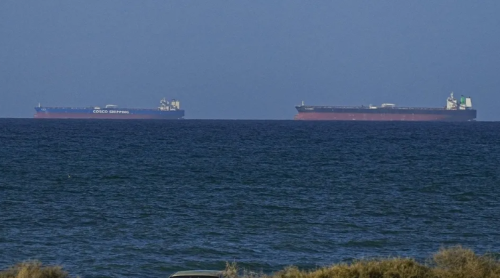
New Cold War on Kenya’s doorstep
What makes the story particularly relevant to Kenya is the growing concentration of foreign military and strategic interests around the Horn of Africa.
Within a relatively small geographic area, foreign military bases and security facilities are spread across Djibouti, Somalia and parts of the wider Red Sea region.
The United States, China, France, Türkiye and Gulf powers all maintain strategic interests near some of the world’s busiest shipping routes.
At the same time, Sudan’s war continues to draw regional and international actors into a conflict that has already displaced more than 12 million people.
The index argues that the convergence of these interests is creating a modern geopolitical contest reminiscent of the Cold War.
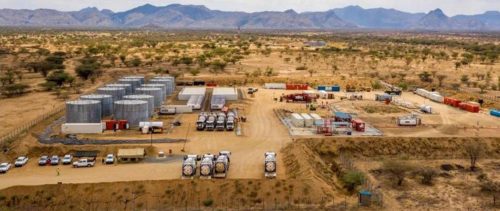
Unlike the ideological rivalry of the 20th century, however, today’s competition revolves around ports, trade routes, military access, minerals and maritime influence.
Although Kenya sits south of the immediate conflict zone, its economy remains closely connected to regional trade networks.
The Port of Mombasa handles cargo destined for Uganda, Rwanda, South Sudan, eastern Democratic Republic of Congo and parts of Ethiopia.
If insecurity in the Red Sea persists, some analysts believe East African ports could become increasingly important alternative logistics hubs.
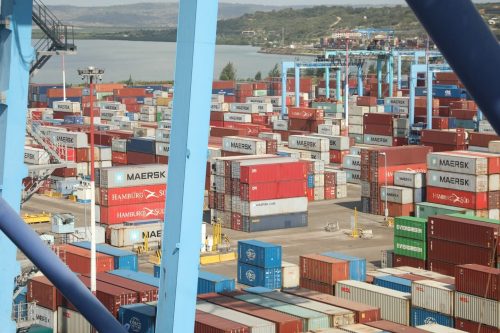
That could create opportunities for Kenya’s transport, shipping and logistics sectors.
However, the opposite outcome is also possible.
Rising insurance costs, shipping delays and disruptions to global supply chains could increase the price of imports entering Kenya through maritime routes.
The report warns that geopolitical instability is increasingly spreading through economic channels rather than traditional military confrontation alone.
The Global Peace Index arrives at a time when Kenya is already facing challenges linked to regional instability.
Sudan’s war continues to generate refugee flows across East Africa, while insecurity in Somalia remains a major concern.
The report also highlights how conflicts are becoming more internationalised.
“There are now 103 countries that were at least partially involved in some form of external conflict in the past five years, up from 59 in 2008,” the study notes.
Author
Latest News








Advertisement
More on News