Advertisement
Why Kenya’s refugees can join a university without KCSE qualifications
Friday 22nd May, 2026 10:16 PM|

Thousands of refugees living in Kenya’s sprawling Kakuma and Dadaab camps could soon gain access to universities, colleges and skilled jobs without traditional secondary school certificates under a new international qualification designed for displaced learners.
The new programme, known as G12++, was unveiled during the recent Education World Forum in London and is expected to create alternative pathways for refugees whose education was disrupted by war, conflict and forced migration.
The initiative, developed through a partnership between Cambridge University Press & Assessment and the Alsama Project, seeks to address a major challenge facing displaced youth worldwide: the lack of recognised academic documents needed for higher education and formal employment.
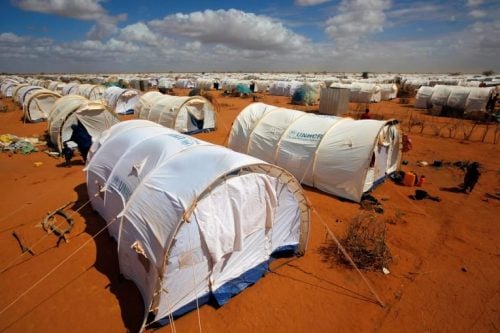
For many refugees in Kenya’s Kakuma Refugee Camp and Dadaab Refugee Complex, interrupted schooling has meant being locked out of universities and Technical and Vocational Education and Training (TVET) institutions despite possessing the skills and ability to succeed.
You Might Also Like
Unlike conventional systems that rely heavily on national examinations such as the Kenya Certificate of Secondary Education (KCSE), the G12++ programme focuses on assessing a learner’s actual capabilities, critical thinking, communication skills and problem-solving abilities.
According to the programme developers, the qualification is curriculum-agnostic, meaning students will not be required to follow a single national education system, such as the Kenyan, British, or Lebanese curriculum. Instead, the assessments are designed around practical, real-life situations and competencies.
“The G12++ is designed as an alternative to traditional secondary school exit exams for learners whose education has been disrupted,” the partners said in a joint statement released during the forum.
The programme mirrors Kenya’s recently introduced Recognition of Prior Learning framework (RPLF), which seeks to certify skills acquired outside formal education systems.
Refugee learners will undergo structured learning and assessment processes to evaluate how they interpret information, solve everyday challenges, work in teams and apply knowledge practically.
Education stakeholders believe the initiative could transform opportunities for thousands of young refugees in Kenya, where access to recognised qualifications remains a major barrier to higher education and employment.
Kenya currently hosts more than 954,000 forcibly displaced people, according to the Department of Refugee Services. Dadaab alone hosts more than 420,000 refugees and asylum seekers, while Kakuma and the Kalobeyei Integrated Settlement accommodate around 305,000 people.
Globally, the crisis is even larger. According to the partnership statement, there are currently 117.3 million forcibly displaced people worldwide, including 49 million displaced children.
Yet only nine per cent of refugees access higher education compared to a global average of 42 per cent.
Education boost for refugees
Jane Mann, Managing Director for Partnership for Education at Cambridge, said the qualification aims to restore educational opportunities to displaced youth, often excluded from formal systems.
“When young people are forced to leave school and flee, it’s not only their past they leave behind, but their future too,” she said.
“Working with Alsama Project, we will help them take back their futures through a new global qualification that will open pathways to universities, vocational programmes and employment.”
The programme has already been piloted at Lebanon’s Shatila refugee camp, where several students who initially struggled with basic literacy and numeracy successfully attained the qualification after completing the training and assessment programme.
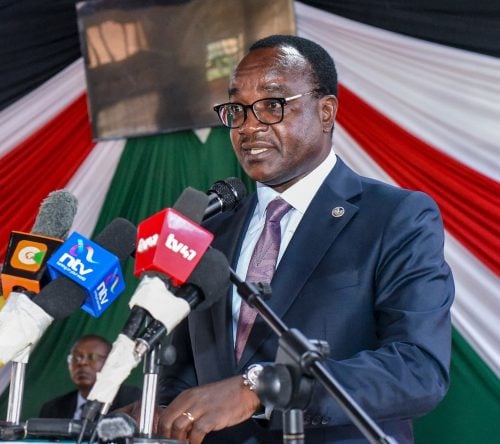
Meike Ziervogel, Co-Founder and CEO of Alsama Project, said the partnership was designed to challenge long-standing assumptions about refugee education.
“The barrier has never been ability. What has been missing is recognition,” she said.
“The G12++ exists to change that.”
Once learners complete the programme and pass the assessments, they receive a recognised qualification that can be used to apply for universities, TVET institutions, scholarships and skilled jobs internationally.
The partners are now seeking collaboration with governments, universities, employers and policymakers worldwide to ensure the qualification receives broad international recognition.
If implemented successfully in Kenya, the programme could provide a lifeline to thousands of refugee youth who have spent years trapped between disrupted education systems and limited employment opportunities.
Author
Latest News







Advertisement
More on News