Advertisement
Why big govt’s plans deliver small results in Kenya’s industrial push
Saturday 11th April, 2026 02:00 AM|

Kenya’s ambition to become a regional manufacturing powerhouse keeps colliding with a stubborn reality: most industrial policies look impressive on paper, but struggle to shift jobs, exports, or productivity in practice.
A new analysis from the World Bank Africa Economic Update (April 2026) released on Friday, April 10, 2026, reveals a deeper structural problem across the continent.
Africa’s challenge, it says, is not a lack of ambition, but a failure of execution, coordination, and ecosystem readiness.
“Sector choice alone does not explain the divergent results: countries with similar priorities achieve very different outcomes,” the report notes.
You Might Also Like



Over the past decade, Kenya has rolled out multiple industrial blueprints, from manufacturing-led growth strategies to special economic zones and flagship infrastructure corridors.

Yet the outcomes remain uneven.
Industrial growth has lagged behind expectations. Job creation in manufacturing remains limited. And export diversification has been slow.
“African countries often articulate strong industrial ambitions, but these may not translate into export diversification, productivity gains, or jobs because delivery and monitoring systems are weak,” the World Bank observes.
In other words, the problem is not vision; it is implementation architecture.
For instance, President William Ruto’s affordable housing programme could face delays as the Ministry of Housing cautions that funding constraints threaten its progress.
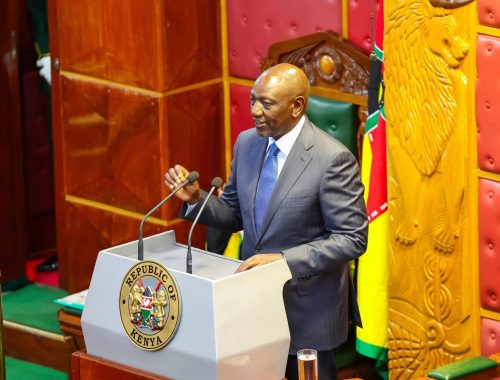
“Currently we have 1,700 ongoing housing projects. We also have a personnel shortage, some officers are working up to three shifts due to understaffing,” he said.
“Under the proposed FY 2025/2026 Supplementary Budget, a reduction of Ksh800 million has been made to the programme’s donor funding allocation, lowering the total budget from Ksh 13.341 billion to Ksh12.541 billion.”
Hinga confirmed that the shortfall was anticipated, with 80 per cent of the allocated budget already utilised. He added that while some funds had been invested in Treasury Bills, the National Treasury had denied access to them for housing projects.
“The department had anticipated the funding inadequacy, having already utilised 80 per cent of the allocated budget. Although the Department had saved some funds in Treasury Bills, the National Treasury has declined to allow access to the funds,” he stated.

Poor execution systems
The report identifies a critical policy-outcome gap that explains why big plans deliver small results.
This gap emerges when strategies are not linked to financing, institutions, or measurable performance targets.
Most plans identify priority sectors. Few specify how they will be executed.
Few define who is accountable. And even fewer track whether interventions are working in real time.
For Kenya, this challenge is visible in industrial parks, manufacturing incentives, and value-chain programs that often operate in isolation rather than as part of a coordinated ecosystem.

Moreover, the lender argues that industrial success depends less on policy announcements and more on what it calls “ecosystem readiness”.
That includes reliable electricity, transport logistics, skilled labour, and access to finance. Without these, even well-designed industrial incentives fail to scale.
“Policy effectiveness hinges on two priorities: foundational ecosystems and targeting sectors aligned with existing capabilities,” the report emphasises.
The report notes that Kenya’s industrial push, especially in manufacturing and agro-processing, continues to face bottlenecks in these areas.
Power costs remain high. Logistics inefficiencies persist. And skills mismatches limit productivity gains.
“Medium-term prospects remain constrained by chronically low investment rates,” the report warns, noting that no country in the region exceeds the 25 per cent investment-to-GDP threshold associated with sustained industrial transformation.
Author
Latest News





Advertisement
More on News