Advertisement
WFP winner’s classic work on soil health
Saturday 26th July, 2025 07:20 AM|

Scientists have established that soils are vital for supporting food security and other ecosystem services, and that climate change can affect soil functions both directly and indirectly.
The direct effects of climate change on soil health include changes in temperature, precipitation, and moisture regimes.
Indirect effects include those that are induced by adaptations such as irrigation, crop rotation changes, and tillage practices.
Climate change and increasing climate variability present new challenges affecting human society in the 21st century, according to a study by AGRA researchers published in the International Journal of Development and Sustainability.
You Might Also Like
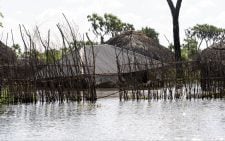
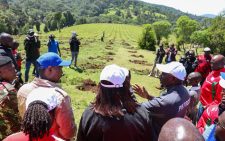

In an unfortunate twist of fate, the poorest countries whose economies and livelihoods largely rely on natural resources in Africa are among the most vulnerable.
The impact of climate change and climate variability on crop growth and yields is largely determined by their impact on soil health and the capacity of crop varieties to adapt to the changing climate and weather patterns.
Although extensive knowledge is available on the direct effects, an understanding of the indirect effects of agricultural adaptation options is less complete.
Focusing on soil health can help feed humanity without harming the planet.
By improving soil health on a global scale, it is possible to feed the planet’s growing population without compromising the fight against climate change.
This year’s World Food Prize (WFP) winner, Dr Mariangela Hungria, a Brazilian microbiologist, has been recognised for her groundbreaking work in biological nitrogen fixation and sustainable soil health.
The World Food Prize, the “Nobel Prize for Agriculture”, recognises individuals who have made significant contributions to improving the quality, quantity, and availability of food worldwide.
Dr Hungria’s research has led to the development of microbial technologies that reduce the need for chemical fertilisers, significantly boosting crop yields and contributing to a more sustainable agricultural system.
The Food and Agriculture Organisation (FAO) predicts that a 60 per cent increase in crop production will be required by 2050 to keep up with global food demand.
To meet this demand — and sequester huge volumes of greenhouse gases (GHG) in the process — soil health must be a priority.
Ultimately, delivering on this spike in demand will require the introduction of precision agriculture to apply the right source of fertilisers as and where needed, in the exact volumes required.
Agriculture contributes around 25 per cent of worldwide GHG emissions and has historically been seen as a zero-sum game: either reduce emissions and fall short of producing the food the world needs, or expand to feed a growing global population and accelerate climate change.
However, advances in soil science have shown that investing in soil health can increase food production and reduce GHG emissions in parallel.
Dr Hungria’s work focuses on rhizobia-based nitrogen fixation in legumes, a process that enhances the natural ability of plants to absorb nitrogen from the air, reducing reliance on synthetic fertilisers.
Her innovations have resulted in a substantial decrease in the use of chemical fertilisers, saving Brazilian farmers billions of dollars annually and contributing to environmental sustainability.
Dr Hungria’s research has played a key role in the dramatic increase in soybean production in Brazil, from 15 million tonnes in 1979 to an estimated 173 million tonnes by 2025, driving a “Micro Green Revolution” by promoting sustainable, low-cost microbial technologies.
She has also expanded her research to include grass pastures, developing an inoculant that increases biomass and supports more food production for cattle.
Dr Hungria recently spoke to Danielle Nierenberg, a world-renowned researcher on food systems and agriculture.
When she started college for microbiology, agriculture had just seen the Green Revolution, and scientists were focused on using artificial fertilisers to feed a growing population.
But she didn’t think that was the only way forward.
Dr Hungria knew that microorganisms could help achieve nitrogen fixation and better soil health. She knew that biological fertilisers can help feed the world.
She’s been a champion of regenerative agriculture before that term was even widely used!
The World Food Prize is a prestigious honour that recognises her lifetime of work that’s literally changed agronomics from the ground up.
But as a young scientist in the 1970s and 1980s, she faced significant pushback from the mostly male scientific establishment that believed chemicals were the only option.
“It’s not easy to start your career when everybody says that you are not going to have a future,” Dr Hungria says.
To prove that microorganisms had a vital role not just on smallholder farms or organic operations but within large-scale, high-yield agriculture, “I had to change the way I was doing research.”
She began involving farmers as collaborators in the research process. As with her commitment to regenerative ag, she didn’t set out to be a trailblazer: She was just doing things the way she thought was right.
“People talk about participative science, and I say, ‘I was doing this a long time ago. I just didn’t know!'” she says.
“Every research that I did, it was because a farmer came to me to talk about something… told me what (s)he wanted… what was happening, that gave me ideas to do my work.”
And just as she set out to prove from the beginning, she has demonstrated that the positive results that come from regenerative practices can be scaled up to fit any size farm.
“The same technology, the same bacteria, that helps the small farmers also helps the big farmers,” she says.
“We use the same in 1 hectare or in 100,000 hectares, so that’s really wonderful to work with something that’s usable for all.”
Dr Hungria identifies several barriers she continues to face in her work that the entire good food movement can learn from
First, is that the regenerative agriculture movement cannot be overshadowed by competition and corporate interests.
Even when faced with data on the success of biological fertilisers, some farmers are still sceptical due to aggressive marketing from chemical fertiliser manufacturers.
Occasionally, companies that do adopt biological fertilisers seem more interested in widely planted crops that are more profitable, rather than culturally relevant crops in local communities.
Dr Hungria explains that feeding the world can’t be a competition—which is also why she makes all her research and solutions available publicly for free.
Second, she believes strongly in the power of scientific communication.
“We have to think creatively about how to earn people’s attention”.
But she’s frustrated by the experience of spending time preparing a concise online video explaining nuance and data—only for the video’s view count to be dwarfed by influencers spreading misinformation or changing the subject away from agriculture entirely.
Third, the future of science has to be collaborative, inclusive, and egalitarian.
She is candid about the challenges she faced and continues to face as a woman and a mother in a male-dominated scientific world that made it very improbable to succeed in her career.
But Dr Hungria did succeed—she worked for her entire career to rebuild a scientific field that’s less competitive and more participatory, collaborative, and focused on listening to others and appreciating the diversity of ideas.
“The kind of approach truly needed to transform the food system!” she says, “I really think that the science of the future will be a female science”.
Author
Alberto Leny
View all posts by Alberto LenyLatest News






Advertisement
More on News