Advertisement
Washington lifts suspension on Somalia food aid after deal
Thursday 29th January, 2026 08:44 AM|

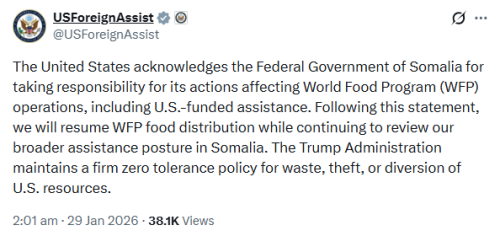
The United States has resumed food aid distribution through the World Food Programme (WFP) in Somalia after a three-week suspension triggered by a dispute with the Somali government over humanitarian operations.
Washington confirmed the decision in an X post on January 29, 2026, after Somalia returned seized food supplies and accepted responsibility for actions that disrupted aid delivery. The US said the move followed commitments by the Somali authorities to improve storage facilities and prevent similar incidents in the future.
“The United States acknowledges the Federal Government of Somalia for taking responsibility for its actions affecting World Food Program (WFP) operations, including U.S.-funded assistance,” the post read.
“Following this statement, we will resume WFP food distribution while continuing to review our broader assistance posture in Somalia. The Trump Administration maintains a firm zero tolerance policy for waste, theft, or diversion of U.S. resources.”
You Might Also Like


The suspension began on January 7, when the US State Department accused Somali officials of interfering with WFP operations at Mogadishu port. According to US officials, local authorities demolished a warehouse funded by the United States and confiscated 76 metric tonnes of donor-funded food aid meant for vulnerable communities.
At the time, the State Department said the Trump administration had zero tolerance for waste, theft, and diversion of life-saving assistance. It halted all US-funded programmes that directly benefited the Federal Government of Somalia and warned that aid would only resume if Somalia took corrective action.
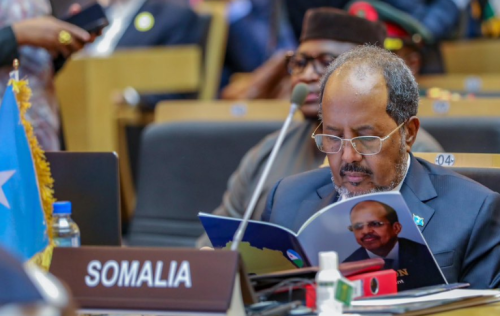
Somalia initially denied the claims. On January 8, the Foreign Ministry said the food supplies remained under the control of the WFP, including aid provided by the United States. Officials explained that the warehouse demolition formed part of a port expansion project and insisted no aid had been seized or destroyed.
However, the disruption affected WFP operations at a critical time. Somalia faces a severe humanitarian crisis driven by drought, conflict, and widespread food insecurity. Millions depend on food assistance, and the pause raised fears of worsening hunger and malnutrition.
Aid dispute escalates
Tensions rose further in mid-January after US media reports suggested the State Department was considering ending food aid permanently. Some outlets claimed the warehouse contents had “disappeared”, increasing pressure on Mogadishu to respond.
The incident highlighted long-standing concerns about aid diversion in Somalia, where corruption, weak oversight, and clan rivalries often complicate humanitarian work. The United States remains the largest donor to the WFP, contributing more than $2 billion globally in 2025, and has repeatedly stressed the need to protect taxpayer-funded assistance.
The episode reflects fragile relations between the United States and Somalia during President Donald Trump’s second term. Somalia depends heavily on international aid, with the WFP supporting more than four million people each year.
Author
Kenneth Mwenda
Kenneth Mwenda is a business, sports, and politics digital writer with over seven years of experience in journalism, covering breaking news, feature stories, and in-depth analysis across a range of beats.
For inquiries, he can be reached at [email protected]
View all posts by Kenneth MwendaLatest News






Advertisement
More on News