Wanjigi warns govt targeting SACCO savings amid economic crisis
By Kenneth Mwenda, July 5, 2026Kenyan businessman and Safina Party leader Jimi Wanjigi has raised fresh alarm over what he says is a growing government interest in SACCO savings, warning that ordinary Kenyans could be pulled into a deepening economic crisis.
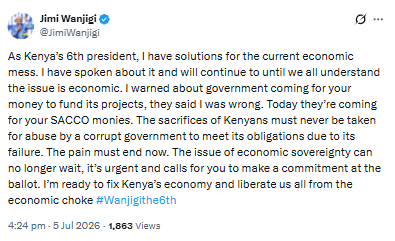
In a post on Sunday, July 5, 2026, Wanjigi claimed he had earlier predicted that the government would move toward SACCO funds to support state spending.
“I warned about the government coming for your money to fund its projects… Today they’re coming for your SACCO monies,” he wrote on X.
His remarks come at a time when debate is intensifying over the government’s plan to mobilise more than Ksh1 trillion held in Savings and Credit Cooperative Organisations (SACCOs) to finance national development projects, mainly through the proposed National Infrastructure Fund and infrastructure bonds.
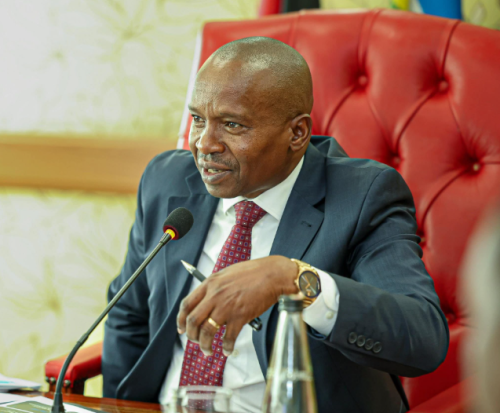
Deputy President Kithure Kindiki has defended ongoing reforms in the cooperative sector, saying the aim is to modernise SACCOs and align them with national development needs.
Speaking during the Ushirika Day celebrations in Nairobi, Kindiki said the government is fast-tracking the Cooperatives Bill, which he expects to be signed into law within a month.
“Within a month, the Bill will be signed into law by the president so that we can modernise this sector and improve transparency and governance,” Kindiki said.
He added that cooperatives hold more than Ksh1 trillion in savings and could play a bigger role in funding infrastructure, agriculture, housing and small enterprises.
According to the government plan, SACCOs would invest in government-backed infrastructure bonds or structured funds, similar to how pension schemes invest in Treasury instruments. Officials insist the money will not be seized, but channelled through regulated investments.
Why SACCO savings are at the centre
SACCOs remain one of the most important financial systems for millions of Kenyans. Teachers, police officers, nurses, farmers, boda boda riders and small traders rely on them for savings and affordable credit.
Unlike banks, SACCOs often provide easier access to loans for school fees, land purchases, medical bills and small businesses. For many members, contributions come directly from salaries or daily earnings, making the funds highly sensitive.
Critics argue that moving SACCO savings into state-linked investments risks exposing ordinary savers to government debt pressure and project failures.
Wanjigi says the timing reflects deeper economic stress. The government has borrowed everywhere, taxed everything, sold public assets and now it is turning to SACCO savings.
“The sacrifices of Kenyans must never be taken for abuse by a corrupt government to meet its obligations due to its failure. The pain must end now. The issue of economic sovereignty can no longer wait, it’s urgent and calls for you to make a commitment at the ballot. I’m ready to fix Kenya’s economy and liberate us all from the economic choke.”
Concerns over SACCO funds are growing alongside wider debates on Kenya’s public debt. Treasury figures show that debt servicing consumes trillions of shillings annually, leaving limited fiscal space for development spending.
Wanjigi has repeatedly warned that the current borrowing model is unsustainable. In a recent interview, he said Kenya risks long-term economic distress if reforms are not made.
He has also linked the situation to broader political risks, claiming that continued borrowing could weaken the shilling and strain household incomes.
Online commentators and political allies of Wanjigi have also raised concerns about the proposed amendments to the cooperative laws.
Government position: no seizure of funds
Officials insist there is no plan to take or confiscate SACCO savings. Instead, they say participation in infrastructure financing will be structured, voluntary and protected through regulatory safeguards, including deposit guarantee mechanisms.
They argue that the reforms are designed to strengthen cooperatives and improve returns for members while supporting national development.
Deputy President Kindiki has emphasised that cooperatives will remain central to Kenya’s Bottom-Up Economic Transformation Agenda, saying they help households build homes, educate children and grow small businesses.
Despite government assurances, public anxiety remains high. Kenya’s history of financial scandals, combined with rising debt levels, has fuelled suspicion over any attempt to link private savings to state financing.
Wanjigi has positioned himself as a leading critic of the government’s economic direction, arguing that ordinary savers should not bear the burden of state borrowing.