Advertisement
United States praises Kenya’s critical role in Haiti mission
Friday 05th December, 2025 06:42 AM|

US Secretary of State Marco Rubio has praised Kenya for what he called its heroic contribution to efforts to stabilise Haiti, saying the situation in the Caribbean nation would be far worse without Nairobi’s intervention.
Rubio spoke in Washington on Thursday, December 4, 2025, during a joint event with President William Ruto, where the two leaders also launched the first agreement under America’s new global health strategy.
Rubio said Kenya had carried a heavy responsibility in Haiti for nearly two years, describing its involvement as essential to preventing a complete collapse. He noted that Kenya’s deployment made it possible for the United States and partners to move to the next phase of the mission, which will shift to the creation of a gang suppression force.
“Kenya’s played an extraordinary role, a really heroic role in trying to help stabilize Haiti – it’s a very difficult situation,” he said.
You Might Also Like
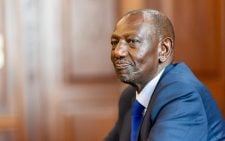
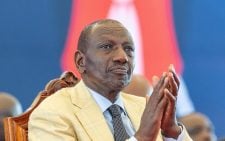
“They’ve carried a huge burden as a country for the better part of two years now, and had it not been for their engagement – and I just expressed this to President Ruto, the – as bad as Haiti is it would be indescribable what it would look like today were it not for the efforts they have made. Our gratitude for the role they’ve played is extraordinary.”
“Had it not been for the role they played, what we are hoping to do next in Haiti would have been impossible, which is to transition to a gang suppression force.”
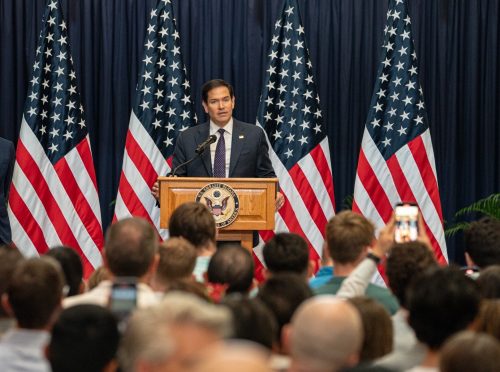
He confirmed that Washington will help manage the transition and support Kenya as the new force forms. However, he stressed that Kenya should not shoulder the burden alone. Rubio used the platform to urge countries in the region and worldwide to contribute personnel, equipment and funding.
Rubio criticised governments that issue statements about the suffering in Haiti but offer limited concrete support. He said that if even a handful of countries contributed half of what Kenya has already done, progress would be significant.
He directed his appeal specifically to nations in the Western Hemisphere, the Caribbean Basin and South America, saying they must take greater responsibility for a crisis in their neighbourhood.
Health assistance model changes
Alongside the Haiti remarks, Rubio unveiled what he called a major shift in how the United States delivers global health assistance. He said Washington has spent billions on health programmes abroad, but too much of that money has been handled by American and international NGOs that often run separate systems and take sizeable administrative costs.
Rubio said the United States will no longer rely on NGOs to design and run foreign programmes. Instead, the new model will work directly with partner governments. He argued that giving money to third parties made little sense because it weakened domestic institutions and reduced the impact of US support on actual patients.
Kenya became the first country to sign under the new framework. Rubio said Washington chose Kenya because of the long-standing partnership between the two countries and because Kenya has strong institutions capable of managing the new approach.
Under the deal, the United States will invest Ksh207.6 billion in Kenya’s health sector over the next five years, while Kenya will contribute Ksh110 billion of its own funds.
Rubio said the partnership aims to strengthen domestic health infrastructure so that countries eventually rely less on external assistance. He said Kenya could, in time, help guide other countries wishing to adopt similar models. The agreement, he added, is designed to build systems that can operate independently rather than prolong dependence on external funding.
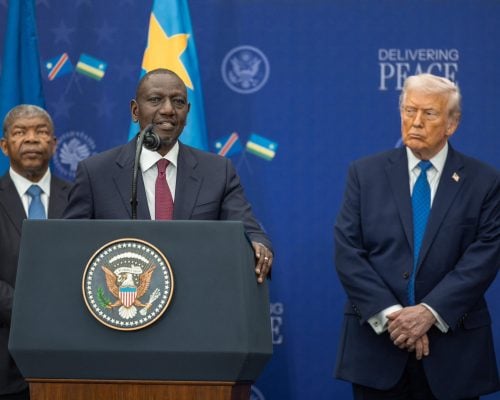
President Ruto spoke after Rubio and gave background on Kenya’s long relationship with the United States. He said American support over the past 25 years has helped Kenya fight diseases such as malaria, HIV/AIDS and tuberculosis. He linked the new agreement to his government’s plans to expand universal health coverage, improve equipment in hospitals and strengthen medical supply chains.
Ruto said Kenya is already raising Ksh389.4 billion in domestic resources for health infrastructure, including community health promoters across the country. He thanked President Donald Trump and the US Government for their commitment and pledged that Kenya will use the funds efficiently, effectively and accountably.
On Haiti, Ruto said Kenya will remain involved and will support the transition to the new gang suppression force. He echoed Rubio’s call for more countries in the region to take responsibility for the crisis.
“Let me also commit that Kenya will continue to be available in Haiti, to do what we can to ensure that the experience we have gathered over the last couple of months – running into two years now – will be of benefit to the Gang Suppression Force,” he said.
” I did promise that we are not going to walk away from Haiti, and I want to say that Kenya would not have succeeded in Haiti if it were not for the support, the friendship, and the partnership of the United States.”
Ruto added that Kenya will also join US officials at another event on efforts to stabilise eastern Democratic Republic of Congo. The event marked the first signing under the United States’ new America First Global Health Strategy, with US officials describing Kenya as the ideal partner for the launch.
Author
Kenneth Mwenda
Kenneth Mwenda is a business, sports, and politics digital writer with over seven years of experience in journalism, covering breaking news, feature stories, and in-depth analysis across a range of beats.
For inquiries, he can be reached at [email protected]
View all posts by Kenneth MwendaLatest News

Advertisement
More on News